
Policy & RegulationAnalysis
China Unveils Power System Blueprint for APEC Renewable Integration
The recommended framework outlines technical, policy, and cross-border mechanisms ahead of China's 2026 APEC host year.
Share
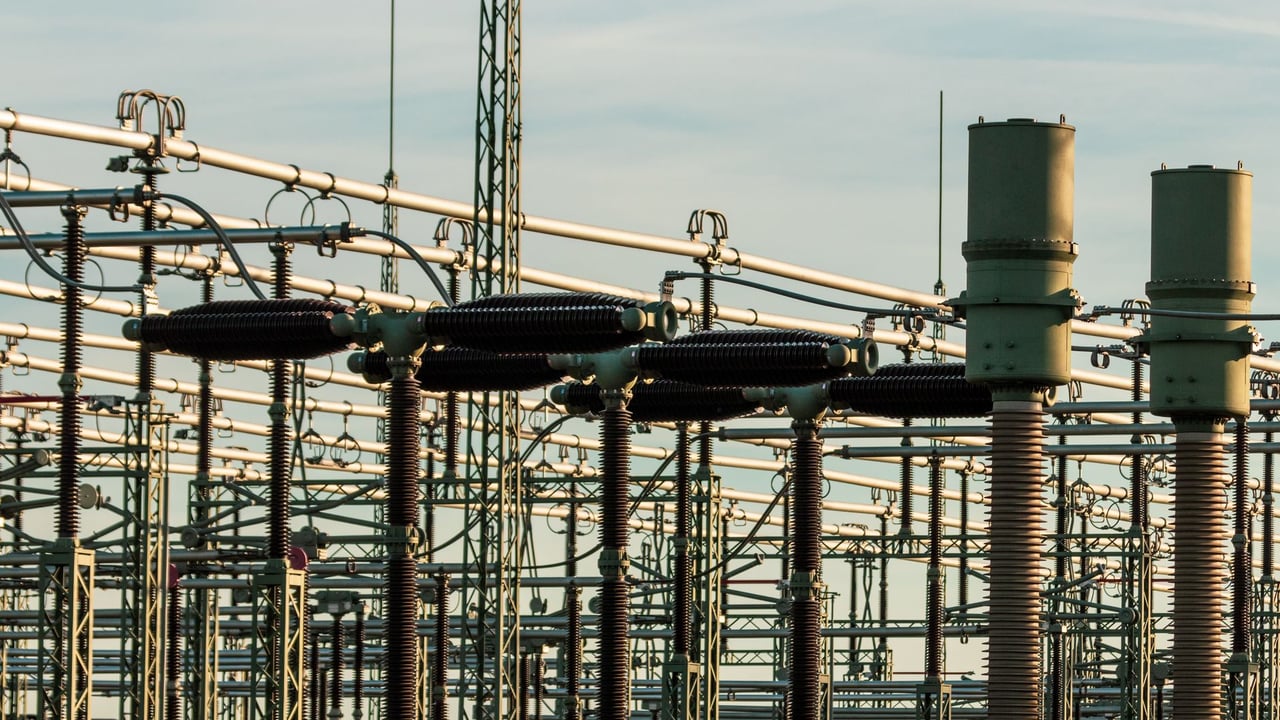
Photo by Mr Dr3igeteilt on Pexels
The Brief
At an Asia-Pacific Economic Cooperation (APEC) workshop, China presented a recommended blueprint for building modern power systems capable of handling high proportions of renewable energy, according to People's Daily. Drafted by a research institute under China Southern Power Grid under the guidance of the National Energy Administration, the document represents one of five host autonomous contributions China plans to deliver in the energy domain for its 2026 APEC host year. The framework spans technical architecture, policy support, and multilateral coordination.
Why it matters
As economies across the Asia-Pacific accelerate wind and solar deployment, maintaining grid stability under intermittent generation has become a shared engineering hurdle. China's proposal packages its domestic engineering practices in ultra-high voltage grids, multi-energy balancing, and digital power management into a multilateral reference framework. If adopted or referenced across APEC members, the blueprint could bolster regional alignment on technical standards, virtual power plants, and future cross-border electricity sharing.
China context
The initiative directly reflects Beijing's domestic strategy to construct a "new-type power system" anchored in the coordination of generation, grid, load, and storage. Led by state-owned utility China Southern Power Grid and overseen by the National Energy Administration, the release highlights how Chinese state-owned enterprises and state-backed think tanks use multilateral platforms such as APEC to translate domestic operational experience into international governance public goods.
Editor's View
EDITOR'S VIEW — Analysis and inference, not factual reporting.
The framework showcases China's strategy of combining multilateral technical diplomacy with the commercial and technological capabilities of its power utilities. Rather than issuing rigid mandates, the proposal frames its recommendations as modular and adaptable to different resource endowments and development levels. The primary test for this initiative will be whether other APEC economies, particularly in Southeast Asia, translate these high-level technical recommendations into bilateral infrastructure partnerships or regulatory adoption amid complex regional geopolitical dynamics.
What to watch
- Details on the remaining four energy-sector host autonomous contributions planned for China's 2026 APEC host year.
- Bilateral or regional pilot programs in APEC economies adopting the proposed virtual power plant and smart distribution grid concepts.
- Commercial participation by Chinese grid equipment manufacturers and digital solution providers in regional energy transition projects.
Key Takeaways
- 1China released a recommended framework for building high-renewable power systems at an APEC workshop.
- 2The document is one of five Host Autonomous Contributions China is preparing in the energy sector for APEC 2026.
- 3Drafted by China Southern Power Grid's research arm under the National Energy Administration, the plan spans technology, policy, and regional cooperation.
- 4Technical recommendations emphasize active grid support from renewables, smart distribution networks, virtual power plants, and AI-driven grid management.
- 5The proposal encourages APEC members to explore cross-border clean energy complementarity, time-sharing mutual assistance, and shared reserve capacity.
China has released a comprehensive proposal outlining solutions for constructing power grids capable of absorbing high proportions of renewable energy, according to a report by People's Daily. Unveiled at an APEC workshop on power system transition pathways, the document serves as one of five energy-related Host Autonomous Contributions prepared by Beijing for its role hosting the 2026 Asia-Pacific Economic Cooperation (APEC) summit.
Formulated under the supervision of China's National Energy Administration and spearheaded by the Energy Development Research Institute of China Southern Power Grid, the blueprint is structured across three core pillars: technology, policy design, and multilateral collaboration. The initiative was developed as part of an APEC self-funded project aimed at helping regional economies navigate the operational challenges of clean energy transitions.
On the technical front, the blueprint promotes an integrated model spanning power generation, transmission networks, consumer loads, energy storage, and digitalization. It calls for shifting renewable generators from passive grid followers to active grid-supporting assets, backed by hybrid systems combining wind, solar, hydro, and thermal generation. For networks and end-users, the proposal advocates transforming passive distribution grids into smart, active networks, alongside deploying virtual power plants to aggregate decentralized energy resources and improve demand response. It also highlights artificial intelligence applications for real-time grid balancing and system security assessments.
Beyond technical architecture, the document addresses regulatory and multilateral coordination. It emphasizes policy frameworks that balance economic efficiency with social equity to ensure the stability and public benefit of the transition. Regionally, the framework encourages APEC members to share operational knowledge and develop cross-border mechanisms, such as clean energy mutual assistance, time-zone power exchanges, and shared reserve capacity, while respecting differences in national development stages and resource endowments.
Sources
- 构建适应高比例新能源的新型电力系统推荐解决方案发布--经济·科技--人民网 — People's Daily · 9/9/2026