
Policy & RegulationAnalysis
China Accelerates Water Infrastructure Push with 515 Billion Yuan H1 Investment
Official data shows 33,000 water conservancy projects underway as major water allocation channels and basin flood control networks expand nationwide.
Share
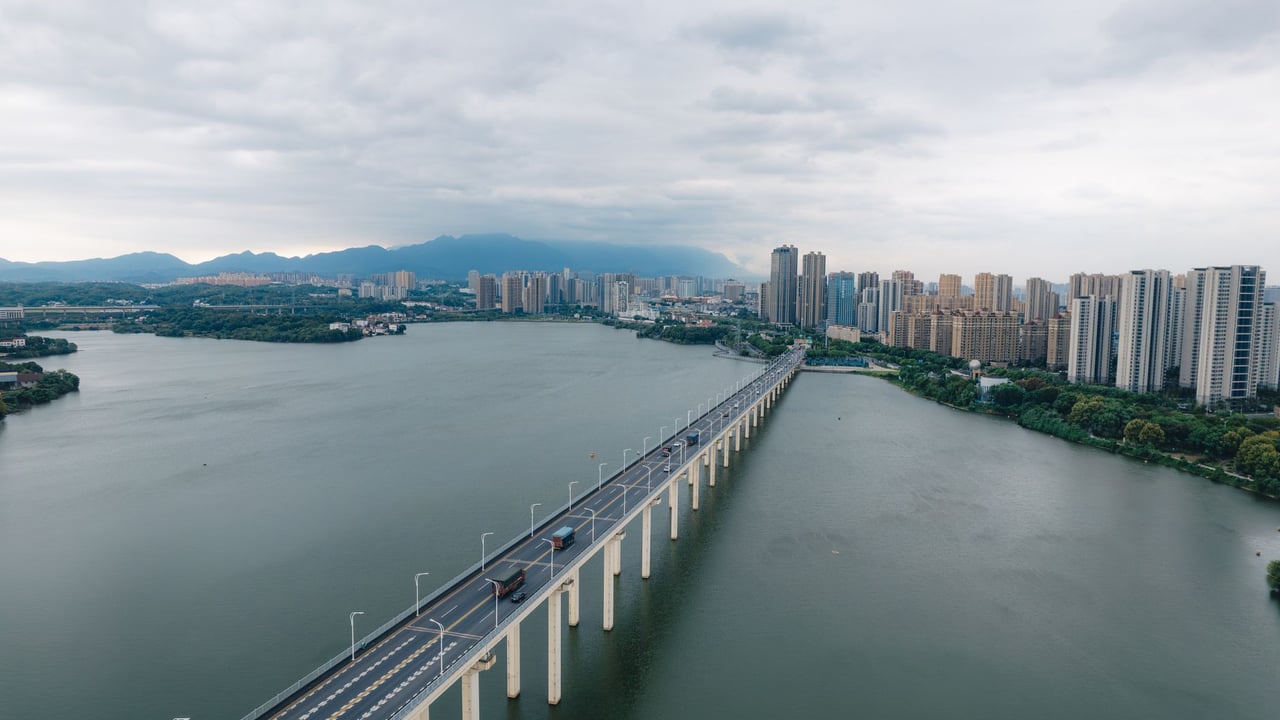
Photo by jason hu on Pexels
The Brief
China completed 515 billion yuan ($71.5 billion) in water conservancy investment across 33,000 projects in the first half of the year, according to Ministry of Water Resources figures reported by CCTV News. A total of 25 major water conservancy projects commenced construction during H1—11 more than in the same period last year—including the Three Gorges Waterway New Channel and the Liaodong Peninsula water allocation project. The push forms part of a broader national effort to secure water supplies, expand agricultural irrigation, and reinforce flood control infrastructure across key river basins.
Why it matters
High-level spending on water conservancy serves as a key fiscal lever to stimulate effective investment and support broader macroeconomic stability. At the same time, accelerating the national water network's core framework is essential for long-term water security, drought resilience, and food supply protection.
China context
Against the backdrop of Chinese modernization and a national policy targeting an additional 100 billion jin (50 million metric tons) in grain production capacity, China is managing water resources and flood defense at the river basin level. This integrated strategy aims to optimize resource allocation and enhance water efficiency across critical agricultural and industrial belts.
Editor's View
EDITOR'S VIEW — Analysis and inference, not factual reporting.
China's accelerated water network development illustrates a strategy of pairing short-term economic stabilization through large-scale civil engineering with long-term ecological and agricultural resilience. While central planning has achieved high completion rates for primary water channels, the extended timelines of complex engineering projects—such as deep-tunnel TBM excavation and new river lock infrastructure—mean capital deployment must remain robust through the remainder of the year to sustain momentum.
What to watch
- Whether water conservancy investment maintains its strong pace through the second half of the year.
- Progress on tunnel boring machine excavation for the Yinjiang Buhan diversion project and construction updates on the Three Gorges Waterway New Channel.
- Milestone acceptances and concrete completion targets for key basin storage projects, including the Menghe Shuanghou Reservoir in the Huaihe River Basin.
Key Takeaways
- 1China completed 515 billion yuan in water conservancy investment across 33,000 projects during the first half of the year.
- 2A total of 25 major water conservancy projects began construction in H1, an increase of 11 over the previous year.
- 3Thirty-five of the 40 planned national backbone water transport channels and 473 of 588 key storage nodes are now built or under construction.
- 4Irrigation modernization projects were launched in major agricultural zones, including Guangdong's Leizhou Peninsula and Anhui's Pishihang districts.
China significantly accelerated the construction of its national water network during the first half of the year, keeping infrastructure investment at elevated levels, according to data from the Ministry of Water Resources reported by CCTV News.
Between January and June, the country implemented 33,000 water conservancy projects, completing 515 billion yuan in overall construction investment. During this six-month window, 25 major water conservancy projects commenced construction—an increase of 11 compared to the same period last year. Notable new initiatives include the Three Gorges Waterway New Channel and the Liaodong Peninsula water resource allocation project in Liaoning Province.
Work on key national water network conduits and major storage hubs also advanced. On the Yinjiang Buhan project—a major extension of the South-to-North Water Diversion project—eight hard rock tunnel boring machines operated simultaneously, bringing cumulative excavation of the main water delivery tunnel past 31 kilometers. Progress also continued on strategic regional schemes, including the Beibu Gulf Rim water allocation project and the Yellow River Guxian water conservancy hub.
To support China's ongoing initiative to expand national grain production capacity by 100 billion jin, construction and modernization projects were launched across several large and medium-sized irrigation districts. Projects underway include updates to the Leizhou Peninsula irrigation district in Guangdong Province and the Pishihang irrigation district in Anhui Province.
At the same time, authorities are advancing river basin-level flood control and drainage systems by coordinating the layout of reservoirs, dikes, river channels, and flood detention zones. At the Menghe Shuanghou Reservoir, a major project under the Huaihe River Basin master plan, construction crews recently began multi-point concrete pouring for the main bridgehead and gate hoist room.
Overall, progress on long-term national water network targets remains steady. Of the 40 planned backbone water transport and drainage channels outlined in national planning, 35 are currently completed or under active construction, while 473 of the 588 planned key regulation and storage nodes have reached the construction or operational stage.
Sources
- 我国现代化水网建设提速 — State Council of China · 8/1/2026