
Technology & AIAnalysis
Chinese Scientists Report Resolving Asian-African Rice Breeding Barrier
State media reports a breakthrough in uncovering the genetic mechanisms behind reproductive isolation in cultivated rice species.
Share
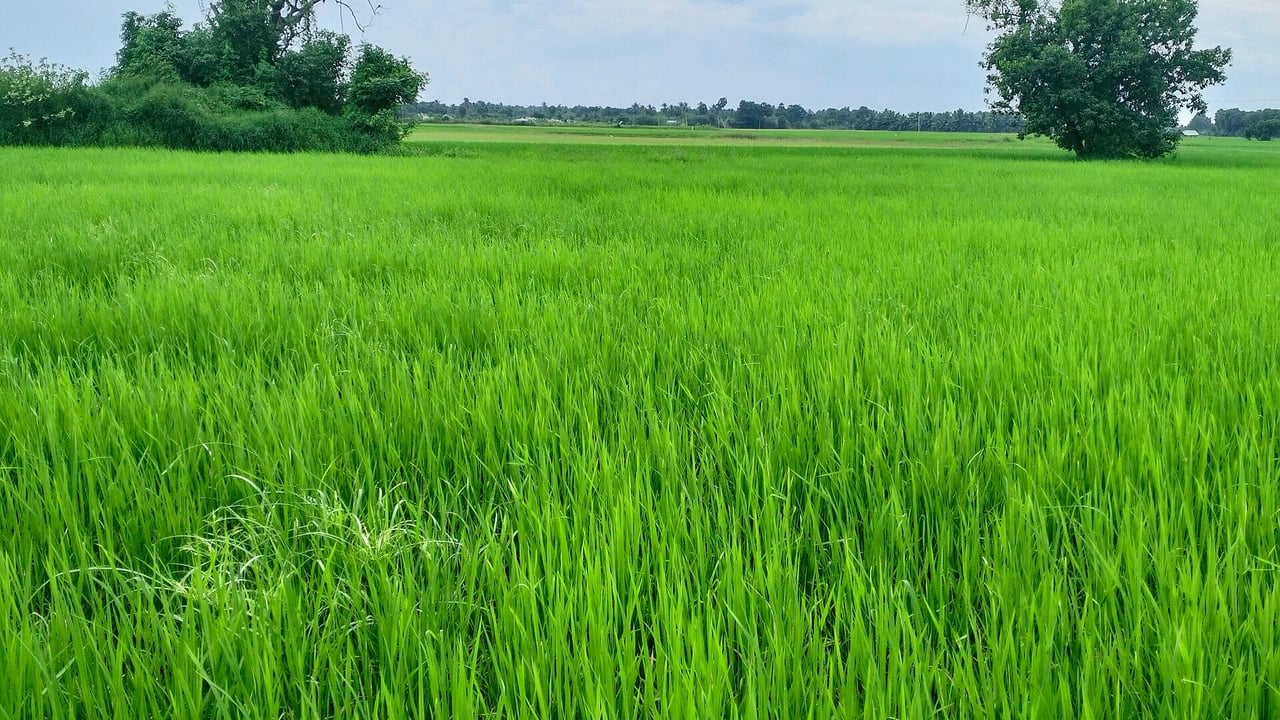
R.S Rakesh Thambikottai via Wikimedia Commons, CC BY 4.0
The Brief
Chinese researchers have reportedly uncovered the mechanisms behind interspecific reproductive isolation between Asian and African cultivated rice, according to state media outlet China News Service. The natural reproductive barrier between the two domesticated species has historically impeded cross-breeding efforts to combine the high yield potential of Asian rice with the stress resilience of African strains. While technical details remain limited in initial reports, solving this biological hurdle represents a long-sought milestone in staple crop genetics.
Why it matters
Breaching reproductive barriers between Asian and African rice species could broaden the available genetic pool for crop breeders. Successfully combining traits from both lineages could facilitate the development of next-generation hybrid rice varieties that offer both high yields and natural resistance to drought, extreme heat, and local pests.
China context
Agricultural biotechnology and staple crop security remain vital strategic priorities for Beijing. Chinese agronomic teams have long occupied a leading position in hybrid rice development, with state research institutions steadily directing resources toward fundamental molecular biology to bolster domestic food self-sufficiency amid climate challenges.
Editor's View
EDITOR'S VIEW — Analysis and inference, not factual reporting.
The initial domestic media coverage highlights a major theoretical advance, yet concrete scientific specifics—such as the responsible gene loci, molecular pathways, and peer-reviewed documentation—have not yet been detailed in public dispatches. Until full experimental data and peer-reviewed papers are made accessible, the agronomic community should view the announcement as an early indicator of research direction rather than an immediately deployable breeding breakthrough.
What to watch
- Publication of comprehensive scientific papers detailing the specific genes responsible for the reproductive isolation barrier
- Subsequent trial breeding programs attempting to create viable hybrid lines between Asian and African rice
- Field trial results assessing whether resulting hybrids retain the targeted stress-resistance and yield traits
Key Takeaways
- 1China News Service reported that Chinese scientists have resolved the mystery behind reproductive isolation between Asian and African cultivated rice.
- 2Reproductive barriers between the two species have historically produced hybrid sterility, preventing breeders from easily combining their genetic traits.
- 3African rice offers strong tolerance to abiotic stresses like drought and heat, while Asian rice provides high yield capacity.
- 4Detailed genetic data, institutional attributions, and peer-reviewed publications have yet to be disclosed in initial reports.
Chinese scientists have resolved the biological mechanisms governing interspecific reproductive isolation between Asian and African cultivated rice, according to a report published by state media outlet China News Service.
Modern cultivated rice across the world belongs primarily to two domesticated lineages: Asian cultivated rice (Oryza sativa) and African cultivated rice (Oryza glaberrima). Although both species share evolutionary roots, efforts to crossbreed them have long been stymied by pronounced reproductive isolation. In nature, hybridization attempts between the two species frequently result in hybrid sterility, unviable pollen, or embryo failure, severely limiting the exchange of desirable genetic material across species boundaries.
Asian rice varieties are celebrated for high grain yield and favorable culinary characteristics, whereas African rice varieties possess natural adaptations to severe ecological stress. African strains often show high resistance to drought, high temperatures, nutrient-poor soils, and regional agricultural pests. For decades, plant geneticists have sought to unlock African rice's environmental resilience to fortify high-yielding Asian varieties against climate-induced crop failures.
The initial media dispatch did not specify the exact research teams, corresponding genetic loci, or the underlying molecular mechanisms involved in the reported advance. In crop breeding research, overcoming interspecific isolation typically requires identifying the specific 'killer-protector' genetic systems or hybrid incompatibility loci responsible for reproductive failure, followed by using molecular breeding or gene-editing techniques to neutralize these incompatibilities.
Advancing fundamental rice genomics remains a national scientific priority in China, where ensuring grain security under tightening land and freshwater constraints is treated as an economic and strategic imperative. Overcoming interspecific genetic barriers has the potential to expand genetic diversity across breeding pipelines.
Whether this research immediately translates to commercial crop improvement will depend on forthcoming scientific literature. Agronomists and international crop researchers will watch for full peer-reviewed publications to verify the precise genetic architecture discovered and monitor subsequent field-level breeding initiatives.
Sources
- 中国科学家破解亚非水稻种间生殖隔离之谜 — China News Service · 8/28/2026