
Business & IndustrySignal
New Battery Routes Advance Across Diverse Applications
Global battery technologies are expanding into diverse pathways as researchers and industries develop solid-state, sodium-ion, and flow batteries for distinct application scenarios.
Share
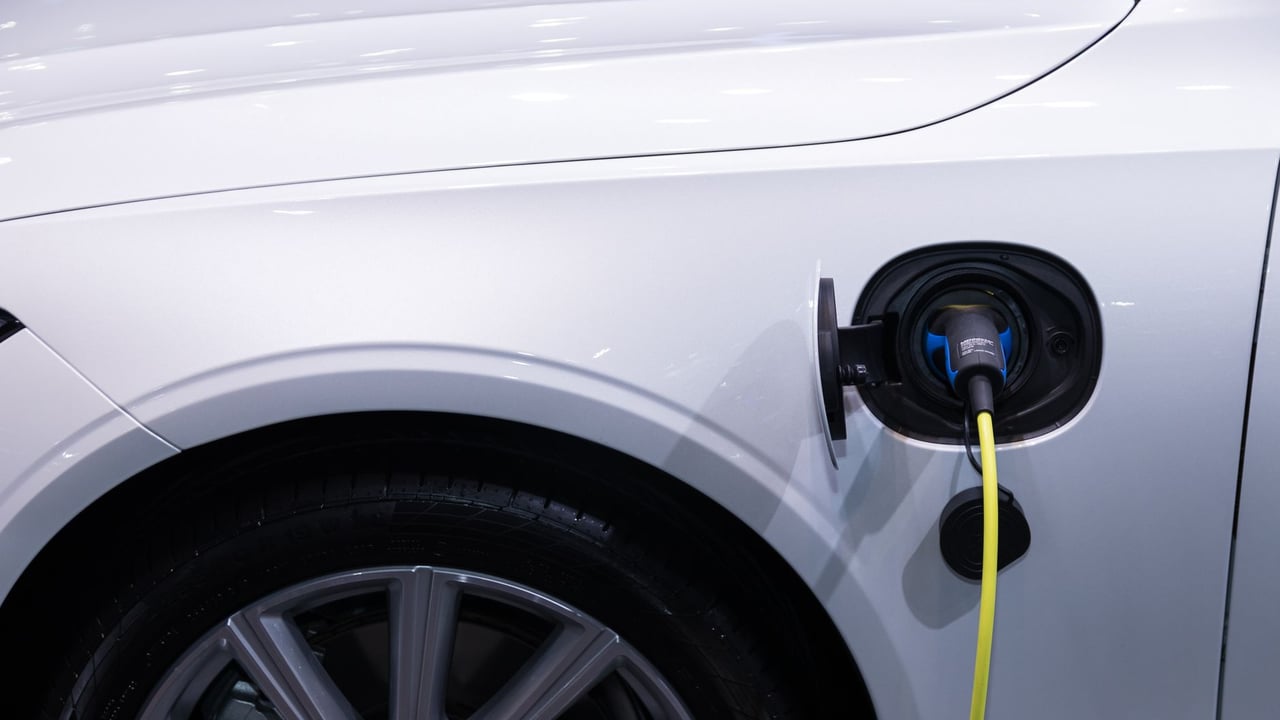
Illustrative image; not a photograph of this reported event. Photo by Rathaphon Nanthapreecha on Pexels
The Brief
People's Daily reported that global battery technologies are moving beyond a single lithium-ion route toward a diverse matrix of parallel technical pathways. Although conventional liquid lithium-ion batteries remain the mainstream choice due to high energy density, long cycle life, and mature industrialization, they continue to face drawbacks in cost, safety, and environmental adaptability. Multiple research and industrial avenues are now advancing together toward safer, longer-lasting, and more economical energy storage systems.
Solid-state and quasi-solid-state lithium batteries represent the primary path for next-generation premium power applications. This architecture replaces flammable organic liquid electrolytes with inherently nonflammable solid electrolytes to fundamentally improve safety, while accommodating high-capacity materials such as lithium metal anodes and lithium-rich manganese-based cathodes to break through current safety and energy density ceilings.
Sodium-ion batteries are expanding quickly, offering notable raw material cost advantages due to widespread sodium abundance and high manufacturing compatibility with existing lithium-ion production lines. Because their energy density remains relatively low, sodium-ion batteries primarily address cost-sensitive needs in energy storage power stations and low-speed electric vehicles.
For long-duration energy storage, flow batteries demonstrate notable advantages by decoupling energy storage capacity from power output through external electrolyte tanks. Vanadium flow batteries readily scale capacity for grid-level storage, whereas metal-air batteries offer extremely high theoretical energy density but remain technically immature, requiring further breakthroughs in cathode catalysts and energy efficiency.
Why it matters
Different battery systems will advance through coordinated evolution across specialized settings rather than one system replacing all others, because no single battery achieves optimal ratings across energy density, safety, cost, cycle life, rate capability, and operating temperature range.
Key Takeaways
- 1Solid-state lithium designs replace flammable organic electrolytes to enhance safety while integrating high-capacity materials.
- 2Sodium-ion batteries lower material costs and match existing equipment, targeting energy storage stations and low-speed electric vehicles.
- 3Flow batteries decouple energy capacity and power output through external tanks for large-scale, long-duration grid storage.
Sources
- 新型电池,不止一条赛道(延伸阅读) — People's Daily · 11/14/2026