
Defense & StrategyAnalysis
Chinese Paramilitary and Army Units Share Training Grounds in Guangdong
A People's Armed Police detachment in Qingyuan taps idle PLA Army facilities, expanding cross-service training amidst urban land pressures.
Share
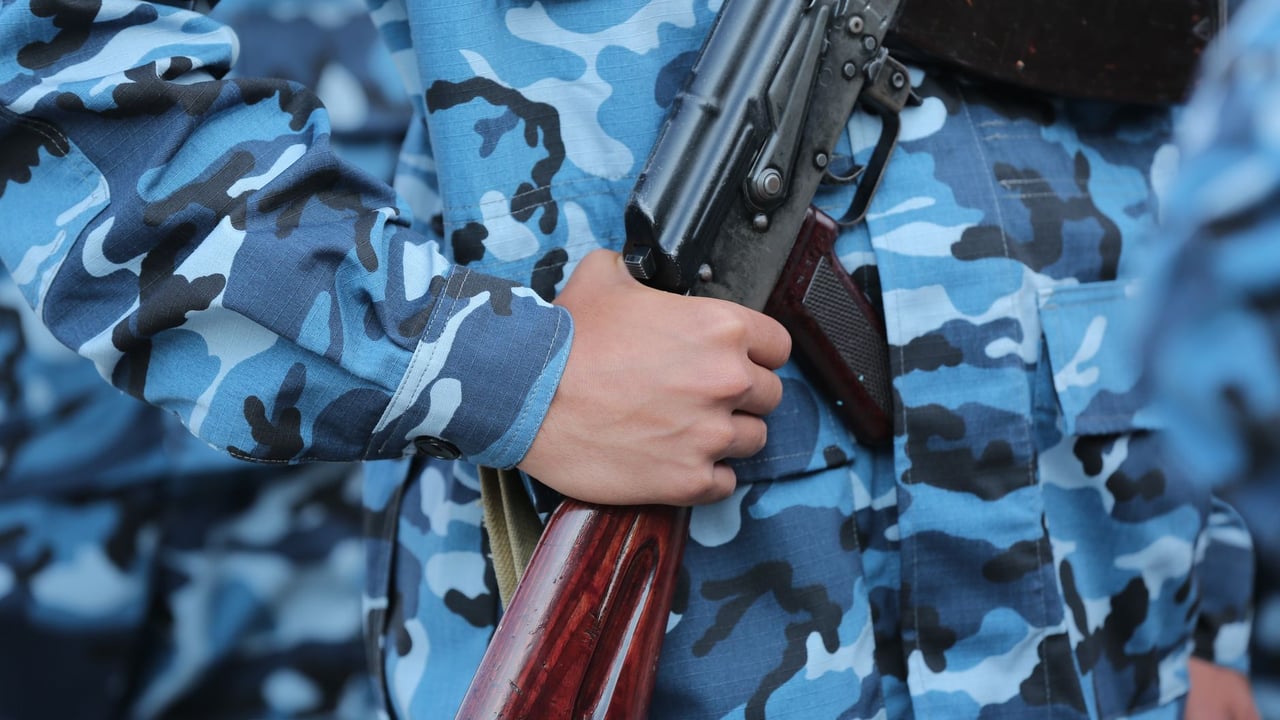
Photo by Андрей Туфанюк on Pexels
The Brief
A People's Armed Police detachment facing severe land shortages in Guangdong province has partnered with a nearby People's Liberation Army unit to share training facilities. According to state-run military media, the initiative began after municipal zoning reclaims eliminated the detachment's leased firing range. The two forces devised a collaborative management model categorized by dedicated, staggered, and idle time slots. This physical co-location has subsequently evolved from separate side-by-side routines into mutual skill exchanges and joint tactical exercises involving coordinated command networks and combined-arms units.
Why it matters
This case highlights how grassroots Chinese military and internal security elements resolve acute local land constraints through institutional sharing. By dismantling organizational silos between the People's Armed Police and the PLA Army, frontline commanders are optimizing redundant infrastructure while turning logistical compromises into integrated joint tactical training.
China context
Rapid urban expansion across China has increasingly constrained military training grounds, particularly for garrisons situated near expanding municipal centers. Because requisitioning fresh urban land imposes political and financial costs on municipal governments, Central Military Commission directives encourage internal optimization. The Qingyuan arrangement reflects an operational workaround to sustain combat readiness without exacerbating local land pressures.
Editor's View
EDITOR'S VIEW — Analysis and inference, not factual reporting.
The operational bridge between the People's Armed Police (PAP) and the PLA Army at the tactical level is a noteworthy consequence of resource scarcity. What began as an administrative solution to an expired land lease evolved organically into joint reconnaissance and small-system integrated training. However, observers should be careful not to mistake ad hoc local facility-sharing arrangements for an overarching, synchronized command integration across all Chinese armed forces, as institutional distinctions and separate mission mandates remain significant.
What to watch
- Whether the 'constructed by one, shared by many, maintained jointly' framework is codified and mandated across other land-constrained theater commands.
- The operational depth of integration between PLA combined-arms battalions and PAP mobile units during future counter-terrorism and reconnaissance drills.
Key Takeaways
- 1The PAP Qingyuan Detachment solved a critical training ground shortage by negotiating shared access to a nearby PLA Army base.
- 2Training areas were categorized into dedicated, staggered-share, and idle zones to avoid operational scheduling conflicts.
- 3Side-by-side facility usage evolved into mutual peer instruction and tactical exchanges between PAP instructors and PLA soldiers.
- 4The collaboration culminated in joint nighttime exercises integrating PAP mobile elements with PLA combined-arms battalions.
A People's Armed Police (PAP) unit stationed in southern China has instituted a cross-service resource-sharing mechanism with a local ground force detachment, overcoming local land restrictions to facilitate combined training exercises.
According to reports published by the PLA Daily and People's Daily, the Qingyuan Detachment of the PAP Guangdong Contingent faced prolonged training ground deficits due to tight municipal land allocations. Previously, the detachment leased unused government land for a firing range, but municipal development priorities and lease expiration forced the return of the plot, leaving the detachment without sufficient training grounds. To resolve the deficit, the detachment surveyed local defense infrastructure and discovered that a neighboring PLA Army unit maintained extensive training facilities that regularly sat idle during seasonal field deployments.
The two units subsequently brokered a joint mechanism described as 'built by one, used by many, and jointly maintained.' To manage schedules and prevent scheduling collisions, the army unit classified its grounds into three functional categories: dedicated army zones, staggered-use shared zones, and standby idle zones. The PAP detachment aligned its training schedule through joint coordination conferences, submitting targeted training plans around the army's operational calendar.
While initial activities were conducted independently in designated sections of the facility, practical interactions between personnel spurred closer collaboration. According to accounts detailed by detachment cadre, technical critiques regarding trench fortification and camouflage led to reciprocal instructional sessions. A PAP detachment bayonet combat instructor was invited to instruct army companies, while an army squad leader provided masterclasses on terrain concealment.
This basic peer instruction expanded into joint tactical maneuvers. The PAP mobile unit and a PLA combined-arms battalion recently held a joint, realistic training exercise that extended late into the night. Operating under unified command protocols, the units engaged in counter-terror operations, obstacle neutralization, and rear-area infiltration, testing tactical coordination, fire coordination, and mine placement under combined-arms conditions.
Sources
- “借船出海”盘活训练资源--军事--人民网 — People's Daily · 9/14/2026
- 武警广东总队清远支队与陆军某部携手构建联训共享机制 — China Military Online · 9/14/2026