
Defense & StrategyAnalysis
Chinese Armed Police Unit Tests Mobile Political Classes on Patrol
A detachment in Henan deploys micro-lectures inside patrol vehicles to maintain ideological training during dispersed urban security missions.
Share
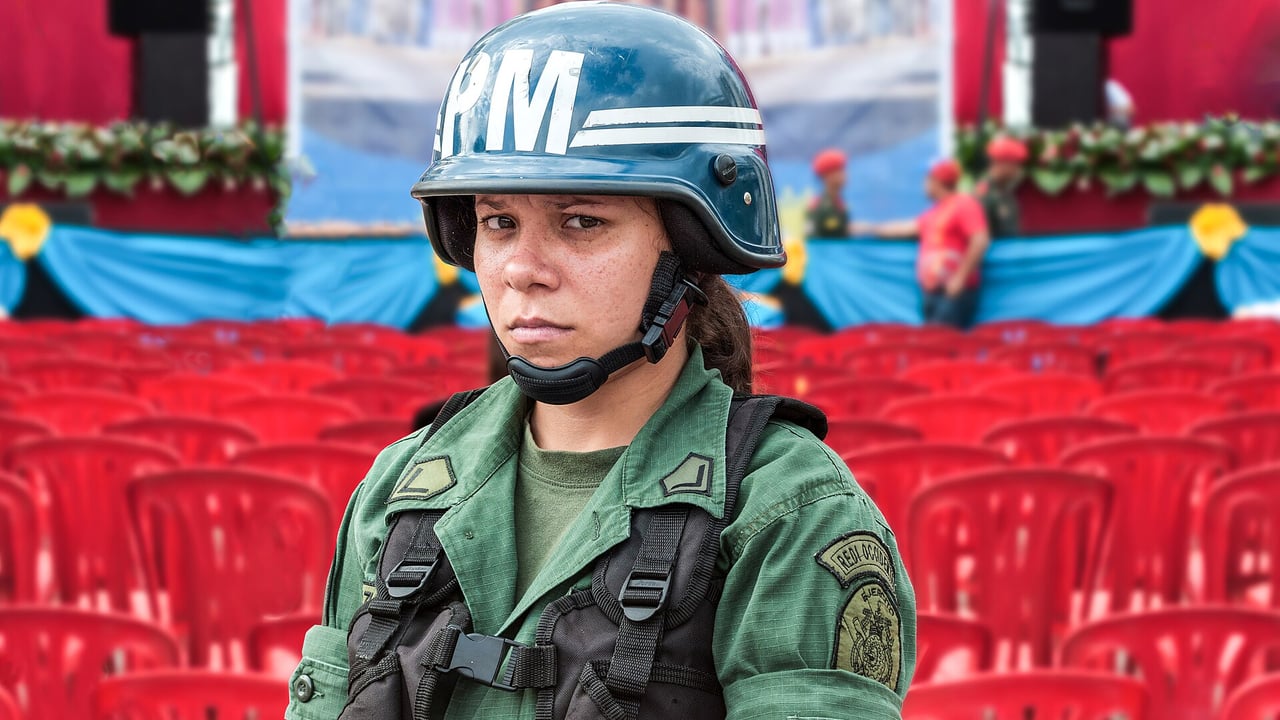
Wilfredor via Wikimedia Commons, CC BY-SA 4.0
The Brief
A detachment under the People's Armed Police Henan Corps has introduced a 'mobile classroom' framework to conduct political education during urban patrols, according to military state media reports. Designed to address the challenge of training dispersed and highly mobile personnel, the model uses short intervals between shifts to deliver micro Party lectures inside patrol vehicles and at frontline guard posts. The detachment has also established mutual-aid units among adjacent patrol teams to coordinate teaching resources, aiming to ensure ideological control and mission readiness remain intact during fragmented operational duties.
Why it matters
The initiative illustrates how Chinese internal security units are adapting traditional political-ideological work to fast-paced, dispersed urban security operations. By embedding targeted instruction directly into operational pauses, units seek to prevent the dilution of Communist Party oversight across fragmented patrol networks.
China context
Maintaining ideological education under 'dynamic and dispersed' conditions is a recurring institutional focus across the People's Liberation Army and People's Armed Police. As military authorities intensify political inspection and training discipline, field commanders are expected to integrate Party-building activities into routine readiness tasks rather than relying strictly on classroom lectures in central barracks.
Editor's View
EDITOR'S VIEW — Analysis and inference, not factual reporting.
The deployment of 'Five-Small' political classes inside patrol vehicles reflects a broader PLA and PAP push to make ideological indoctrination practically functional rather than purely ceremonial. By anchoring lectures directly to operational incidents—such as medical emergencies at railway hubs—commanders attempt to merge political fidelity with technical performance. However, condensing ideological sessions into fragmented minutes also highlights the administrative friction基层 units face in meeting stringent Party-work requirements while sustaining intensive frontline patrol schedules.
What to watch
- Whether the 'mobile classroom' and 'mutual-aid unit' models are codified into standard operational guidelines across broader People's Armed Police corps.
- Efforts to quantify how frontline political activities affect operational response times and patrol evaluation metrics.
- Further integration of mobile informational tools and equipment into tactical vehicle compartments for political work.
Key Takeaways
- 1A PAP detachment in Henan introduced mobile classrooms inside patrol vehicles to resolve political training gaps caused by fragmented deployments.
- 2The program relies on a 'Five-Small' instructional method leveraging brief breaks between shifts and guard duties.
- 3Instructors anchor political sessions to practical operational events, such as emergency medical responses at transit hubs.
- 4Neighboring patrol teams form mutual-aid pairings to co-develop lesson plans and share educational resources.
A detachment under the People's Armed Police Henan Corps has introduced a 'mobile classroom' system to deliver ideological and political training directly to frontline patrol personnel, according to reports in PLA Daily and People's Daily.
The framework addresses a persistent organizational dilemma known within Chinese military doctrine as education under 'dynamic and dispersed' conditions. In urban security and patrol missions, troops are routinely scattered across numerous discrete checkpoints and mobile vehicle patrols. Detachment leadership reported that frequent movement, fragmented schedules, and the absence of fixed conference facilities had previously complicated efforts to assemble personnel for routine theoretical study, Party branch meetings, and political lectures.
To bridge the gap, the detachment organized an exploratory study of its operational postings and onboard vehicle equipment. It developed an accompanying education model centered on what military media described as 'Five-Small' political classes: assigning junior instructors, organizing small-group discussions, utilizing small blocks of time, sharing brief written reflections, and conducting targeted conceptual exchanges. Political instructors, such as detachment educator Nie Di, now lead micro-discussions inside patrol vehicles during rest intervals, shift handovers, and stationary perimeter watches.
State media highlighted an operational example at a local high-speed railway station, where a passenger suddenly lost consciousness. The commander of a detachment patrol team, Yang Xing, initiated first aid, coordinated with station staff, and resolved the incident. Immediately following the response, Yang conducted an on-the-spot micro Party class reviewing emergency protocols, first-aid techniques, and mission duties, which junior soldiers cited as reinforcing their operational responsibilities.
The detachment has also linked adjacent patrol teams into 'mutual assistance units.' According to Political Instructor Han of an assigned duty company, these pairings allow small teams to share study materials and jointly prepare lesson outlines, compensating for limited instructional experience at isolated checkpoints. Detachment commanders claimed the integrated approach has tightened Party oversight while directly improving joint response performance during urban patrols.
Sources
- “移动课堂”设在任务一线--军事--人民网 — People's Daily · 9/18/2026
- 武警河南总队某支队破解动散条件下教育难题 — China Military Online · 9/18/2026