
Policy & RegulationAnalysis
PBOC to Inject Net Liquidity via 500 Billion Yuan Repo Operation
China's central bank expands three-month liquidity support with a net 200 billion yuan injection to maintain stable bank reserves.
Share
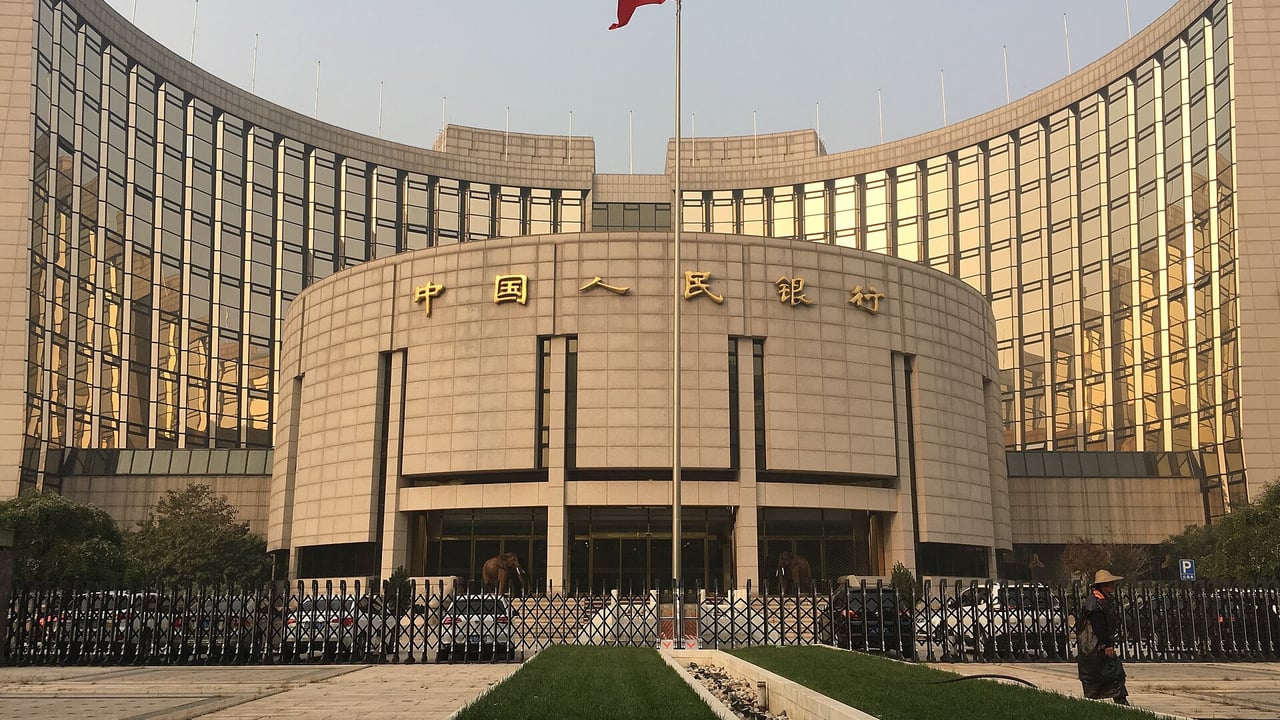
Max12Max via Wikimedia Commons, CC BY-SA 4.0
The Brief
On August 4, 2026, the People's Bank of China announced it will conduct a 500 billion yuan outright reverse repurchase operation on August 5 to ensure ample banking system liquidity. The three-month facility matures on November 5, 2026. Because 300 billion yuan of three-month outright reverse repos mature in August, this operation results in a net injection of 200 billion yuan. The operation will use fixed-quantity, rate-bidding, and multiple price auction methods.
Why it matters
The central bank's decision to roll over maturing repos with an increased volume signals an intention to maintain stable medium-term cash supplies across China's financial system. By adding a net 200 billion yuan, the central bank aims to smooth interbank money market fluctuations and ensure commercial banks hold adequate liquidity to support broader economic credit demand.
China context
Within China's macroeconomic toolkit, the outright reverse repurchase instrument offers the central bank a flexible mechanism for fine-tuning system-wide liquidity. By balancing short-term open market operations with longer-term structural tools, central bankers can maintain stable bank funding conditions while coordinating monetary support with government bond issuances.
Editor's View
EDITOR'S VIEW — Analysis and inference, not factual reporting.
The net liquidity expansion reflects a targeted approach to liquidity management, preferring calibrated open-market operations over broad tools like systemic reserve requirement ratio cuts. Conducting the operation through a multiple-price auction allows the central bank to discover market-clearing rates while supplying predictable quarterly funds, helping banks absorb seasonal tight spots and fiscal borrowing loads.
What to watch
- The bidding yield distribution and effective interest rates from the August 5 auction.
- The scale and timing of central bank open-market operations across the remainder of August.
- Interbank benchmark interest rate shifts following the liquidity injection.
Key Takeaways
- 1The PBOC scheduled a 500 billion yuan outright reverse repo operation for August 5, 2026.
- 2With 300 billion yuan maturing in August, the transaction delivers a net 200 billion yuan liquidity boost.
- 3The three-month facility matures on November 5, 2026, and uses fixed-quantity, multi-price rate bidding.
The People's Bank of China announced on August 4, 2026, that it will conduct a 500 billion yuan outright reverse repurchase operation on August 5 to maintain reasonable and ample liquidity across the banking system, according to reports by China News Service and People's Daily.
The operation carries a three-month (92-day) term and is scheduled to mature on November 5, 2026, with maturity subject to adjustment for public holidays. According to People's Daily, the central bank will execute the transaction through a fixed-quantity, interest-rate bidding format with multiple winning price allocations.
With 300 billion yuan in three-month outright reverse repos maturing during August, the upcoming 500 billion yuan operation represents a net liquidity injection of 200 billion yuan into commercial banks for the month. The move signals ongoing central bank support for medium-term funding stability without resorting to heavy structural easing.
Unlike traditional pledged repos, outright reverse repos involve the actual transfer of bond ownership during the agreement term. This gives primary dealers enhanced flexibility in managing pledged collateral while providing the central bank with a refined mechanism to manage monetary conditions.
The net expansion comes as policy makers seek to keep interbank money market rates stable against upcoming seasonal credit demands and ongoing government bond issuance routines. By utilizing three-month liquidity injections, monetary authorities are providing commercial lenders with reliable cash buffers through the early autumn quarter.
Sources
- 中国央行将开展5000亿元买断式逆回购操作 — China News Service · 8/4/2026
- 央行将开展5000亿元买断式逆回购操作--经济·科技--人民网 — People's Daily · 8/4/2026