
Defense & StrategyAnalysis
PLA Navy Flotilla Adopts Cross-Warship Intensive Training System
Shared assessment slots and specialized training runs address officer qualification backlogs caused by rapid vessel commissioning.
Share
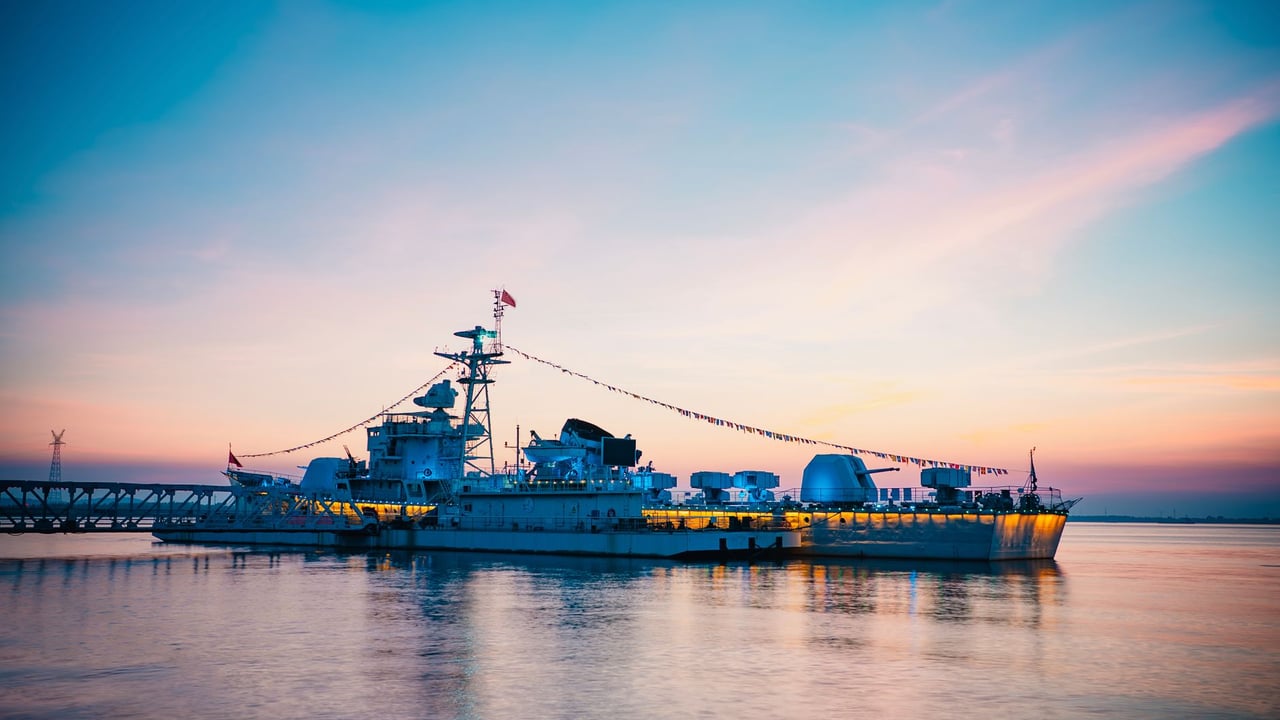
Photo by jason hu on Pexels
The Brief
A People's Liberation Army Navy flotilla has introduced an intensive, cross-warship training management model to resolve bottlenecks in officer certification, according to official military media. Under the system, officers from ships facing heavy operational tasks board other active vessels to complete mandatory command and live-fire qualifications. The reform decouples personnel assessments from individual ship deployment schedules, using structured training tiers to maximize efficiency across the flotilla.
Why it matters
The rapid expansion of the PLA Navy's surface fleet has created acute demand for qualified ship captains and department heads. By transforming qualification assessments into a flotilla-wide shared resource, the naval force seeks to prevent newly commissioned warships from outpacing the supply of certified command personnel while maintaining high-tempo operational readiness.
China context
The initiative reflects broader PLA efforts to optimize combat-readiness training amidst surging naval deployments and equipment turnover. In recent years, Chinese military planners have sought institutional mechanisms to bridge the gap between rapid hardware commissioning and human capital development, ensuring operational tempo does not delay essential personnel certifications.
Editor's View
EDITOR'S VIEW — Analysis and inference, not factual reporting.
This training reform underscores a fundamental friction point in China's naval modernization: human capital development lagging behind shipbuilding velocity. By converting individual ship training slots into flotilla-wide shared training pipelines, the PLA Navy is testing procedural solutions to accelerate officer qualification, though executing standardized evaluations across differing vessel hulls requires rigorous coordination.
What to watch
- Whether the cross-ship training and evaluation model is formally institutionalized across other PLA Navy flotillas and theater commands
- How the flotilla links this maritime shared-assessment mechanism with shore-based simulation and joint-domain exercises
Key Takeaways
- 1A PLA Navy flotilla introduced a cross-warship training model where officers complete qualifications on vessels other than their own.
- 2Up to ten executive officers have gathered on a single warship to conduct live-fire and navigation evaluations.
- 3The model addresses a bottleneck where rapid vessel commissioning outpaced the pipeline of certified commanding officers.
- 4The flotilla established dual training tracks for common foundational subjects and specialized skill-gap remediation.
A People's Liberation Army (PLA) Navy flotilla has implemented an intensive training management model that allows naval officers to complete qualification assessments aboard other vessels, according to a report by China Military Online. The mechanism is designed to resolve scheduling conflicts between high-frequency operational tasks and mandatory personnel certifications.
Under the new system, flotilla headquarters consolidates operational timelines and training requirements across all assigned warships, breaking down dozens of evaluation subjects into structured, coordinated training packages. Officers requiring specific qualification milestones can apply to board designated vessels already scheduled to carry out those exact mission profiles.
In one recent exercise highlighted by state military media, the executive officer of the destroyer Harbin conducted a live-fire anti-air defense assessment from the command cabin of the destroyer Qingdao, successfully engaging an aerial target drone. At peak utilization, up to ten executive officers have boarded a single warship simultaneously to complete various qualification exams.
Flotilla leadership stated that the initiative was driven by practical bottlenecks caused by rapid fleet modernization. In recent years, the flotilla has commissioned multiple new warships, creating a deficit of fully certified commanders. Because operational deployments frequently conflicted with required training cycles, officers struggled to accumulate necessary operating hours and independent command credentials.
To standardize the process, the flotilla established two complementary tracks: a regular "training shuttle" for common subjects where personnel from different ships train together, and a "training special" track focused on intensive, targeted instruction to address individual skill deficiencies.
Recent implementations have included executive officers from the Zhumadian and Ganzi completing navigation and mooring evaluations aboard the Urumqi, while officers from the Yantai completed surface-attack, air-defense, and damage-control assessments aboard the Weifang. Additionally, during far-seas live-fire missile drills, the commanding officer of the Ganzi and two other officers boarded the destroyer Anshan to participate in scenario planning and tactical wargaming.
Sources
- 海军某支队探索集约化组训新模式,让有限资源释放更大效能 - 中国军网 — China Military Online · 8/11/2026