
Defense & StrategyAnalysis
PLA Rocket Force Brigade Refines Underground Rapid Launch and Crew Cross-Training Drills
Official reports highlight standardized maintenance, procedural innovations, and simulated casualty response in deep-mountain missile facilities.
Share
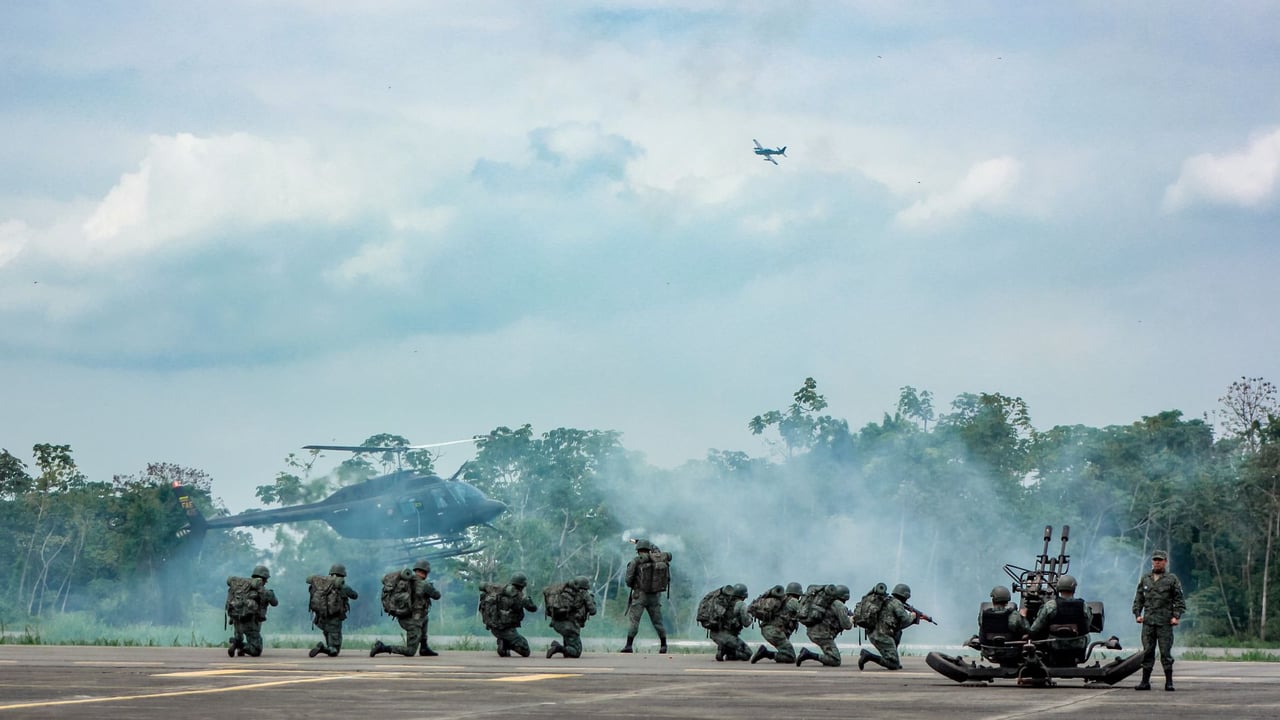
Photo by Antonio Prado on Pexels
The Brief
A PLA Rocket Force brigade operating out of deep-mountain underground facilities has conducted midnight rapid-launch and withdrawal exercises to test combat readiness, according to reports published by PLA Daily and People's Daily. The brigade emphasized standardized maintenance routines, including daily checks that recently flagged a sub-threshold voltage anomaly in a power supply module before launch precision could be compromised. Additionally, the unit introduced technical modifications and cross-functional crew reassignments to sustain multi-wave counter-strikes following simulated chemical casualties.
Why it matters
The coverage illustrates how China's strategic missile forces are pursuing incremental operational gains through standardized maintenance, specialized equipment fixes, and modular crew flexibility. By prioritizing rapid deployment, fault prevention, and attrition survivability in fortified underground bunkers, the Rocket Force aims to secure operational continuity and immediate counter-strike readiness under high-intensity combat conditions.
China context
Under Xi Jinping's military doctrine, PLA strategic units are tasked with closing gaps between routine training and actual combat environments. The emphasis on deep-mountain underground facilities—often termed 'underground dragon palaces'—reflects Beijing's focus on nuclear and conventional deterrence survivability. Ensuring missile units can maintain zero-error precision and quickly reconfigure damaged launch teams is central to preserving second-strike capabilities during potential high-intensity conflicts.
Editor's View
EDITOR'S VIEW — Analysis and inference, not factual reporting.
While official media coverage of the PLA Rocket Force frequently centers on strategic deterrence, this reporting emphasizes ground-level operational logistics and procedural optimization. The detail regarding sub-threshold power module diagnostics points to an institutional emphasis on predictive maintenance over reactive repairs. Furthermore, exercises involving the dynamic re-pooling of launch crews following simulated chemical attacks indicate a focus on tactical redundancy, ensuring launch capabilities remain intact even when units suffer severe casualties.
What to watch
- Potential broader rollout of standardized maintenance protocols and cross-functional crew training across other PLA Rocket Force units.
- Future disclosures regarding automated diagnostic tools and digital supply tracking within underground missile installations.
- The frequency of night-time rapid-deployment exercises under complex meteorological and simulated combat conditions.
Key Takeaways
- 1A PLA Rocket Force brigade conducted midnight rapid-launch, retreat, and quick replenishment drills inside an underground base.
- 2Standardized daily diagnostic checks detected a subtle power supply voltage anomaly, preventing potential launch accuracy degradation.
- 3Operational modifications, including custom hardware jigs and dual-person disassembly methods, were validated and rolled out brigade-wide.
- 4Under a simulated chemical attack scenario, surviving crew members successfully reconfigured into new launch teams to execute multi-wave counter-strikes.
A People's Liberation Army (PLA) Rocket Force brigade recently conducted midnight simulated rapid-launch and retreat training inside a deep-mountain underground facility, according to reports by PLA Daily and People's Daily. Following the simulated strikes, participating combat units returned to base to execute immediate status-restoration operations, including system parameter recalibration, signal link testing, and fuel replenishment.
To maintain peak combat readiness, the brigade has instituted a standardized maintenance framework governed by daily inspections, weekly maintenance, and monthly overhauls. During a recent routine inspection, operators detected an abnormal output voltage in a power supply module. Although the fluctuation remained well below standard fault thresholds, technical experts determined it could induce targeting inaccuracies. The brigade conducted technical consultations and launched a unit-wide inspection to eliminate potential operational risks.
To compress deployment preparation times without sacrificing safety standards, personnel within the brigade have introduced several operational innovations. A squad leader in a testing group designed dozens of specialized custom jigs and optimized ground-wire setup procedures. Combined with command-level procedural adjustments—such as dual-person synchronized disassembly methods and pre-positioned preparation steps—the unit succeeded in streamlining launch prep times. These procedures were subsequently validated by technical experts and adopted across the brigade.
Training exercises also focused on crew survivability and operational continuity under severe combat disruption. During a simulated night-time chemical attack that caused mock casualties on the launch pad, unit commanders ordered immediate protective measures and evacuated vehicles from the contaminated area. Surviving personnel were subsequently regrouped and merged with other launch crews to form two reconstituted launch teams. These restructured teams seamlessly executed two successive waves of simulated counter-launch strikes, demonstrating cross-functional adaptability designed to maintain firing capacity during sustained combat operations.
Sources
- “地下龙宫”的胜战答卷——来自火箭军某旅的观察报告 - 中国军网 — China Military Online · 8/6/2026
- “地下龙宫”的胜战答卷--军事--人民网 — People's Daily · 8/7/2026