
Business & IndustryAnalysis
Poly Developments Posts 135.1 Billion Yuan in Sales for First Half of 2026
State-backed developer concentrates investment in top-tier cities while pushing debt costs down to 2.61 percent.
Share
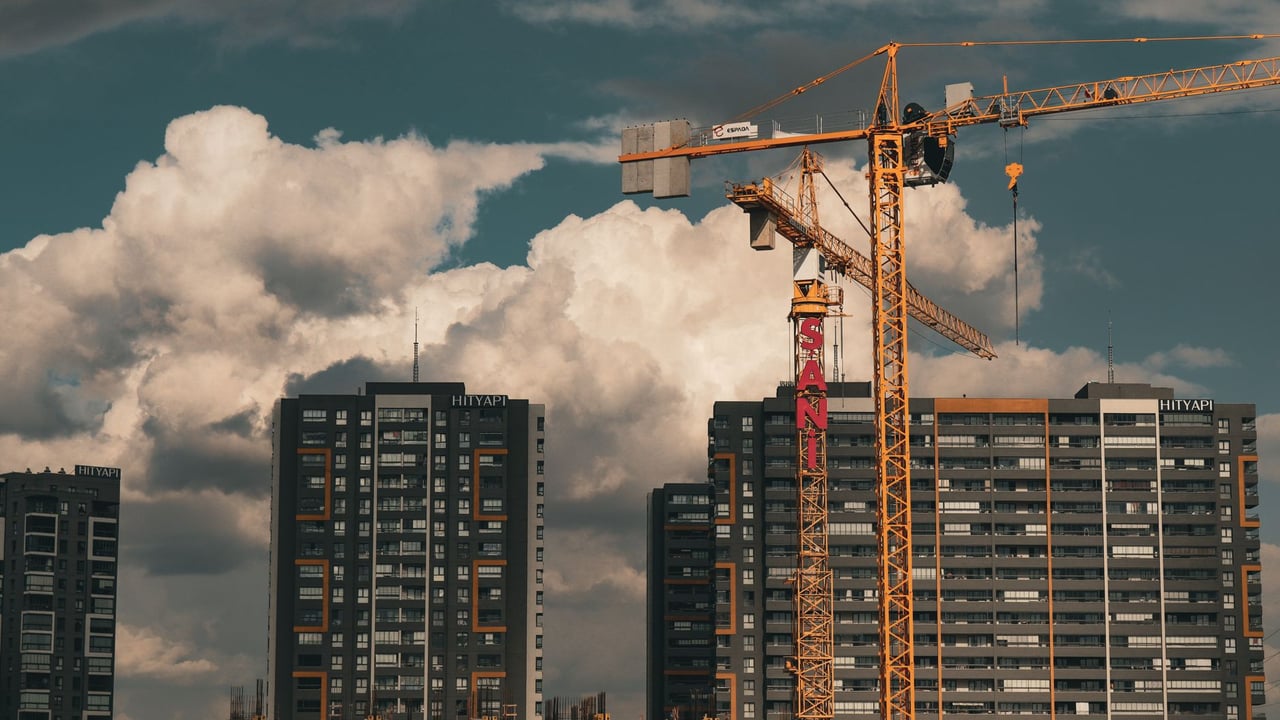
Photo by Mehmet Aksoy on Pexels
The Brief
Chinese state-backed property giant Poly Developments reported contracted sales of 135.11 billion yuan for the first half of 2026, according to its interim financial disclosure reported by People's Daily Online. The company's sales and land acquisitions leaned overwhelmingly toward top-tier markets, with core cities contributing 95 percent of sales. Backed by ultra-low funding rates, Poly reduced its interest-bearing debt and logged positive operating cash flow for the ninth straight year, demonstrating the comparative resilience of central state-owned enterprises amid the prolonged property sector adjustment.
Why it matters
In a prolonged downturn that has distressed dozens of private developers, Poly Developments' interim performance illustrates how liquidity and market demand are consolidating around central state-owned enterprises. With its average financing costs falling to 2.61 percent, Poly can still borrow at record-low rates and redeploy capital into prime metropolitan plots that smaller or private rivals can no longer afford.
China context
China's property sector continues to undergo a structural model shift following sweeping policy changes aimed at clearing surplus housing stock, curbing systemic financial risk, and encouraging the monetization of operational assets. Central authorities have supported state-linked developers to stabilize land auctions and trial infrastructure and commercial property real estate investment trusts (REITs) to recycle tied-up capital.
Editor's View
EDITOR'S VIEW — Analysis and inference, not factual reporting.
Poly's interim report reads less like a story of sector-wide revival and more like a textbook case of flight to safety. By allocating 82 percent of its first-half land spend exclusively to five mega-cities—Beijing, Shanghai, Guangzhou, Shenzhen, and Hangzhou—the developer is actively insulating itself from severe deflationary headwinds in lower-tier regions. However, this strategy also narrows Poly's margin for error: intense competition among state-owned peers for prime parcels could compress development margins even if financing remains exceptionally cheap.
What to watch
- Regulatory approval and pricing for Poly's maiden commercial real estate REIT backed by Guangzhou and Foshan properties.
- Land auction bidding dynamics in Beijing, Shanghai, and Shenzhen during the second half of 2026 to see if state-owned developers maintain their heavy capital concentration.
- Whether national commercial housing sales show signs of broader bottoming out beyond tier-one and tier-two cities.
Key Takeaways
- 1Poly Developments posted contracted sales of 135.11 billion yuan for H1 2026, with 95 percent generated in core cities.
- 2The developer's comprehensive financing cost dropped 28 basis points to 2.61 percent, and asset-liability ratio decreased to 71.79 percent.
- 3Operating cash flow was positive for the ninth straight year at 24.55 billion yuan, with cash holdings of 133.8 billion yuan.
- 4New land investment totaled 38.4 billion yuan, with 82 percent focused on Beijing, Shanghai, Guangzhou, Shenzhen, and Hangzhou.
- 5The company advanced filings for its first commercial property REIT using prime office and retail assets in Guangzhou and Foshan.
State-owned Poly Developments reported contracted sales of 135.11 billion yuan ($18.9 billion) for the first half of 2026, representing 6.32 million square meters in contracted floor space, according to interim figures released by the developer and reported by People's Daily Online. Cash collection reached 111 billion yuan, with an attributable equity sales ratio of 84 percent.
The developer's sales footprint showed an intense concentration in top-tier metropolitan centers. Core cities generated 95 percent of Poly's sales revenue in the first six months of the year, with tier-one and tier-two cities together accounting for 86 percent. Five single projects alone generated more than 3 billion yuan each, delivering a combined 21 billion yuan in contracted value.
Poly continued to reinforce its balance sheet amid broader credit constraints across the industry. The company's asset-liability ratio dropped 0.45 percentage points from the beginning of the year to 71.79 percent, marking its sixth consecutive annual decline. Total interest-bearing debt shrank by 8.6 billion yuan to 332.5 billion yuan. Concurrently, Poly's comprehensive financing cost decreased by 28 basis points year-on-year to 2.61 percent. During the half-year period, the firm issued 8.1 billion yuan in corporate bonds, achieving record-low coupons of 1.85 percent on a three-year tranche and 2.20 percent on a five-year tranche.
Net cash flow from operating activities stood at 24.55 billion yuan, keeping the metric in positive territory for a ninth consecutive year. At the end of June, cash reserves stood at 133.8 billion yuan, representing 11.48 percent of total assets. Debt maturities were also extended, with newly issued debt carrying tenors of over three years comprising 67 percent of additions.
On the investment front, Poly acquired 21 plots with a planned gross floor area of 1.66 million square meters for 38.4 billion yuan. All land investments were located in core markets, with tier-one and tier-two cities absorbing over 94 percent of total land spending. Five major hubs—Beijing, Shanghai, Guangzhou, Shenzhen, and Hangzhou—accounted for 82 percent of total investment volume.
Beyond development, Poly initiated preparations for its first commercial real estate REIT, using Guangzhou Poly Centre and Foshan Poly Water City Time Square as underlying assets. The company also generated 45.5 billion yuan by selling completed inventory and revitalized roughly 7.6 billion yuan of land assets through returns and transfers.
Sources
- 保利发展:2026年上半年实现销售签约金额1351亿元--经济·科技--人民网 — People's Daily · 8/28/2026