
Business & IndustryAnalysis
Southern Agronomists Bring New Crop and Soil Models to Northeast Saline Land
Researchers and farmers from southern China are testing specialized crops and soil conditioning techniques in Jilin.
Share
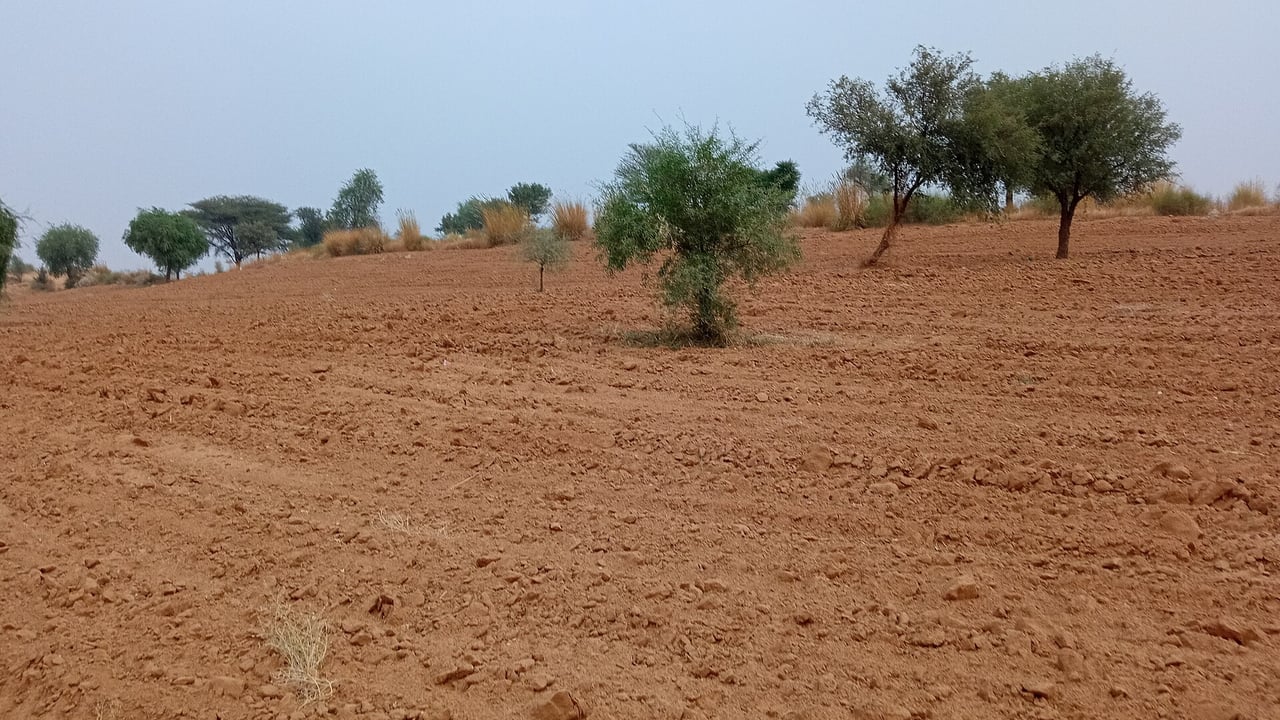
Py System via Wikimedia Commons, CC BY-SA 4.0
The Brief
Agricultural specialists, university researchers, and corporate practitioners from southern China are collaborating in Zhenlai County, Jilin Province, to rehabilitate soda saline-alkali soil. The cross-regional efforts combine soil conditioning techniques, such as straw incorporation to facilitate salt leaching, with commercial crop introduction like water bamboo (jiaobai) and improved dryland corn farming. State media reports indicate that remediated plots in the county are now achieving corn yields comparable to local farmland averages, highlighting broader national efforts to expand arable land reserves.
Why it matters
Comprehensive remediation of saline-alkali land in Northeast China is central to China's grain security and strategic land reserve expansion. Zhenlai County's model illustrates how local governments and enterprises are pairing ecological rehabilitation with economic crop introduction and inter-provincial technical expertise.
China context
As China prioritizes farmland conservation and the reclamation of marginal soil reserves, academic institutions and agribusinesses are increasingly deployed to transform low-yielding soda saline-alkali fields into productive farmland through collaborative research and industrial farming methods.
Editor's View
EDITOR'S VIEW — Analysis and inference, not factual reporting.
The migration of southern farming techniques and academic talent to Northeast China highlights a pragmatic shift in land remediation strategy: moving beyond pure environmental management toward commercially viable, multi-tier agricultural systems. By pairing cash crops like water bamboo with targeted soil physics interventions, these initiatives test whether high-input remediation can become self-sustaining at scale.
What to watch
- Replication of the water bamboo and corn remediation models across other saline-alkali regions in Jilin and Northeast China.
- Field trial results and commercial deployment of soil physics improvement techniques developed by Nanjing Agricultural University researchers.
Key Takeaways
- 1Agricultural workers and researchers from southern provinces are actively managing crop and soil remediation projects in Zhenlai County, Jilin.
- 2Water bamboo (jiaobai) is being cultivated to generate economic returns while assisting in saline-alkali soil management.
- 3Nanjing Agricultural University researchers are testing straw incorporation to enhance soil structure and accelerate salt leaching.
- 4Corporate trials led by Jilin Xielian Agricultural Science and Technology project corn yields on remediated land to exceed 1,000 jin per mu this season.
In Zhenlai County, located in Jilin Province's Baicheng region, a growing contingent of agricultural specialists and researchers from southern China is testing new methods to transform challenging soda saline-alkali soils into productive farmland, according to state news agency Xinhua.
Zhenlai has integrated southern crop cultivation with soil remediation practices, most notably introducing water bamboo (jiaobai) under an initiative aimed at combining economic yields with soil conditioning. Because local farmers initially lacked experience with the wetland crop, experienced growers from southern provinces were recruited to manage cultivation. Lü Xiaoyun, an agricultural worker from Shangrao, Jiangxi Province, has led teams of up to 20 farmers from provinces including Jiangxi, Anhui, Hunan, and Yunnan to manage planting, field maintenance, and harvesting tailored to the northeastern climate and shorter growing season.
Alongside crop diversification, academic institutions are conducting field trials on soil mechanics. Tong Yihang, a researcher from Nanjing Agricultural University, has focused on improving the physical structure of Zhenlai's dense soda saline soil. The soil's low permeability often impedes water infiltration and causes severe surface waterlogging after rain. Tong's research investigates soil aeration and compaction reduction, primarily through methods such as returning crop straw to fields to improve permeability and accelerate salt leaching. Tong is set to continue her doctoral research on the site.
Corporate farming operations are also scaling dryland grain cultivation on conditioned plots. Zhao Guowen, general manager of a branch at Jilin Xielian Agricultural Science and Technology Co., Ltd., has managed saline land improvement and dryland cropping in Zhenlai since 2020. According to Zhao, multi-year corn planting trials on remediated saline land are projected to yield more than 1,000 jin (approximately 500 kilograms) per mu this season, matching the average output of standard local farmland.
The combined initiatives reflect wider state-backed efforts to mobilize inter-provincial expertise, research universities, and enterprise capital to reclaim marginal land across Northeast China.
Sources
- 南农北移:一群新农人的盐碱地探索 — Xinhua News Agency · 8/13/2026