
Business & IndustryAnalysis
Tianwan Nuclear Power Plant Unit 7 Begins Initial Fuel Loading in East China
The Russian-designed VVER-1200 reactor enters nuclear commissioning ahead of its planned 2026 commercial startup.
Share
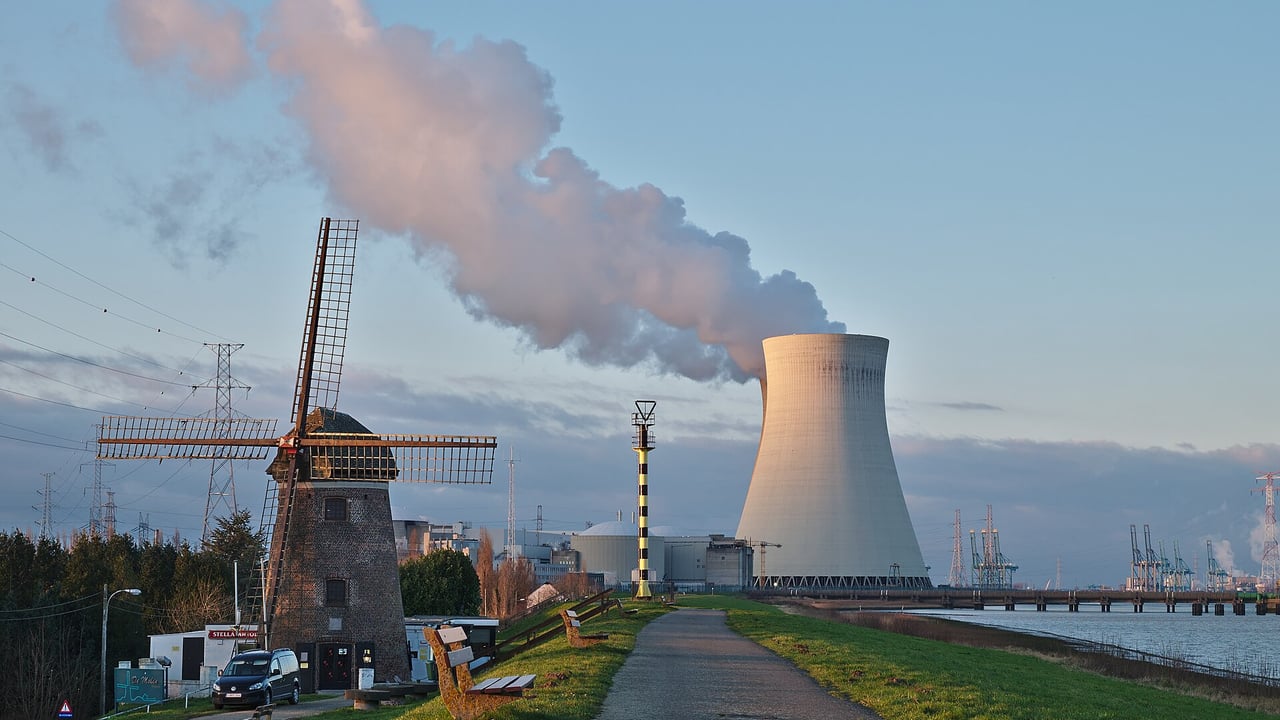
Trougnouf via Wikimedia Commons, CC BY 4.0
The Brief
Unit 7 of the Tianwan Nuclear Power Plant in Jiangsu province began its initial fuel loading on August 12, according to state-owned China National Nuclear Corporation (CNNC). The unit, a VVER-1200 pressurized water reactor constructed under a major Sino-Russian energy cooperation framework, is the first of its design type to reach fuel loading in China. The process involves inserting 163 fuel assemblies into the core, marking the formal transition from physical construction to nuclear commissioning ahead of scheduled commercial operation in 2026.
Why it matters
Initial fuel loading marks the decisive transition of a nuclear reactor from physical construction into live, nuclear commissioning. For the broader Sino-Russian strategic energy partnership, bringing the first VVER-1200 unit in China to the commissioning phase demonstrates continued bilateral industrial execution despite wider geopolitical shifts.
China context
The Tianwan site, operated by subsidiaries of CNNC, is planned as the world's largest nuclear power base by total capacity across operating and under-construction units. China has relied heavily on Tianwan's multi-technology fleet to supply clean baseload power to the industrial centers of East China while balancing domestic Gen-III reactor deployments like Hualong One with Russian VVER designs.
Editor's View
EDITOR'S VIEW — Analysis and inference, not factual reporting.
The progress at Tianwan Unit 7 illustrates China's pragmatic approach to nuclear energy diplomacy and technology diversification. While Beijing aggressively exports and builds its domestic Hualong One design across the country, it continues to honor and execute high-profile agreements with Russia's Rosatom for select coastal sites. Reaching the fuel loading stage on schedule for a 2026 commercial startup highlights operational resilience in managing foreign-designed nuclear projects within China's stringent domestic regulatory and construction ecosystem.
What to watch
- Completion of the 163-assembly fuel loading process and subsequent criticality testing at Unit 7
- Grid connection and commercial operation milestones for Unit 7 scheduled for 2026
- Construction and commissioning progress on Tianwan Unit 8, targeted for commercial operation in 2027
Key Takeaways
- 1Tianwan Unit 7 began initial fuel loading on August 12, moving the reactor into the nuclear commissioning phase.
- 2The project is the first VVER-1200 design to undergo fuel loading in China, requiring 163 fuel assemblies placed with millimeter precision.
- 3Tianwan Units 7 and 8 are scheduled for commercial operation in 2026 and 2027, respectively.
- 4Upon full eight-unit completion, the Tianwan base will exceed 9 GW in total capacity and provide over 70 billion kWh of clean power annually.
Unit 7 of the Tianwan Nuclear Power Plant officially commenced initial fuel loading on August 12, according to an announcement by China National Nuclear Corporation (CNNC) reported by People's Daily. The milestone marks the formal entry of the reactor into its nuclear commissioning phase, laying the foundation for reactor criticality and eventual commercial power generation.
The operation is the first initial fuel loading for a VVER-1200 reactor in China. The unit requires loading a total of 163 nuclear fuel assemblies into the reactor core. According to project operators, the workflow comprises three primary phases: fuel assembly transport, core loading, and comprehensive verification of loading accuracy. The process employs an automated remote-control refueling system, allowing operators inside a control room located 30 meters from the reactor hall to monitor operations with millimeter-level placement precision.
Tianwan Nuclear Power Plant, located in Lianyungang, Jiangsu province, is an eight-unit facility and represents the largest nuclear power base globally in terms of combined operational and under-construction capacity. Units 1 through 6 have already generated more than 500 billion kilowatt-hours of cumulative electricity for the regional power grid. Units 7 and 8, both based on Russian VVER-1200 technology developed under bilateral government agreements, are scheduled to enter commercial service in 2026 and 2027, respectively.
Once all eight units at the Tianwan base are fully operational, total installed capacity will exceed 9 million kilowatts (9 gigawatts), delivering over 70 billion kilowatt-hours of clean electricity annually. A representative for the Tianwan project noted that the completed facility is projected to offset 57.4 million tons of carbon dioxide emissions each year, playing a substantial role in optimizing the energy mix across East China.
Sources
- 中俄核能合作项目田湾核电7号机组首次装料--经济·科技--人民网 — People's Daily · 8/13/2026