
Policy & RegulationAnalysis
Yunnan Issues 15th Five-Year Urban Renewal Plan Targeting 2030 Goals
The provincial policy outlines a shift toward micro-renovations, complete communities, and diversified financing instruments such as REITs.
Share
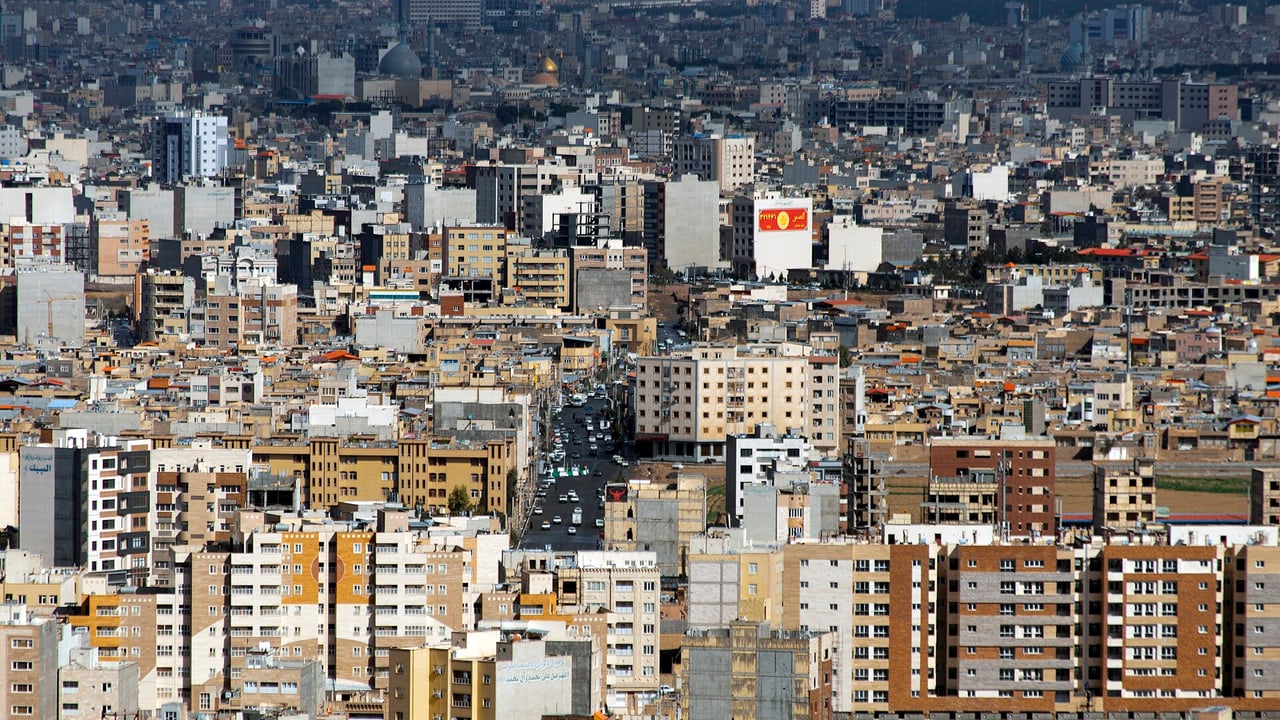
Mostafameraji via Wikimedia Commons, CC BY 3.0
The Brief
The Yunnan provincial government has issued its urban renewal action plan for the 15th Five-Year Plan period, establishing guidelines through 2030 to upgrade existing urban areas. The plan adopts a phased framework prioritizing immediate hazard elimination, mid-term updates, and long-term quality enhancement. Rather than pursuing large-scale demolition, the initiative emphasizes micro-renovations, heritage protection, and the construction of complete communities, supported by diversified financing tools including innovative bank credit, corporate bonds, and real estate investment trusts.
Why it matters
The plan establishes Yunnan's top-level policy architecture for urban development leading into the 2030 benchmark, reflecting a shift away from debt-heavy, greenfield real estate expansion toward asset revitalization and targeted public-space improvements.
China context
As urbanization across China slows and local governments navigate strict fiscal and debt constraints, policymakers are replacing traditional demolition-and-rebuild models with structured urban renewal programs. Yunnan's framework mirrors national directives requiring city-level physical examinations prior to planning, while testing market-oriented capital instruments like infrastructure and property REITs to fund renovations without overextending municipal balance sheets.
Editor's View
EDITOR'S VIEW — Analysis and inference, not factual reporting.
Yunnan's 15th Five-Year urban renewal blueprint indicates how regional authorities intend to balance strict financial discipline with the need to maintain urban living standards. By specifically endorsing REITs and corporate bonds alongside conventional bank credit, the provincial government recognizes that public fiscal resources alone cannot sustain extensive urban maintenance. However, the commercial viability of micro-renovations and public community infrastructure remains a key structural challenge, and institutional investor interest will heavily depend on whether local projects can generate predictable, stable cash flows.
What to watch
- Municipal-level implementation guidelines and initial pilot project lists across Yunnan cities such as Kunming
- Adoption rates of specialized credit products by commercial banks for urban renewal initiatives
- Issuance and market reception of urban renewal corporate bonds and qualified real estate investment trusts (REITs)
Key Takeaways
- 1Yunnan released its 15th Five-Year Urban Renewal Action Plan setting development and governance targets through 2030.
- 2The initiative prioritizes micro-renovations, complete communities, and cultural preservation over wholesale demolition.
- 3Ten key tasks include pairing urban physical checkups with renewal projects and repurposing existing building stock.
- 4Financial measures encourage the creation of new bank credit products and the issuance of corporate bonds and REITs.
The Yunnan provincial government has released the Yunnan Province 15th Five-Year Urban Renewal Action Plan, outlining the province's development framework for urban spaces through 2030, according to a report by People's Daily.
The action plan adheres to a phased principle described as addressing hazards in the short term, conducting updates in the medium term, and enhancing quality over the long term. Provincial authorities explicitly emphasized a philosophy centered on micro-renovation, commercial format optimization, and measurable efficiency. Under this framework, Yunnan plans to coordinate improvements across residential housing, neighborhoods, complete communities, and broader urban districts.
According to the policy document, Yunnan aims by 2030 to substantially improve its institutional mechanisms, supportive policies, and governance systems for urban renewal. The overarching target is to establish a sustainable renewal model, achieve early progress in transforming urban construction methods, and make urban spaces more livable, resilient, culturally distinctive, and smartly managed.
The plan outlines ten core tasks to drive implementation. Key priorities include integrating urban physical checkups with urban renewal planning, systematically renovating and repurposing existing buildings, actively constructing complete communities, and strengthening the preservation and heritage transmission of historical urban culture. Other directives focus on organizational leadership, inter-agency implementation mechanisms, multi-stakeholder participation, and rigorous supervision and performance assessment.
To ensure implementation, Yunnan outlined resource guarantees spanning land, fiscal, tax, and financial support. Notably, the policy encourages financial institutions to innovate dedicated credit products. It also explicitly supports qualified market entities in issuing corporate bonds and real estate investment trusts (REITs) to broaden capital channels for urban upgrading projects.
Sources
- 云南印发“十五五”城市更新行动规划 --经济·科技--人民网 — People's Daily · 9/7/2026