
Technology & AIAnalysis
Zhejiang's Embodied AI Sector Shifts from Demonstrations to Factory Floors
Robotics developers in eastern China face industrial trials as the sector transitions from stage demonstrations to commercial deployment.
Share
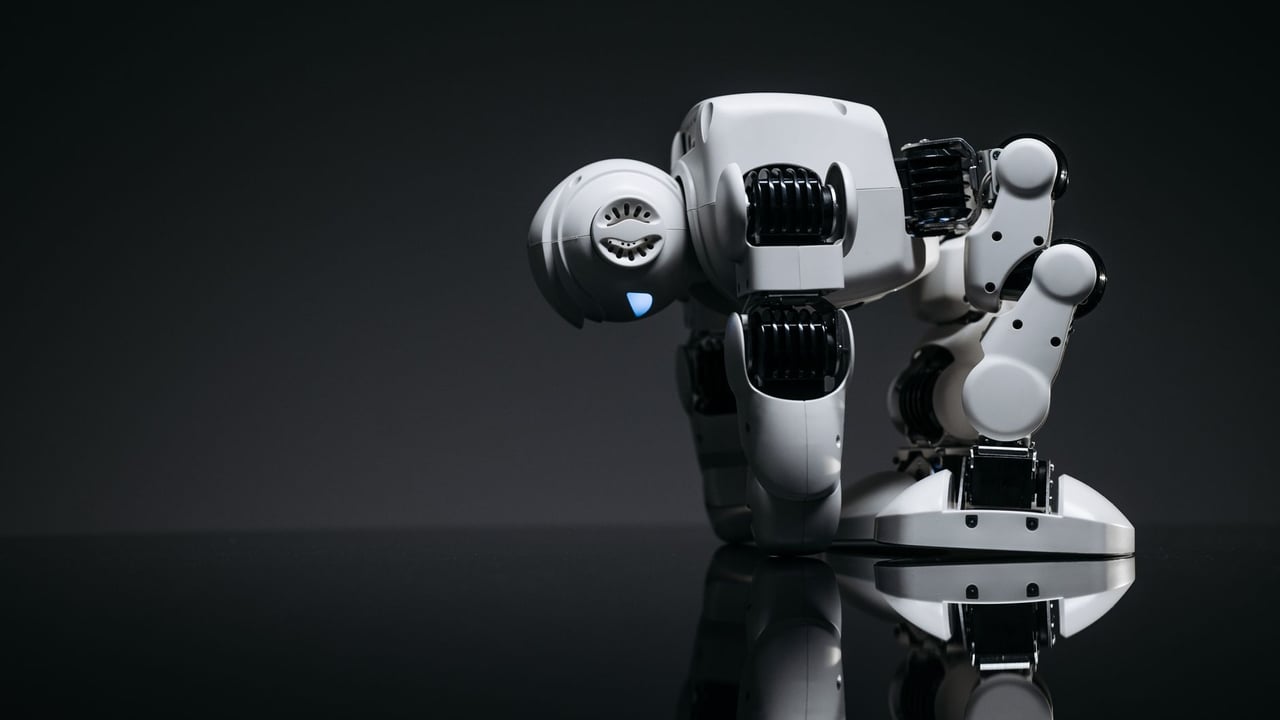
Photo by Pavel Danilyuk on Pexels
The Brief
Zhejiang's embodied artificial intelligence and robotics sector is pivoting from stage demonstrations to practical industrial testing, according to reporting by China News Service. As robotics developers seek to prove economic viability and operational precision on real factory floors, local initiatives are deploying embodied robotic systems across manufacturing ecosystems. The transition marks a critical phase for Chinese robotics enterprises, shifting industry priorities from public showcases toward rigorous production benchmarks, yield rates, and commercial delivery capabilities.
Why it matters
Embodied artificial intelligence and humanoid robotics are moving beyond promotional technology demonstrations into a commercial phase evaluated by real-world factory performance and mass delivery capacity. This operational shift provides an important benchmark for smart manufacturing, hardware-software integration, and broader industrial upgrading.
China context
Driven by targeted local industrial policies and a dense manufacturing supply chain, China is accelerating the integration of embodied robotic systems into factory production lines. Manufacturing hubs such as Zhejiang province are leveraging their established industrial ecosystems to lead multi-scenario trials, bridging upstream AI models with downstream factory applications.
Editor's View
EDITOR'S VIEW — Analysis and inference, not factual reporting.
The transition from tech showcases to factory trials underscores an essential reality for China's robotics industry: sophisticated algorithms matter little without industrial reliability. While Chinese robotics firms have excelled at rapid hardware prototyping and public demonstrations, entering industrial production lines exposes these systems to unforgiving margins of error. Success will ultimately be determined not by choreographed movements, but by repeatable precision, mean time between failures, and clear cost-competitiveness against conventional automation and human labor.
What to watch
- Yield rates and economic cost-efficiency metrics of wheeled-arm and humanoid robots deployed on live manufacturing assembly lines.
- Commercial order volumes and deployment updates from Zhejiang-based robotics developers such as Deep Robotics across mobile and specialized industrial scenarios.
Key Takeaways
- 1Zhejiang's embodied AI industry is transitioning from promotional exhibition showcases to practical industrial evaluation on factory floors.
- 2Field testing prioritizes industrial metrics such as yield rates, precision, economic viability, and continuous operation over novel demonstrations.
- 3Local initiatives leverage Zhejiang's manufacturing ecosystem to trial diverse robotic form factors, including wheeled-arm and mobile platforms, in active production workflows.
China's embodied artificial intelligence sector is undergoing a strategic shift from public technology showcases to rigorous industrial testing, as companies across Zhejiang province deploy robotic hardware into real-world factory environments, according to a report by China News Service.
For months, humanoid and mobile robots have predominantly featured in exhibition halls, tech conferences, and choreographed video demonstrations. However, industry players in eastern China's manufacturing heartland are now pushing these systems out of the showroom and onto the factory floor to evaluate their true operational readiness.
In Zhejiang, robotics firms and industrial partners are setting up evaluation regimes to test embodied systems on active assembly lines. Rather than focusing solely on basic mobility or novel physical feats, these field trials center on industrial benchmarks, including continuous operating stability, task precision, defect rates, and integration with existing automated manufacturing workflows.
The regional push reflects a broader strategic imperative within China's robotics sector to bridge advanced algorithmic development with industrial implementation. Zhejiang's dense supply chain and diverse manufacturing base offer an accessible testing ground for diverse configurations, such as wheeled-arm collaborative units and specialized mobile platforms.
Companies in the region, including quadruped and specialized robotics developers like Deep Robotics, have increasingly directed engineering resources toward practical inspection, material handling, and logistics tasks. In these environments, robots are expected to execute repetitive, high-dexterity operations alongside human workers or existing fixed automation units.
Industry observers note that moving into the operational testing phase will quickly separate commercially viable platforms from purely speculative ventures. While factory operators are keen to address long-term labor shortages and boost automation efficiency, they remain conservative regarding capital expenditure and operational downtime.
Consequently, the success of Zhejiang's embodied AI push will depend on whether developers can demonstrate clear economic returns, robust safety standards, and reliable component supply chains capable of supporting commercial-scale production and deployment.
Sources
- 从“秀场”到“考场”:浙江具身智能产业一线观察 — China News Service · 8/29/2026