
# AI%20infrastructure
Latest news and articles about AI%20infrastructure
Total: 52 articles found

Microsoft Threatens Legal Fight as Amazon’s $50bn OpenAI Pact Tests Azure Exclusivity
Microsoft is contemplating litigation after Amazon and OpenAI agreed a roughly $50 billion cloud deal to host OpenAI's Frontier models on AWS, potentially breaching Microsoft's exclusive cloud arrangement with OpenAI. The companies are negotiating technical and commercial workarounds while trying to avoid a court test that could reshape cloud‑AI partnerships.

Nvidia Goes to Orbit as Beijing Announces Pro-growth Fiscal and Data Push — What It Means for AI, Chips and Markets
Nvidia unveiled the Vera Rubin orbital module to run LLMs in space, promising dramatic on‑orbit inference gains, while China’s finance ministry pledged more proactive fiscal policy in 2026 and Beijing moved to commercialize public data for AI training. Together these developments accelerate demand for compute, datasets and resilient hardware, reshaping supply chains and competitive dynamics in the global AI industry.

Google Visits China to Vet Liquid‑Cooling Suppliers as AI Server Demand Surges
Google sent a procurement team to mainland China to evaluate liquid‑cooling systems for data‑centre servers, according to Chinese media. The move underscores the growing importance of liquid cooling for AI infrastructure and highlights the tension between operational needs and geopolitical pressures on supply chains.
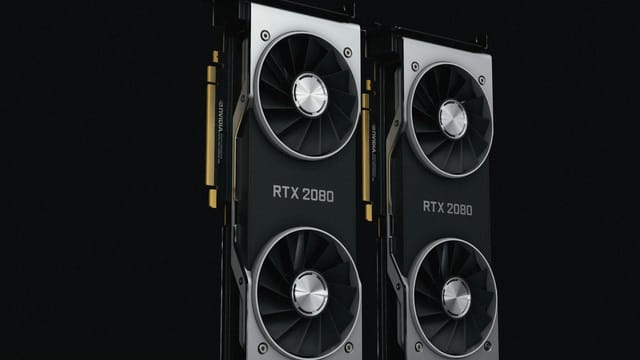
Huang’s GTC Playbook: NVIDIA Repackages AI as Token Factories — Hardware, Agents and a $1tn Inference Bet
At GTC Huang declared a structural shift from training to inference, unveiling a hardware and software roadmap — Vera Rubin systems, Groq LPU integration, Kyber racks, and OpenClaw/NemoClaw agent frameworks — he says could create at least $1 trillion in revenue by 2027. The announcements reframe AI as a token‑generation business that will reshape data centre design, software stacks and corporate IT strategy.

Nvidia Pushes ‘One‑Line’ Agent Deployment with NemoClaw to Cement GPU‑centric AI Ecosystem
At GTC, Nvidia introduced NemoClaw, a two‑command deployment toolchain optimized for the open‑source agent framework OpenClaw, aiming to bind GPU servers tightly to agent runtimes. The move continues Nvidia’s strategy of using software to drive hardware adoption and raises questions about portability, vendor lock‑in and standards in the rapidly growing agent ecosystem.

Meta’s AI Gamble Falters: ‘Avocado’ Delayed, Leadership Scrutinised and a Potential 20% Layoff Looms
Meta has delayed the launch of its next‑generation AI series, internal codenamed Avocado, after tests found it lagged leading rival models. The company faces potential layoffs of up to 20%, leadership scrutiny of AI boss Alexandr Wang, and strategic headwinds as competitors more rapidly translate models into user products.

Jieyue Xingchen Launches StepClaw — 50,000 One‑Click Cloud AI Assistant Deployments with a 50M‑Token Trial
Jieyue Xingchen launched StepClaw, a cloud AI assistant platform built on OpenClaw that offers 50,000 one‑click deployment slots with a one‑month free trial including 50 million tokens, compute and storage. The move lowers technical barriers to running assistants, accelerates experimentation, and signals intensified competition over hosted model services in China amid regulatory and moderation challenges.

Amazon Lines Up as Much as $42bn in Bonds to Fund an AI Infrastructure Arms Race
Amazon is seeking $37bn–$42bn via simultaneous dollar and euro bond issuances across a wide range of maturities to finance a major build‑out of AI infrastructure. The move reflects a broader industry rush to fund data centres and chips, and it will test investor appetite for very large, long‑dated technology debt amid geopolitical and market volatility.

Stargate Stumbles: Oracle and OpenAI Abandon Texas Expansion as Meta Eyes the Site
Oracle and OpenAI have abandoned a planned expansion of a flagship AI data‑centre near Abilene, Texas — part of the broader Stargate programme — after financing stalled and OpenAI’s capacity needs changed. Meta is exploring leasing the stalled expansion, with Nvidia facilitating talks, highlighting chipmakers’ growing influence over where AI compute is built.

When a Drone Strike Took Down the Cloud: How a Middle East Attack Exposed AI’s Strategic Fragility
A drone strike on an AWS data centre in the UAE triggered a chain of outages that highlighted the strategic fragility of cloud-dependent AI. Cheap Gulf electricity has encouraged large AI data-centre investments, but attacks and geopolitical ties are forcing a re-evaluation of where and how critical compute is hosted.
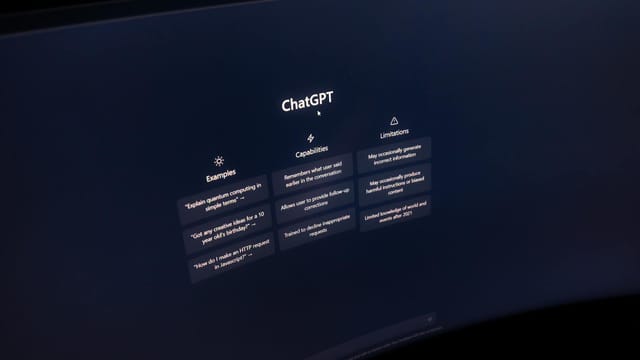
CITIC Flags AI 'Sentiment Shock' in China’s Software Stocks — Data-Rich Specialists Seen as Long-Term Winners
CITIC Securities warns that AI large models have sparked a sentiment-driven adjustment in China’s software application sector, but identifies a clear pattern: companies with industry expertise and proprietary data are best placed to benefit from the AI Agent era. The note advises focusing on model developers, enterprise and vertical Agent software, and AI infrastructure, while cautioning that headline‑led market moves may not reflect long‑term fundamentals.

Ant Group and Tsinghua Open-Source an RL Training Framework as China’s AI Infrastructure Race Heats Up
Ant Group and Tsinghua University released AReaL v1.0, an open‑source, asynchronous reinforcement‑learning training framework aimed at lowering the engineering barrier for production‑grade adaptive agents. The announcement coincided with mixed market moves in China’s AI ETF, underscoring investor interest in infrastructure plays even as the sector navigates commercialisation, hardware constraints and regulatory questions.