
# US%20Navy
Latest news and articles about US%20Navy
Total: 85 articles found

Shadows of the Deepfake: How a Viral Video of a Retired US Admiral Became a Lightning Rod for Global Distrust
A viral video of a retired US Navy Vice Admiral has sparked widespread online speculation and conspiracy theories regarding his physical appearance. The incident highlights the growing challenge of maintaining public trust in an era defined by deepfakes and the weaponization of digital anomalies.
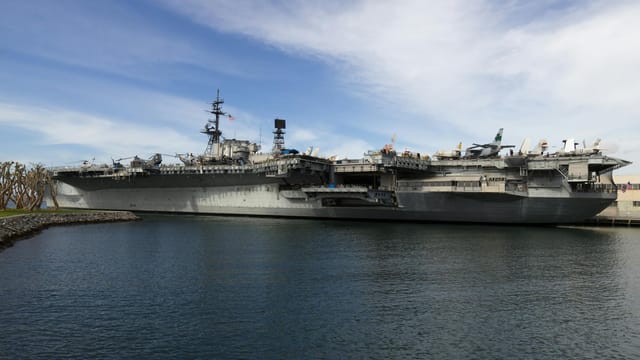
Forward Presence: USS George Washington’s Return to Yokosuka Signals Indo-Pacific Readiness
The USS George Washington has returned to its homeport in Yokosuka, Japan, following successful sea trials that signify its transition back to full operational status. This deployment reinforces the U.S. Seventh Fleet's forward-deployed capabilities and its strategic deterrence posture in the Indo-Pacific.
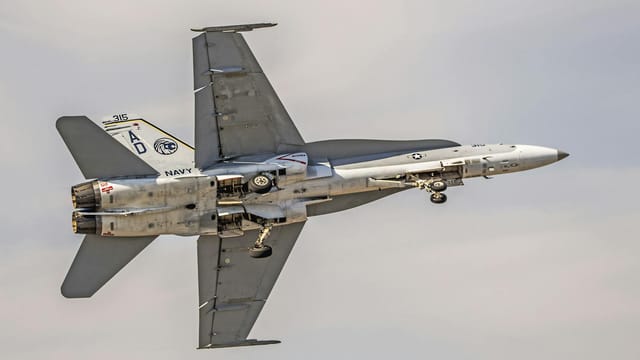
Sky-High Costs: The Strategic Implications of the US Navy's Growler Mid-Air Collision
Two US Navy EA-18G Growler electronic warfare aircraft collided during an Idaho airshow, resulting in over $200 million in losses. While all four crew members survived, the incident highlights the risks of using specialized combat aircraft for aerobatic displays and the strategic vulnerability caused by the loss of limited-production airframes.
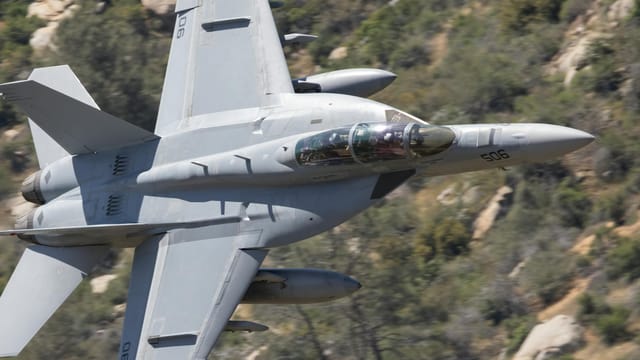
Double Growler Down: US Navy Mid-Air Collision Highlights Risks in Aerial Demonstrations
Two U.S. Navy E/A-18G Growler electronic warfare jets collided mid-air during a flight demonstration at Mountain Home Air Force Base in Idaho. All four crew members successfully ejected without reported fatalities, though the loss of two high-value airframes marks a significant incident for Naval aviation.
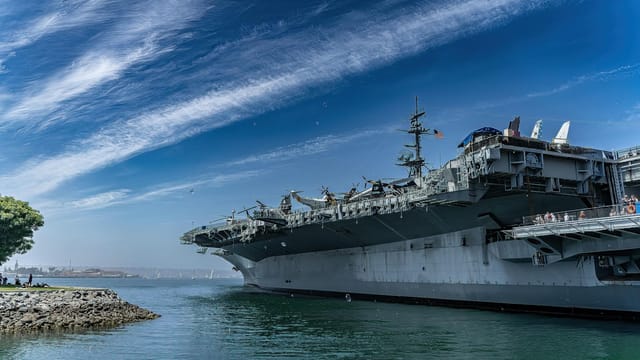
The Longest Watch: What the USS Gerald R. Ford’s Marathon Deployment Signals About American Naval Overstretch
The USS Gerald R. Ford has returned to the United States after a record-breaking 326-day deployment, highlighting the strain on the U.S. Navy's global operations. While the mission demonstrated the capabilities of the Ford-class carrier, it also underscored the strategic risks associated with naval overstretch and the 'carrier gap' in global security.
Slowing the Surge: US Navy’s Carrier Ambitions Stumble Over Industrial Realities
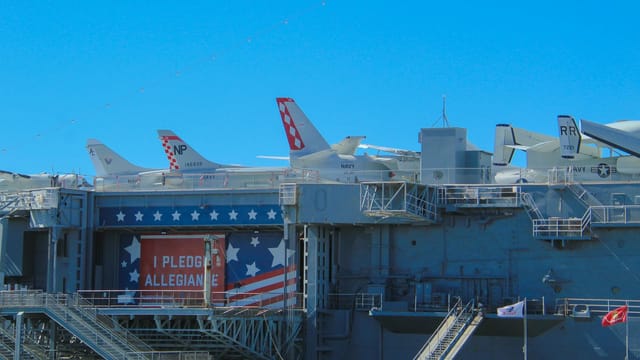
The US Navy has officially delayed the delivery of the Doris Miller (CVN-81) aircraft carrier by two years, citing shipyard capacity constraints and modular production issues. This extension to a 15-year build cycle highlights systemic weaknesses in the US defense industrial base compared to its global competitors.
Tightening the Noose: The U.S. Naval Blockade of Iran Signals a Volatile New Phase in Middle East Conflict
U.S. Central Command has deployed a task force of over 20 warships to enforce a formal blockade on Iran, marking a major escalation in regional tensions. The operation has already resulted in the diversion of 61 merchant ships and the disabling of four vessels, signaling a shift toward active military interdiction.

Tactical Fire, Strategic Friction: The US Navy Disables Iranian Tanker in Widening Blockade
U.S. carrier-based aircraft disabled an Iranian oil tanker in the Gulf of Oman to enforce an ongoing maritime blockade. The precision strike marks a significant escalation in kinetic enforcement against Iranian shipping in international waters.
Tehran’s Digital Broadside: Iranian Video Release Signals New Phase of Naval Brinkmanship
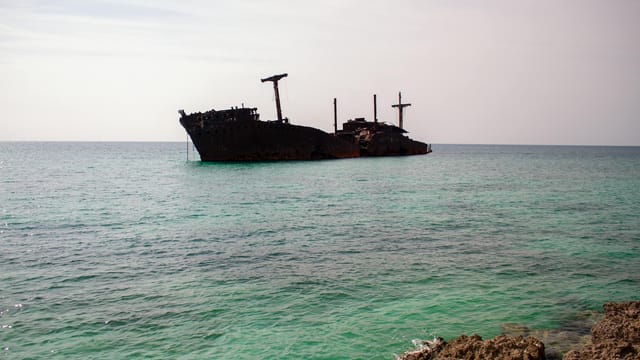
Iran has released footage purportedly showing a missile launch targeting a U.S. destroyer, marking a significant escalation in regional propaganda and maritime tension. The move highlights Tehran's growing asymmetric military capabilities and its intent to challenge U.S. naval presence in the Persian Gulf.
A Precarious Pivot: US Precision Strikes in the Strait of Hormuz Signal New Phase of Deterrence
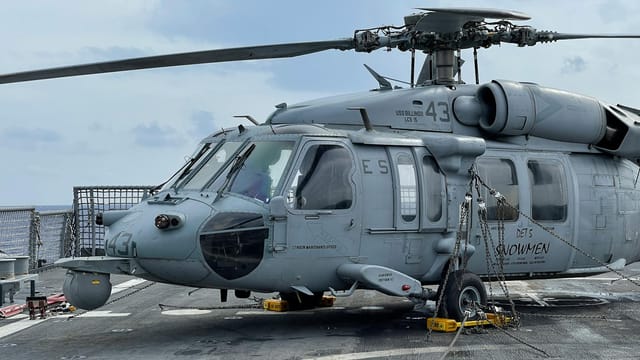
Following a failed multi-vector attack by Iranian forces on a US Navy destroyer group in the Strait of Hormuz, the US military launched precision strikes against Iranian command and launch facilities. While US officials state they do not seek escalation, the proactive degradation of Iranian ISR and missile assets marks a strategic shift in regional deterrence.
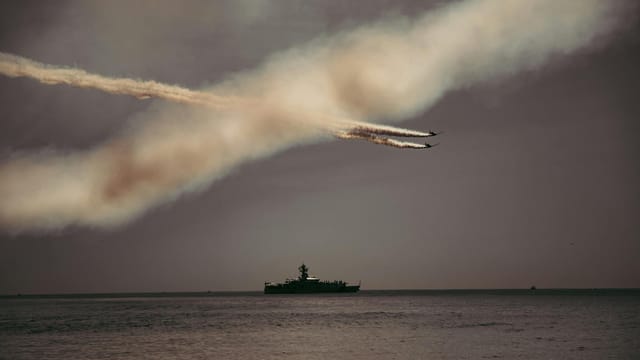
Strained Silence in the Gulf: US Navigates Iran’s Calculated Escalation Below the Threshold of War
The US military remains reluctant to restart large-scale combat despite nine Iranian attacks on merchant ships and the seizure of two vessels. Both nations are currently engaged in a dangerous cycle of maritime skirmishes and conflicting narratives that threaten a fragile regional ceasefire.
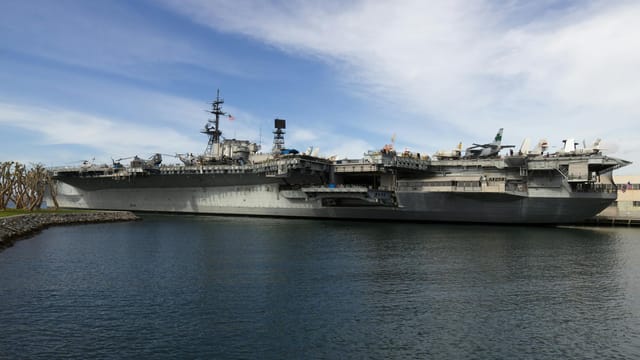
Cracks in the Hull: The Growing Risk of 'Soft Mutiny' on American Supercarriers
A speculative military analysis explores the potential for a mutiny on the USS Gerald R. Ford during a protracted conflict with Iran. It argues that logistical overstretch and 'soft mutiny' through sabotage represent a greater threat to U.S. naval power than enemy fire.