
Technology & AIAnalysis
Beijing to Host Second World Humanoid Robot Games as Entries Quadruple
Over 2,000 robots from 16 countries will compete across 51 events designed to stress-test hardware and set industrial benchmarks.
Share
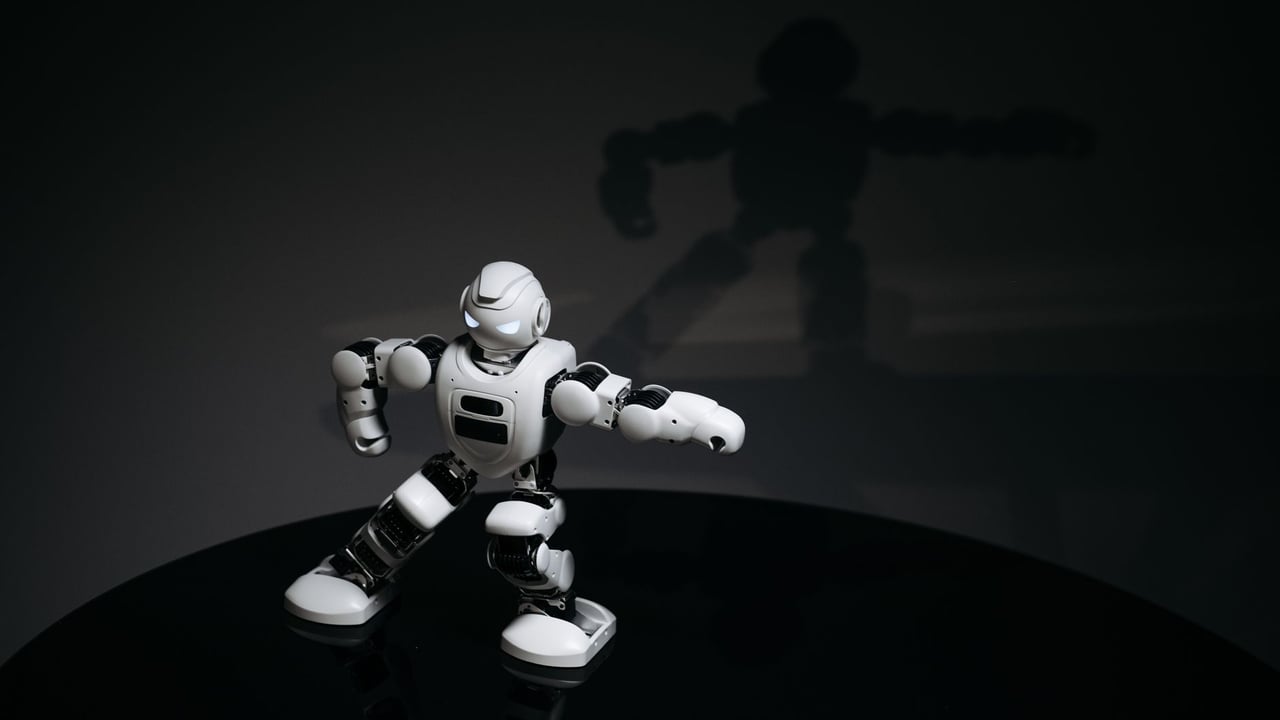
Photo by Pavel Danilyuk on Pexels
The Brief
The second World Humanoid Robot Games will take place in Beijing from August 22 to 26 at the National Speed Skating Oval, featuring 2,056 robots and 666 teams from 16 countries. Robot participation has quadrupled compared to the inaugural event, while team numbers have increased by 138 percent. Organizers have expanded the schedule to 51 events spanning athletic contests and real-world industrial tasks, aiming to translate competitive benchmarks into formal technical standards for commercial deployment.
Why it matters
The rapid expansion of the games highlights accelerating technical iteration and practical experimentation in humanoid robotics. By testing machines in both high-load sports and fine-motor industrial scenarios—such as logistics, firefighting, and precision assembly—organizers aim to turn competition criteria into commercial acceptance standards, accelerating the transition of humanoid systems from test labs to production lines.
China context
Beijing is leveraging major public infrastructure like the Olympic 'Ice Ribbon' venue to advance its position in embodied artificial intelligence and robotics manufacturing. The Beijing Municipal Bureau of Economy and Information Technology is actively pursuing an 'evaluate through competition, standardize for industry' strategy to validate domestic supply chain components—such as joint motors and speed reducers—and bolster China's competitive edge in advanced manufacturing.
Editor's View
EDITOR'S VIEW — Analysis and inference, not factual reporting.
While competitive robot games offer strong visual demonstrations of mobility and manipulation, the deeper significance lies in Beijing's attempt to formalize industry standards through competitive rulebooks. If competition criteria successfully transition into commercial procurement and testing benchmarks, such events could serve as a valuable mechanism to weed out non-viable hardware prototypes and standardize China's fragmented robotics supply chain.
What to watch
- Performance and failure rates of humanoid robots in high-impact events like weightlifting, long jump, and tug-of-war during the August 22–26 tournament.
- Progress in fine-motor dexterous manipulation tasks such as powder weighing, tweezer handling, and domestic chores.
- Potential announcements of formal industry technical standards or commercial procurement contracts arising from the tournament.
Key Takeaways
- 1The second World Humanoid Robot Games will run August 22–26 at Beijing's National Speed Skating Oval.
- 2A total of 2,056 robots and 666 teams from 16 countries will compete across 51 events and 1,301 matches.
- 3Robot entries have quadrupled and team participation has grown 138% compared to the inaugural games.
- 4New events include high-impact sports like weightlifting and long jump, alongside applied tasks in logistics, domestic work, and dexterous manipulation.
- 5Beijing officials intend to convert tournament rules into standardized technical acceptance criteria for commercial robotics.
The second World Humanoid Robot Games is scheduled to open in Beijing on August 22, featuring a dramatic increase in international participation and a broader testing ground for hardware capabilities, according to state media.
The five-day event, running through August 26 at the National Speed Skating Oval, commonly known as the "Ice Ribbon," will host 1,301 matches across 51 distinct competition categories. A press briefing revealed that 666 teams and 2,056 robots from 16 countries are registered to compete. Compared to the inaugural edition, team registration surged by 138 percent, while the total number of participating humanoid robots quadrupled.
The tournament expands beyond traditional track-and-field demonstrations into both high-stress athletic contests and practical task simulations. Newly added athletic events include the long jump, weightlifting, tug-of-war, and table tennis. Jiang Guangzhi, executive deputy director of the organizing committee and director of the Beijing Municipal Bureau of Economy and Information Technology, stated that these high-intensity formats are designed to push the structural durability of robot frames and core components to their limits.
Jiang noted that incremental gains on the field—such as lifting an extra kilogram or jumping an additional centimeter—directly reflect iterative improvements made by engineers in precision machining, joint motor design, and speed reducers.
In addition to pure athletic tests, the 2026 games will place significant emphasis on applied scenarios across industry, logistics, hospitality, domestic service, and emergency rescue. These events are specifically tailored to address dirty, dull, dangerous, and difficult environments. Dedicated dexterous hand challenges will evaluate fine-motor manipulation, requiring robots to perform tasks such as weighing chemical powders, handling small beans with tweezers, and opening bottle caps.
Municipal organizers indicated that the competition's rule sets are intended to lay the groundwork for commercial technical acceptance standards, helping participating enterprises validate hardware readiness for factory floors, warehouses, and service sectors.
Sources
- 第二届世界人形机器人运动会参赛机器人数量较上届翻两番--经济·科技--人民网 — People's Daily · 8/13/2026