
Business & IndustryAnalysis
China Accelerates Major Waterway and Port Infrastructure Projects to Boost Investment and Lower Logistics Costs
Expansions along the Yangtze River, the Pinglu Canal, and coastal container hubs aim to clear shipping bottlenecks and support trade growth.
Share
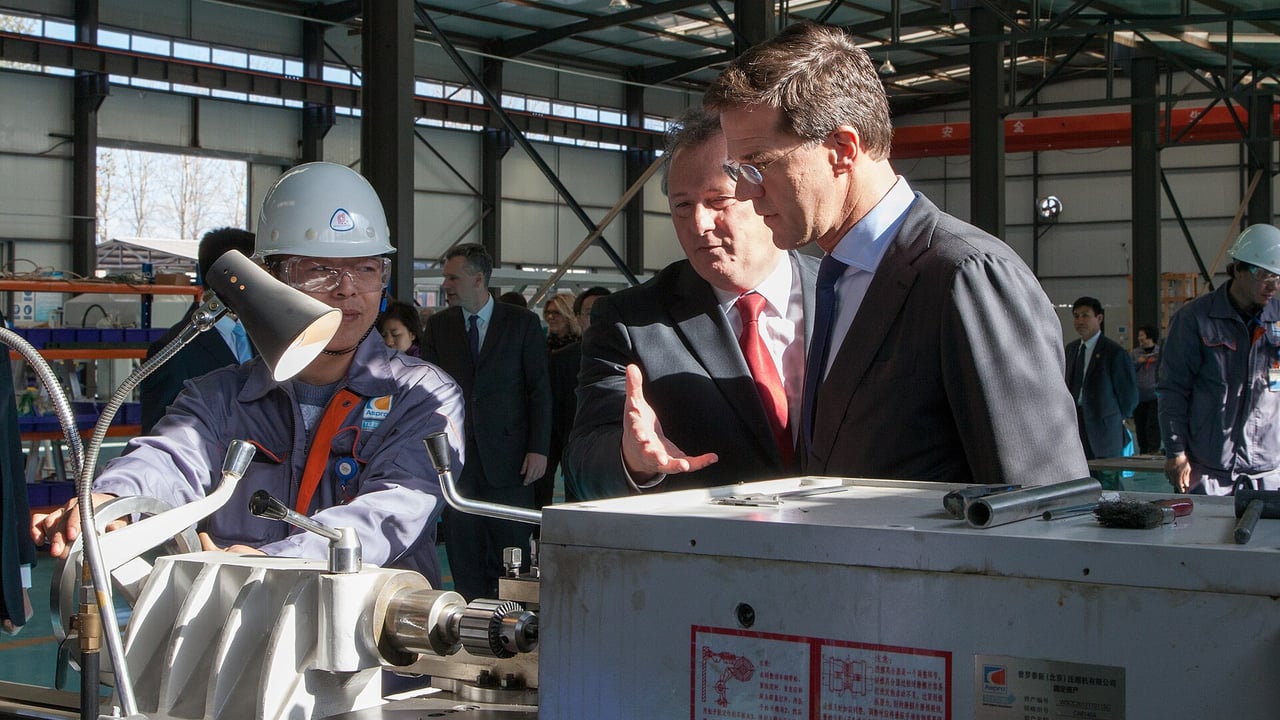
Minister-president Rutte from Nederland (+31) via Wikimedia Commons, CC BY 2.0
The Brief
China is accelerating several major water transport projects across key inland shipping corridors and coastal hub ports. Key milestones include progress on the Three Gorges Water Transport New Channel—a project with over 77 billion yuan in static investment—and preparations for the Pinglu Canal to open for navigation in September. Authorities view water infrastructure as both an immediate economic stimulus through investment multiplier effects and a long-term strategic measure to address network bottlenecks, leverage low-cost freight capacity, and support rising foreign trade demands.
Why it matters
Major water transport projects serve as an immediate vehicle to expand investment and stabilize economic growth, while strategically addressing inland shipping bottlenecks to lower overall societal logistics costs.
China context
Faced with evolving foreign trade patterns and industrial upgrading, China is accelerating cross-regional shipping corridors to optimize its integrated transport system. This expansion aims to enhance regional economic coordination while operating within fiscal risk and environmental protection constraints.
Editor's View
EDITOR'S VIEW — Analysis and inference, not factual reporting.
China's renewed emphasis on inland and maritime waterways highlights a structural shift toward optimizing multimodal transport efficiency. While high-speed rail and expressways expanded rapidly over the past two decades, high-volume, low-cost water shipping remained a relative lag. Successfully integrating new mega-canals and expanded port facilities could provide durable cost relief for industrial supply chains, provided that regional industrial clusters along these waterways develop sufficient operational demand.
What to watch
- Opening of the Pinglu Canal for navigation targeted for September.
- Completion of the advance excavation phase for the Three Gorges Water Transport New Channel expected in October.
- Progress on preliminary feasibility studies for inter-provincial canal projects including the Zhejiang-Jiangxi, Jiangxi-Guangdong, and Hunan-Guangxi routes.
- Implementation of subsequent project reserves, including port upgrades at Rizhao Port in Shandong.
Key Takeaways
- 1Three Gorges Water Transport New Channel excavation is over half complete, with a static investment exceeding 77 billion yuan.
- 2The Pinglu Canal has achieved full-line water flow and is aiming for navigation to open in September.
- 3Phase II of the Yangtze River Estuary South Passage Waterway Project will enable full-tide navigation for 5,000-tonne vessels.
- 4China's goods trade grew 16.9% year-on-year in H1, driving a 6.7% increase in daily average port container throughput.
China has accelerated the construction of several major water transport and port infrastructure projects across key river basins and coastal hubs, according to a report by People's Daily.
Along the Yangtze River, work has progressed on the Three Gorges Water Transport New Channel, a multi-purpose project with a static total investment exceeding 77 billion yuan ($10.7 billion). Advance excavation on the new channel is more than half complete, with excavation targeted to finish in October. In Guangxi, the Pinglu Canal has achieved full-line water flow as construction crews prepare for navigation to open in September. Meanwhile, construction has begun on Phase II of the Yangtze River Estuary South Passage Waterway Project to enable full-tide navigation for 5,000-tonne vessels, while main terminal structures for the Yangpu Regional International Container Hub Port expansion in Hainan have been completed ahead of partial operational launches later this year.
Short-term infrastructure spending on these megaprojects is serving as a key driver for domestic investment and employment. Yuan Ziwen, director of the transport economics division at the Ministry of Transport’s Water Transport Institute, noted that major water projects generate multiplier effects across upstream and downstream industries, ranging from raw materials to heavy electrical equipment. Along the Pinglu Canal route, 30 river-sea intermodal berths are currently under construction or upgrade, driving industrial park investments along the corridor.
In the long term, expanding the inland and coastal shipping network aims to eliminate logistical bottlenecks and lower overall societal transport costs. While China possesses extensive high-speed rail and expressway networks, its modern water transport system remains a relative weak point in the national integrated transport framework. Water transport offers high-capacity, low-cost, and low-energy advantages that can ease congestion along busy shipping lanes.
The push for expanded capacity also reflects changing trade demands. China’s total foreign trade in goods grew 16.9% year-on-year in the first half of the year, led by a 20.1% increase in mechanical and electrical product exports. Data from the National Information Center showed that daily average container throughput at Chinese ports increased by 6.7% year-on-year during the same period, putting pressure on major coastal gateway ports to expand capacity.
Sources
- 重大水运工程建设为何驶入“快车道”(经济新方位) --经济·科技--人民网 — People's Daily · 7/30/2026