
Policy & RegulationAnalysis
China Adds 27 New Vocational Majors to Align with Strategic Industries
The Ministry of Education's 2026 update introduces undergraduate and diploma majors in AI, green energy, and the low-altitude economy, with enrollment starting in 2027.
Share
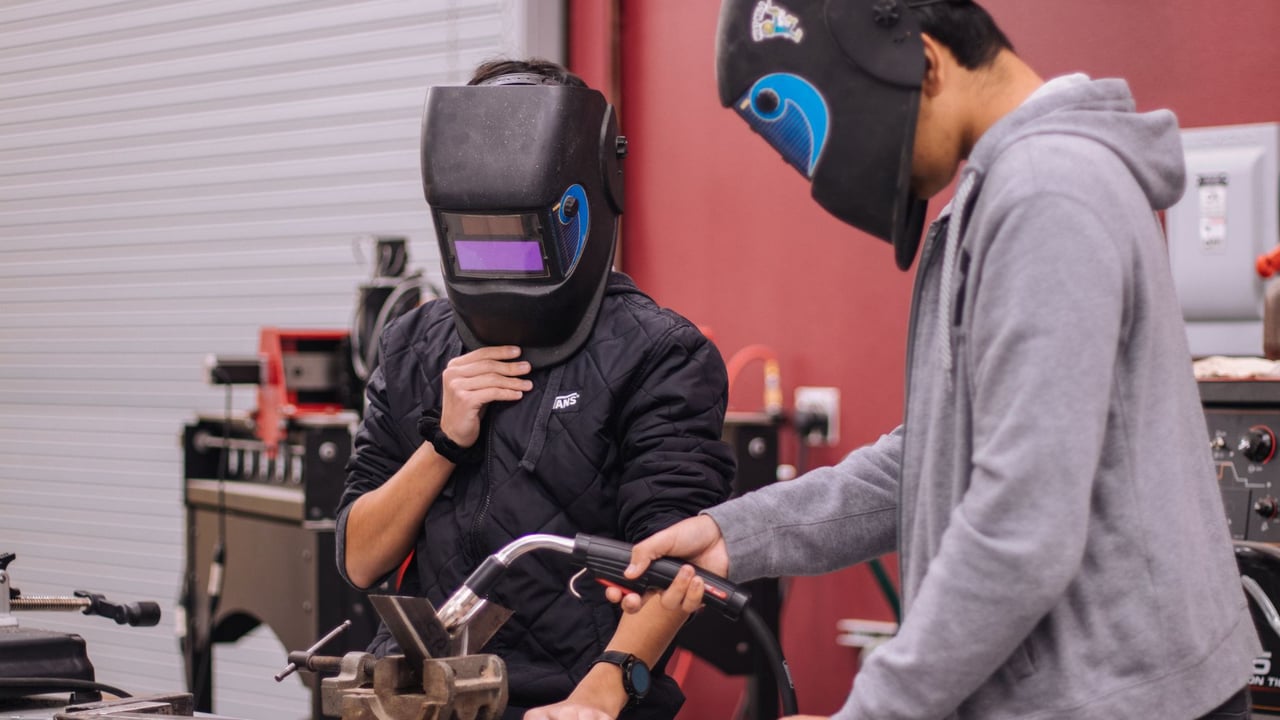
Photo by Jeswin Thomas on Pexels
The Brief
China's Ministry of Education has added 27 new majors to its 2026 Vocational Education Professional Directory, comprising 18 vocational undergraduate and nine higher vocational diploma majors. Aligned with the upcoming "15th Five-Year Plan," these additions target critical sectors such as artificial intelligence, the low-altitude economy, green energy, and urban renewal. The new programs, which will begin student enrollment in 2027, reflect a strategic push to align vocational training with high-end industrial demands and address structural labor shortages.
Why it matters
This update signals the preparation phase for China's "15th Five-Year Plan." By heavily weighting the additions toward vocational undergraduate programs (18 out of 27), Beijing is demonstrating its commitment to elevating the status of vocational education and cultivating higher-level technical talent. The inclusion of cutting-edge fields like the low-altitude economy and AI will directly shape the industrial talent supply chain over the next five years.
China context
Against the backdrop of China's emphasis on "high-quality development" and building a "modern industrial system," the Ministry of Education is dynamically adjusting its academic directories to resolve structural mismatches in the labor market. This is not merely an educational policy shift, but a coordinated effort to support major national strategies, including urban renewal, green energy transition, and addressing an aging population.
Editor's View
EDITOR'S VIEW — Analysis and inference, not factual reporting.
The expansion of vocational undergraduate programs highlights a critical shift in China's educational philosophy. Historically, vocational schools were seen as a secondary track for students who did not qualify for traditional academic universities. By introducing advanced undergraduate majors in fields like humanoid robotics and hydrogen energy, the government is attempting to rebrand vocational education as a high-tech, prestigious career path. However, the success of this initiative will depend heavily on whether local industries actively participate in curriculum design and whether employers truly value these new vocational undergraduate degrees on par with traditional academic credentials.
What to watch
- The pace at which vocational colleges apply to offer these new majors and the scale of their initial student intake.
- Whether further large-scale revisions to the vocational directory will occur after the official release of the national '15th Five-Year Plan' outline.
- Feedback from the job market regarding the employability of the first graduates and the depth of corporate involvement in teaching.
Key Takeaways
- 1China's Ministry of Education added 27 new majors to the 2026 Vocational Education Professional Directory, with enrollment starting in 2027.
- 2The update comprises 18 vocational undergraduate majors and nine higher vocational diploma majors across 14 major categories.
- 3New majors target strategic sectors such as the low-altitude economy, humanoid robotics, hydrogen energy, and urban renewal.
- 4The additions are aligned with the upcoming '15th Five-Year Plan' and rely on industry-education integration to identify labor shortages.
China's Ministry of Education (MoE) has finalized the 2026 update to its Vocational Education Professional Directory, adding 27 new majors to support high-quality economic and social development. The update includes 18 vocational undergraduate majors and nine higher vocational diploma majors, spanning 14 major categories and 20 sub-categories. Student enrollment for these newly established majors is scheduled to begin in 2027.
According to the MoE, the update is closely aligned with the national "15th Five-Year Plan" outline and the "15th Five-Year Plan for Educational Development". The selection of majors targets high-skill talent cultivation in emerging sectors, including the digital economy, low-altitude economy, artificial intelligence, advanced manufacturing, urban renewal, and urgent public welfare areas. For instance, new productive service majors include Technology Brokerage Services and Low-Altitude Transport Engineering Technology at the undergraduate level. In life services, the ministry added diploma-level majors such as Infant Family Care and Guidance, and Sojourn Health Care Operation and Management.
To address new occupations listed in the National Occupational Classification, the directory now features majors like Humanoid Robot Engineering Technology, Digital Twin Engineering Technology, and Embodied Intelligent Computing Technology. Green energy sectors are also represented with the addition of Hydrogen Energy Engineering Technology and Energy Storage Materials and Equipment Intelligent Operation and Maintenance Technology.
The MoE emphasized that these additions were formulated based on real-world demands gathered from industry-education integration communities and municipal alliances. For example, the Urban Renewal Design Technology major was created in response to talent shortages identified by urban renewal industry groups. Since the release of the 2021 directory, the MoE has dynamically added a total of 169 majors, representing approximately 11% of the total directory, in an ongoing effort to align vocational education with industrial shifts.
Sources
- 《职业教育专业目录》增补27个新专业 为经济社会高质量发展提供人才支撑 — Xinhua News Agency · 7/16/2026
- 27个新职业教育本专科专业“上架” 释放哪些信号? — China News Service · 7/17/2026