
Business & IndustryAnalysis
China Approves Eight Nuclear Reactors in 170 Billion Yuan Expansion
State Council approvals for four projects drive a surge in domestic energy stocks as Beijing accelerates deployment of its Hualong One 2.0 design.
Share
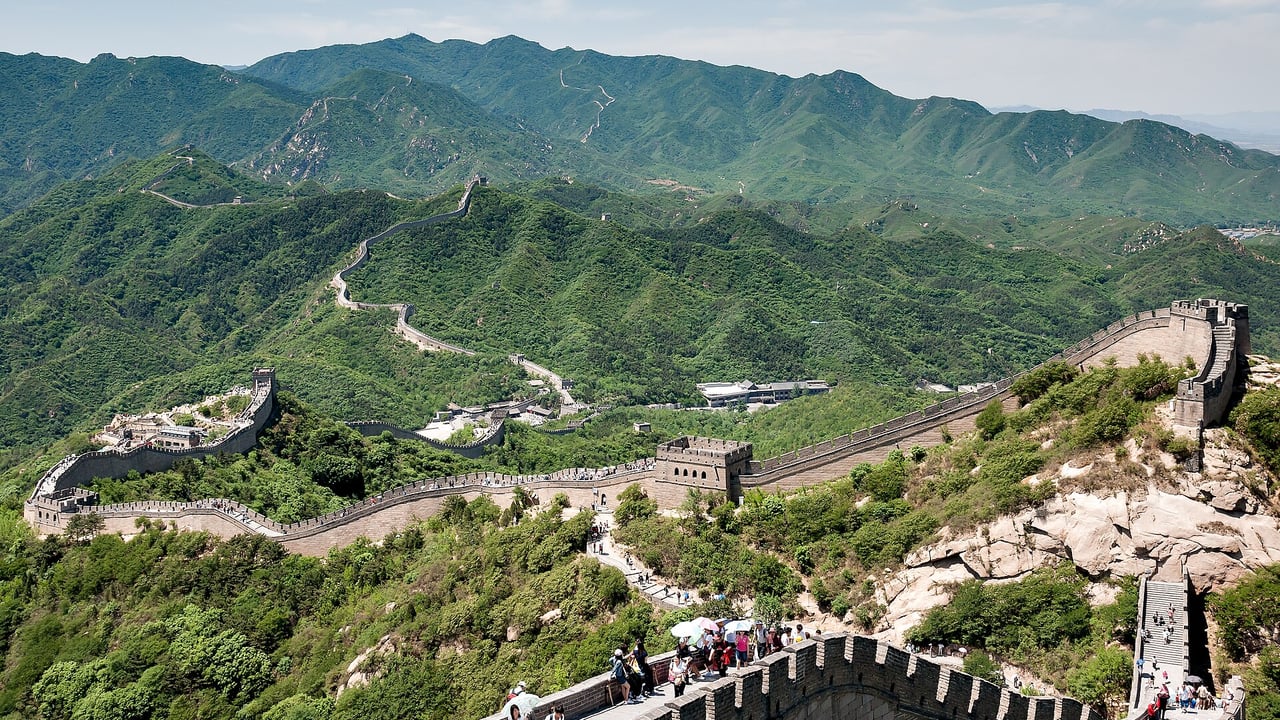
CEphoto, Uwe Aranas via Wikimedia Commons, CC BY-SA 3.0
The Brief
China's State Council has approved eight new nuclear power reactors across four projects in Zhejiang, Guangdong, Liaoning, and Shandong provinces, representing a total estimated investment exceeding 170 billion yuan. The announcement triggered a widespread rally in domestic nuclear concept stocks, with over ten listed companies hitting their daily upper trading limits. Six of the approved units will feature China's self-developed Hualong One reactor design, including two designated demonstration projects for the upgraded Hualong One 2.0 technology, reinforcing Beijing's sustained pace of nuclear power deployment.
Why it matters
The approval of eight new nuclear units and a 170-billion-yuan capital commitment reinforces China's long-term trajectory of normalized, large-scale nuclear expansion, directly unlocking equipment orders and fueling capital market momentum across the energy supply chain.
China context
Amid carbon neutrality goals and energy security priorities, China aims to maintain steady approvals of approximately ten reactors per year, accelerating the deployment of self-developed technologies like Hualong One to become the world's largest nuclear power producer by capacity before 2030.
Editor's View
EDITOR'S VIEW — Analysis and inference, not factual reporting.
Beijing’s approval of eight new reactors underscores a predictable regulatory cadence that provides rare long-term visibility for domestic industrial supply chains. By establishing demonstration sites for Hualong One 2.0, state planners are prioritizing both supply chain localization and cost reduction through standardized, modular construction. However, while upstream component makers stand to benefit from order backlogs, execution risks—including grid integration timelines and prolonged construction cycles—remain critical factors for long-term profitability and grid balance.
What to watch
- Order conversion rates and quarterly earnings performance among upstream equipment manufacturers.
- Construction milestones and supply chain execution for the Hualong One 2.0 demonstration projects.
- Potential additional approvals of nuclear power units by the State Council later in the year.
Key Takeaways
- 1The State Council approved eight new nuclear reactors across four domestic projects, with investment estimated above 170 billion yuan.
- 2A-share nuclear concept indices rose over 4.5%, with more than ten individual stocks hitting their daily limit.
- 3Six approved units will deploy Hualong One technology, with two projects serving as Hualong One 2.0 demonstration sites.
- 4China maintained annual approvals of 10 or more reactors from 2022 to 2025, aiming for 200 GW of capacity by 2040.
Chinese market sentiment in the nuclear energy sector surged following Beijing's executive approval of eight new nuclear power reactors involving an estimated investment exceeding 170 billion yuan, as reported by Securities Times. The July 31 State Council meeting sanctioned four distinct projects: Phase II of Zhejiang Jinqimen (Units 3 and 4), Phase III of Guangdong Taipingling (Units 5 and 6), Phase I of Liaoning Zhuanghe (Units 1 and 2), and Phase I of Shandong Laiyang (Units 1 and 2).
In response to the policy news, A-share nuclear power and nuclear fusion indices climbed over 4.5% during trading on August 3. More than ten related equities—including China Nuclear Engineering & Construction, Libert, Sino-Rock Construction, Baoli Electric, and Jiangsu Shentong—rapidly reached their 10% daily upper trading limits.
The regulatory decision aligns with China's broader multi-year strategy to scale up clean baseline power generation. According to data cited from the China Nuclear Energy Development Report (2025), China operated 59 nuclear units with an installed capacity of approximately 62.5 gigawatts as of late 2025. Following consistent annual approvals of 10 or more reactors from 2022 through 2025, market analysts from Founder Securities noted that China is expected to maintain an annual approval cadence of about 10 units, with potential for further approvals in the second half of the year.
Six of the newly approved reactors will utilize China’s proprietary Hualong One technology. Notably, the Zhejiang Jinqimen Phase II and Guangdong Taipingling Phase III facilities have been designated as demonstration projects for Hualong One 2.0. This updated iteration incorporates domestic software and optimized safety systems designed to reduce total engineering volume while boosting safety and economic competitiveness. Globally, 10 Hualong One reactors are currently in commercial operation, with dozens more approved or under construction as China moves toward its goal of leading global operational capacity before 2030.
Sources
- 核电大消息 总投资将超1700亿元!机构扎堆调研的核电概念股出炉 _ 东方财富网 — Eastmoney · 8/3/2026
- 10余股集体涨停!千亿级投资增量引爆核能赛道 — Securities Times · 8/3/2026