
Business & IndustryAnalysis
China Connects 16-Megawatt Tension-Leg Floating Wind Turbine to Offshore Grid
The Haiyou Anlan platform marks China's first operational tension-leg floating wind project, supplying power to a South China Sea oilfield.
Share
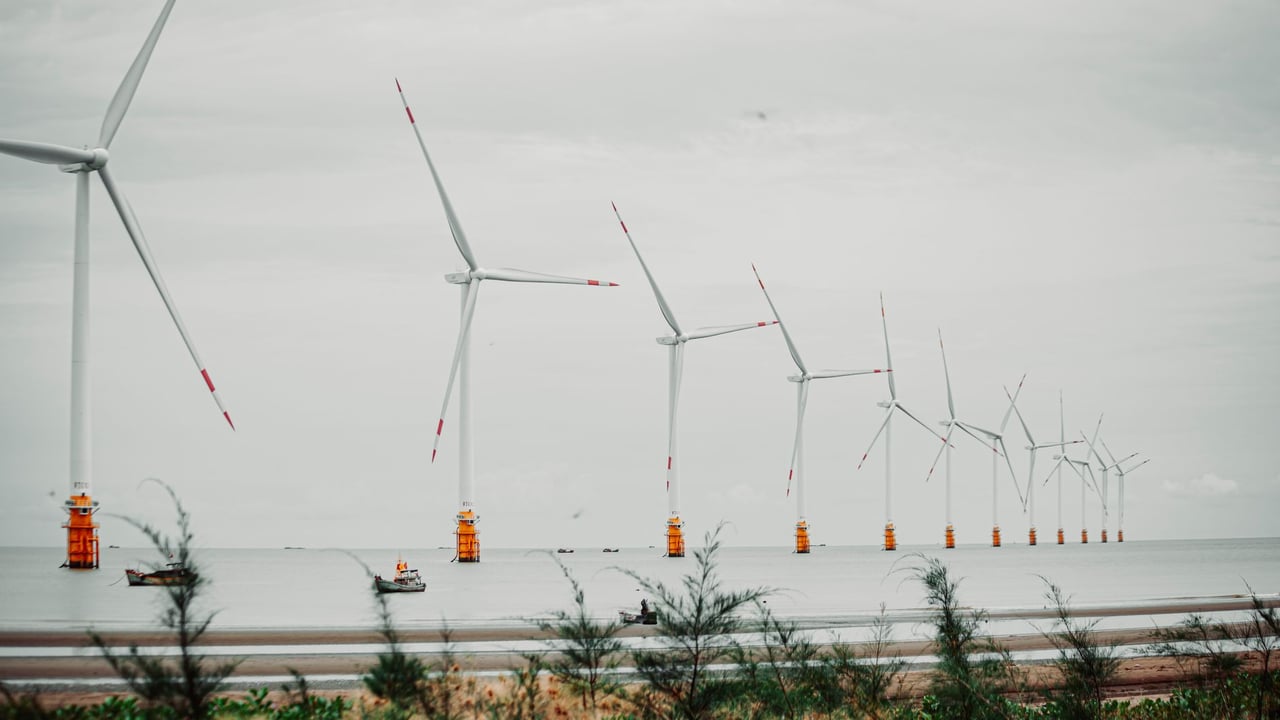
Photo by Phong Võ on Pexels
The Brief
China has connected the Haiyou Anlan, a 16-megawatt tension-leg platform floating wind turbine, to the grid at the Lufeng oilfield in the Pearl River Mouth Basin. Located roughly 200 kilometers southeast of Shenzhen, the unit represents China's first tension-leg floating wind platform and the world's deepest and largest-capacity installation of its specific design type, according to People's Daily. Built to generate an estimated 54 million kilowatt-hours annually for offshore operations, the milestone signals Beijing's technological push into deeper offshore waters as nearshore sites become congested.
Why it matters
The commissioning marks an important engineering shift for China's offshore energy sector from shallow-water fixed-bottom turbines to deep-water tension-leg platforms. As the world's deepest-water, farthest-offshore, and largest single-capacity tension-leg wind turbine installation, it provides an engineering blueprint for decarbonizing offshore oil and gas production while validating a design intended to exploit rich deep-sea wind reserves at scale.
China context
China is accelerating the migration of offshore wind development from nearshore zones to deep waters. Under guidelines for the 15th Five-Year Plan period, the country plans to build offshore wind bases across the Bohai, Yellow, East China, and South China Seas, aiming for cumulative grid-connected offshore wind capacity exceeding 100 gigawatts. Because deep waters offer higher wind resource density without encroaching on coastal land or shallow shipping corridors, floating wind platforms are a key technical priority for meeting Beijing's carbon reduction targets.
Editor's View
EDITOR'S VIEW — Analysis and inference, not factual reporting.
The deployment of the Haiyou Anlan illustrates how China is using state-backed industrial coordination to solve complex deep-sea energy challenges. Fixed foundations become economically nonviable in water depths beyond 60 meters due to excessive steel consumption and mounting installation costs. By adopting a tension-leg platform with vertical mooring tendons, Chinese engineers aim to reduce steel use per megawatt and minimize ocean footprint. However, tension-leg platforms remain one of the most technically demanding floating concepts globally, facing severe mechanical fatigue from deep-sea currents and typhoons. The real test will lie in whether the design achieves cost competitiveness and operational durability over an extended lifecycle without heavy state subsidization.
What to watch
- Structural integrity and power generation efficiency of the Haiyou Anlan during South China Sea typhoon seasons.
- Levelized cost of electricity reductions and supply chain replication for tension-leg floating wind in future commercial offshore lease auctions.
- Announcements of new tension-leg floating wind projects supplying green electricity to other offshore oil and gas facilities.
Key Takeaways
- 1The Haiyou Anlan, a 16-megawatt tension-leg floating wind platform, was connected to the Lufeng oilfield grid roughly 200 km southeast of Shenzhen.
- 2It is China's first tension-leg floating wind turbine and ranks as the world's deepest, farthest offshore, and largest-capacity platform of its type.
- 3The 7,800-ton platform uses nine tensioned vertical steel cables anchored to the seabed to stabilize a 100-meter triangular floating base.
- 4Expected annual generation is 54 million kilowatt-hours, offsetting 15,000 cubic meters of fuel oil and cutting 35,000 metric tons of carbon emissions.
- 5China's 15th Five-Year Plan outlines offshore wind bases in four major sea areas, targeting total grid-connected capacity above 100 gigawatts.
China has officially commissioned the Haiyou Anlan, the world's first 16-megawatt tension-leg platform floating wind turbine, connecting it to the power grid of the Lufeng oilfield in the Pearl River Mouth Basin, People's Daily reported. Located approximately 200 kilometers southeast of Shenzhen, Guangdong province, the facility directly supplies electricity to offshore oilfield operations.
State media described the project as China's first tension-leg floating wind platform, as well as the world's deepest, farthest offshore, and largest single-capacity installation of its type. Traditional offshore wind installations rely heavily on fixed foundations driven into the seabed, an approach that becomes economically impractical as projects push into waters deeper than 60 meters due to surging steel requirements and installation costs, project director Yu Yingping told People's Daily. Floating structures provide an alternative, with tension-leg platforms representing one of the sector's primary design pathways.
The Haiyou Anlan uses a triangular floating hull with side lengths of roughly 100 meters. The buoyant upper structure pushes upward while nine vertically tensioned steel cables—or tension legs—pull downward against seabed anchors, fixing the platform securely in place. According to Yu, the tension-leg architecture offers high stability, lower steel consumption per megawatt, and a smaller marine footprint compared to conventional designs, minimizing interference with traditional marine activities.
Engineers faced major technical hurdles in deploying the system, which had no prior operational precedent in China. Reaching an overall height equivalent to nearly 110 stories and weighing 7,800 metric tons, the platform must endure frequent typhoons and complex ocean currents while subjecting its mooring tendons to persistent mechanical strain. Project engineer Feng Dong credited close collaboration between state-owned enterprises and private manufacturing suppliers with overcoming design and fabrication bottlenecks, noting that multiple core components represent world-first engineering applications.
Equipped with a typhoon-resistant 16-megawatt turbine, the unit features a swept area of 5.3万 square meters, roughly equal to 7.5 standard soccer pitches. Operating estimates suggest it will produce 54 million kilowatt-hours of clean electricity annually, matching the yearly consumption of roughly 70,000 residents while saving 15,000 cubic meters of fuel oil and avoiding 35,000 metric tons of carbon dioxide emissions, according to the report.
Deep-sea wind resources evaluated by China's National Climate Center represent the primary growth frontier for the country's offshore wind industry. The national 15th Five-Year Plan targets building large-scale offshore wind bases across the Bohai, Yellow, East China, and South China Seas, aiming to bring cumulative grid-connected offshore wind capacity past 100 gigawatts.
Sources
- 海上漂起“大风车”(探访全球第一) --经济·科技--人民网 — People's Daily · 8/26/2026