
Business & IndustryAnalysis
China Connects World's First 16-Megawatt Tension Leg Floating Wind Platform
The Haiyou Anlan platform begins supplying clean electricity directly to offshore oilfields in eastern Guangdong.
Share
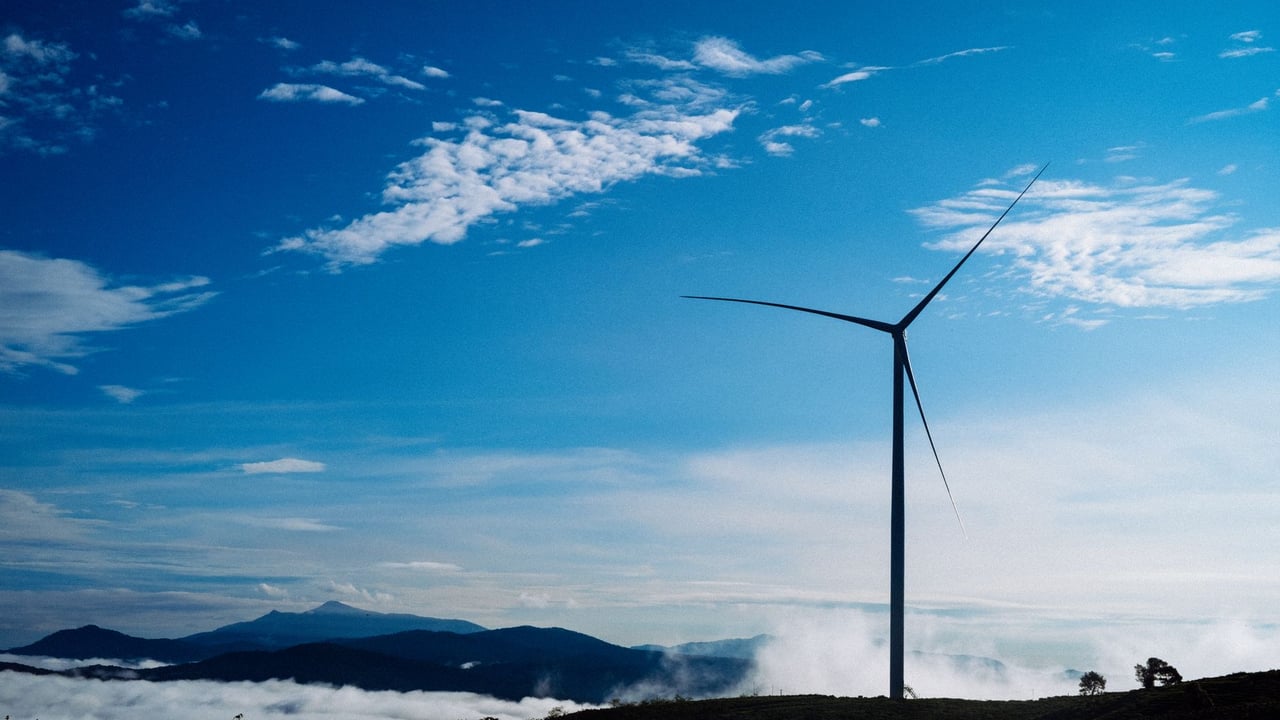
Photo by Khoa Võ on Pexels
The Brief
The world's first 16-megawatt tension leg platform (TLP) floating offshore wind unit, named Haiyou Anlan, has been commissioned and connected to the power grid of the Lufeng oilfield cluster in the South China Sea. Developed and built in China, the deep-water facility utilizes Mingyang Smart Energy's MySE16-260 typhoon-resistant floating turbine to deliver green electricity directly to offshore oil and gas production facilities.
Why it matters
The commissioning marks the first commercial deployment of a 16 MW-class tension leg floating wind system in deep-sea industrial operations. By feeding green power directly into an operating offshore oilfield cluster, the project establishes an engineering template for decarbonizing offshore hydrocarbons extraction while validating ultra-large floating wind turbines on tension-leg moorings.
China context
As nearshore shallow-water wind resources become increasingly congested, Chinese energy developers are pushing farther into deeper waters. Haiyou Anlan is China's first domestically designed, manufactured, and installed TLP floating platform, underscoring domestic supply-chain capabilities in heavy offshore engineering and supporting China's broader dual-carbon goals.
Editor's View
EDITOR'S VIEW — Analysis and inference, not factual reporting.
Decarbonizing offshore oil and gas extraction has historically been hindered by the difficulty of anchoring massive renewable installations in deep waters with severe weather risks. Deploying a 16 MW TLP platform directly linked to an offshore oil network addresses both installation efficiency and platform power demand, though long-term performance under South China Sea typhoon conditions remains the key operational metric to monitor.
What to watch
- Operational resilience and stability of the platform during South China Sea typhoon seasons
- Actual fuel savings and carbon reduction data achieved across the Lufeng oilfield cluster
- Cost trajectory and scale deployment potential for TLP floating wind in other deep-water energy hubs
Key Takeaways
- 1The 16 MW Haiyou Anlan floating wind platform has been connected to the Lufeng oilfield power grid.
- 2The unit features Mingyang Smart Energy's MySE16-260 turbine and stands over 307 meters tall in 136-meter-deep waters.
- 3An integrated quayside assembly and towing process was utilized to minimize offshore installation risks.
- 4The project is expected to generate 54 million kWh annually, reducing CO2 emissions by 35,000 tonnes.
The world's first 16-megawatt tension leg platform (TLP) floating wind unit, Haiyou Anlan, has officially been integrated into the Lufeng oilfield power grid, state media reported on Friday. The installation has commenced direct green electricity transmission to offshore oil and gas facilities operating off the coast of eastern Guangdong province.
According to People's Daily, Haiyou Anlan is located approximately 136 kilometers offshore in waters with a depth of 136 meters. It represents China's first domestically designed, constructed, and installed tension leg floating wind platform.
The entire installation reaches a total height exceeding 307 meters. It is equipped with the MySE16-260 typhoon-resistant floating wind turbine developed by Mingyang Smart Energy, featuring a single-unit capacity of 16 MW, a hub height of 155 meters, and a rotor diameter of 260 meters. The swept area spans 53,000 square meters, equivalent to roughly 7.5 standard football fields.
To overcome the logistical complexities of deep-sea engineering, the project employed a quayside complete-integration approach followed by integrated ocean towing. This construction method minimized high-risk assembly work at sea, substantially reducing overall project construction duration and marine installation risks.
Once in full operation, the platform is projected to generate an average of approximately 54 million kilowatt-hours of clean electricity annually. This output is estimated to reduce carbon dioxide emissions by roughly 35,000 metric tons per year while saving approximately 15,000 cubic meters of fuel oil. Electricity is delivered directly to the Lufeng oilfield cluster via subsea cables, providing a stable stream of renewable energy for marine oil and gas production.
Sources
- 全球首座16兆瓦张力腿浮式风电平台正式投运--经济·科技--人民网 — People's Daily · 8/7/2026