
Business & IndustryAnalysis
Chongqing Wind and Solar Capacity Exceeds 10 Gigawatts Amid Grid Push
Wind and photovoltaic installations now account for more than 23 percent of the southwestern municipality's total power capacity.
Share
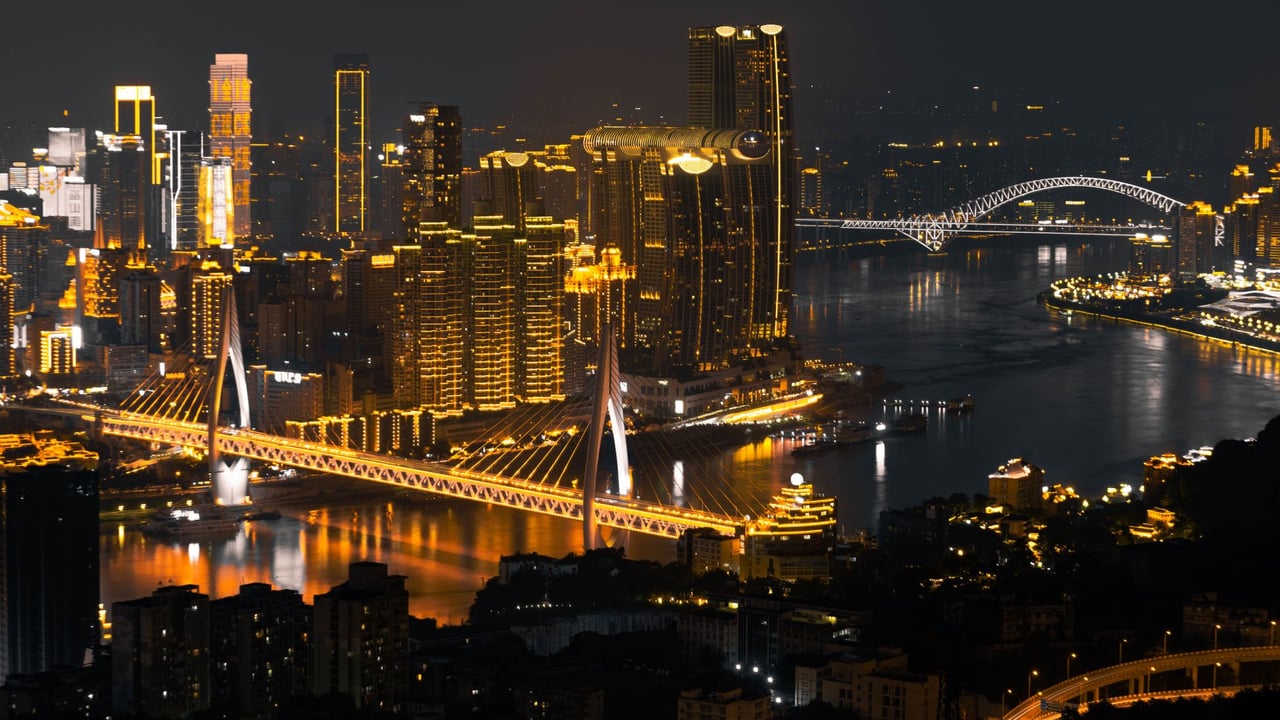
Photo by 余鑫磊 on Pexels
The Brief
Chongqing's combined wind and solar power capacity has surpassed 10 gigawatts, reaching 10.39 million kilowatts, according to State Grid Chongqing Electric Power Company. This reflects a more than 17 percent increase compared to the end of 2025, lifting wind and solar to over 23 percent of the municipality's total installed capacity. Distributed solar represents more than half of the total, supported by expanding pumped storage and grid-side battery storage projects.
Why it matters
Crossing the 10-gigawatt mark highlights how inland industrial centers in southwest China are diversifying their energy mix beyond traditional hydropower and thermal generation, reinforcing local supply stability during seasonal peak demand.
China context
Under China's broader push toward dual-carbon targets and next-generation power systems, regional grids must balance rapid renewable integration with intermittent output. Chongqing is pairing wind and solar deployment with pumped hydro and grid-side storage to maintain grid stability.
Editor's View
EDITOR'S VIEW — Analysis and inference, not factual reporting.
Chongqing's expansion illustrates the evolving operational reality of China's provincial power grids. Distributed solar is scaling faster than centralized installations in topographically complex regions. The primary challenge going forward shifts from generation capacity to flexible reserve adequacy, requiring continued investment in short-duration and long-duration storage.
What to watch
- Construction and commissioning timelines for additional pumped storage and grid-side energy storage projects in Chongqing
- Distribution network management policies addressing the rapid growth of distributed rooftop solar
- Actual renewable generation output and peak-shaving performance during summer peak demand periods
Key Takeaways
- 1Chongqing's wind and solar capacity reached 10.39 million kW, up more than 17% from the end of 2025.
- 2Renewables now make up over 23% of Chongqing's total power generation capacity.
- 3Distributed solar reached 5.25 million kW by late July, making up over half of all wind and solar assets.
- 4The grid is supported by a 1.2 million kW pumped-storage station and 12 grid-side storage facilities offering 1.4 million kW of flexibility.
Chongqing's combined installed capacity of wind and solar power has crossed the 10 million kilowatt threshold to reach 10.39 million kilowatts, according to data released by State Grid Chongqing Electric Power Company and reported by People's Daily.
The figure marks an increase of more than 17 percent compared to the end of 2025. Wind and photovoltaic power now represent over 23 percent of the southwestern municipality's total installed electricity generation capacity, accelerating the local transition toward a cleaner energy mix.
Distributed solar has driven much of the recent expansion. By the end of July, Chongqing's distributed photovoltaic capacity reached 5.25 million kilowatts, accounting for more than half of the municipality's total wind and solar installations.
To accommodate the rapid growth of intermittent renewable generation, local grid operators are expanding regulating assets. Xiao Qiang, director of the New Power System Construction Center at the State Grid Chongqing Electric Power Research Institute, noted that wind and solar power exhibit significant intermittency and volatility compared to conventional thermal and hydropower assets, requiring large-scale energy storage and flexible capacity to ensure grid reliability.
According to official data, Chongqing currently operates one pumped-storage hydroelectric station with an installed capacity of 1.2 million kilowatts. In addition, 12 grid-side energy storage projects have been commissioned across the municipality, providing an additional 1.4 million kilowatts of regulating capacity to support renewable energy consumption and maintain grid stability.
Sources
- 重庆风光发电装机容量突破1000万千瓦--经济·科技--人民网 — People's Daily · 8/17/2026