
Policy & RegulationAnalysis
China's Foreign Exchange Reserves Slipped to $3.4 Trillion in September
Valuation shifts and a stronger dollar drove a 1.11% dip, while official gold holdings rose for a 23rd straight month.
Share
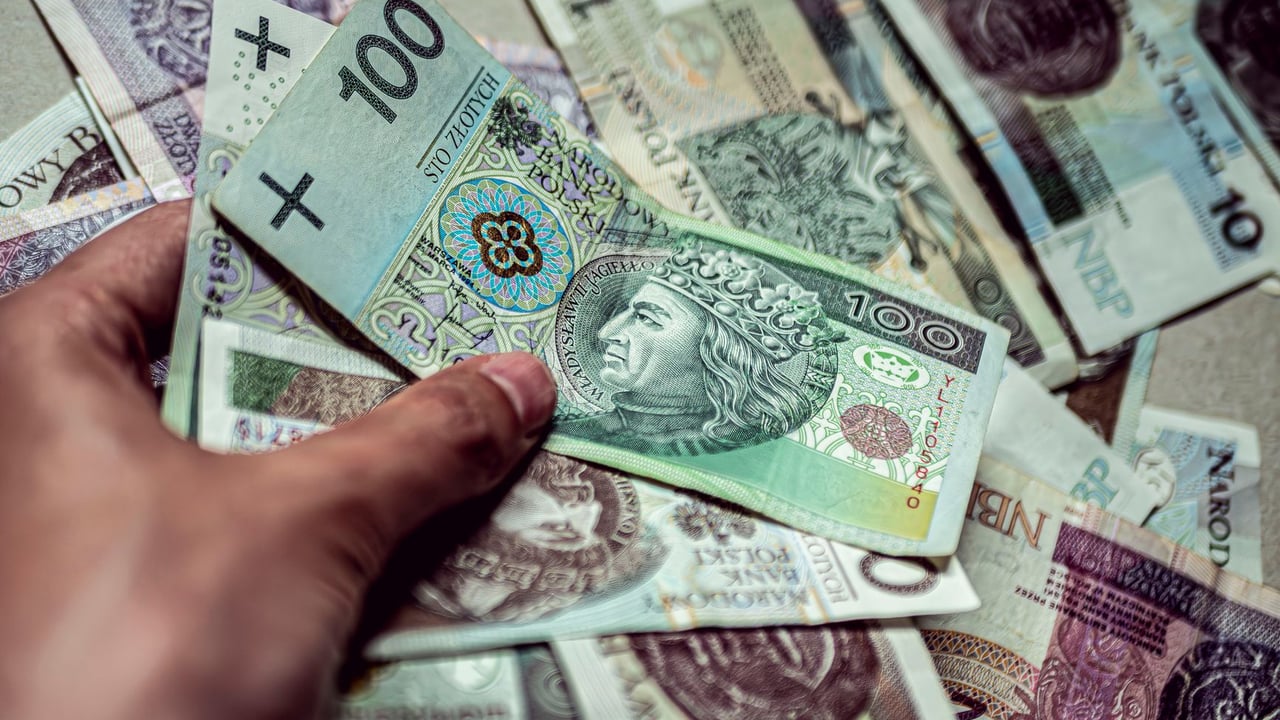
Photo by SHOX ART on Pexels
The Brief
China's foreign exchange reserves stood at approximately $3.4003 trillion at the end of September, declining by $38.1 billion or 1.11% from August, according to official data reported by Securities Times and People's Daily. The State Administration of Foreign Exchange attributed the contraction to exchange rate conversion effects and lower global asset prices amid a stronger U.S. dollar. Concurrently, central bank gold reserves rose by 740,000 ounces to 77.47 million ounces, marking the 23rd consecutive month of net gold purchases.
Why it matters
Foreign exchange reserves serve as a primary buffer for China's external liquidity, currency stability, and broader financial security. Despite the monthly contraction caused by global market volatility, maintaining reserves above the $3.4 trillion mark provides ample room to manage capital flows. The unbroken 23-month streak of gold accumulation further highlights Beijing's sustained push to diversify reserve assets away from dollar-denominated holdings and bolster resilience against heightened geopolitical and macroeconomic risks.
China context
The monthly adjustment in reserves occurred against a backdrop of ongoing domestic financial reforms and evolving trade conditions. Chinese regulators have recently rolled out nationwide measures facilitating cross-border treasury management for multinational corporations to streamline two-way capital flows. Meanwhile, stable export fundamentals, driven by demand for artificial intelligence hardware and ongoing bilateral tariff negotiations, continue to underpin China's basic balance of payments.
Editor's View
EDITOR'S VIEW — Analysis and inference, not factual reporting.
The decline in China's headline foreign reserves for September reflects global valuation accounting rather than underlying capital flight. As the dollar rallied and major sovereign debt and equity indices softened, mark-to-market valuations naturally declined across international reserve portfolios. More telling is the central bank's disciplined, incremental expansion of gold reserves: adding roughly 740,000 ounces every month reinforces a structural reallocation toward neutral safe-haven assets, balancing exchange rate stability with long-term strategic diversification.
What to watch
- Whether the central bank maintains its streak of monthly gold purchases through the fourth quarter.
- Impact of nationwide multinational cross-border capital pooling rules on net balance of payments flows.
- Export performance in high-tech manufacturing, particularly semiconductors and server hardware.
Key Takeaways
- 1Foreign exchange reserves dropped by $38.1 billion (1.11%) in September to approximately $3.4003 trillion.
- 2The State Administration of Foreign Exchange attributed the contraction to a rising U.S. dollar index and declining global financial asset prices.
- 3Gold reserves increased by 740,000 ounces to 77.47 million ounces, extending an expansion streak to 23 consecutive months.
- 4Analysts emphasize resilient high-tech exports and new nationwide multinational cross-border cash management policies as stabilizing factors for external balances.
China's foreign exchange reserves stood at just over $3.4 trillion at the end of September, recording a modest decrease compared with August, according to official figures published by Chinese state media.
Data released by the People's Bank of China and reported by Securities Times put the exact figure at $3,400.251 billion, while a detailed breakdown published by People's Daily showed the total rounded to approximately $3.4003 trillion. The reserve level represents a decline of $38.1 billion, or 1.11%, compared to the end of August.
An official from the State Administration of Foreign Exchange explained that global macroeconomic conditions and major central bank monetary policy shifts led to an increase in the U.S. dollar index during September, alongside general declines across major global financial asset prices. The official stated that the combined impact of exchange rate translation effects and asset price fluctuations resulted in the reduction in reserve scale, while noting that China's ongoing economic development supports overall reserve stability.
Alongside the foreign exchange figures, official gold holdings continued their upward trajectory. China's gold reserves reached 77.47 million ounces at the end of September, up by 740,000 ounces from 76.73 million ounces recorded at the end of August. This marks the 23rd consecutive month that the central bank has expanded its gold stockpile.
Commenting on the external environment, Wen Bin, chief economist at China Minsheng Bank, noted that exports are expected to maintain resilience and provide a stable foundation for the balance of payments. He pointed to strong global capital expenditure in artificial intelligence, sustained demand for chips and servers, and bilateral trade talks, including a tariff reduction framework covering $30 billion in goods agreed upon in September.
Wen also cited regulatory measures that took effect on September 14 expanding multinational corporate cross-border fund pooling nationwide, which aim to streamline currency management and cross-border settlement. According to the World Gold Council, cited by People's Daily, persistent gold accumulation by the central bank serves to diversify China's reserve portfolio and reinforce external financial resilience amid ongoing geopolitical friction.
Sources
- Stcn — Securities Times · 10/7/2026
- 截至9月末外汇储备规模超3.4万亿美元 黄金储备连续23个月增加--经济·科技--人民网 — People's Daily · 10/7/2026