
Business & IndustryAnalysis
China's Freight and Port Traffic Post Moderate Growth in First Seven Months
Steady expansion in foreign trade throughput and container volume accompanies new shipping routes to emerging markets.
Share
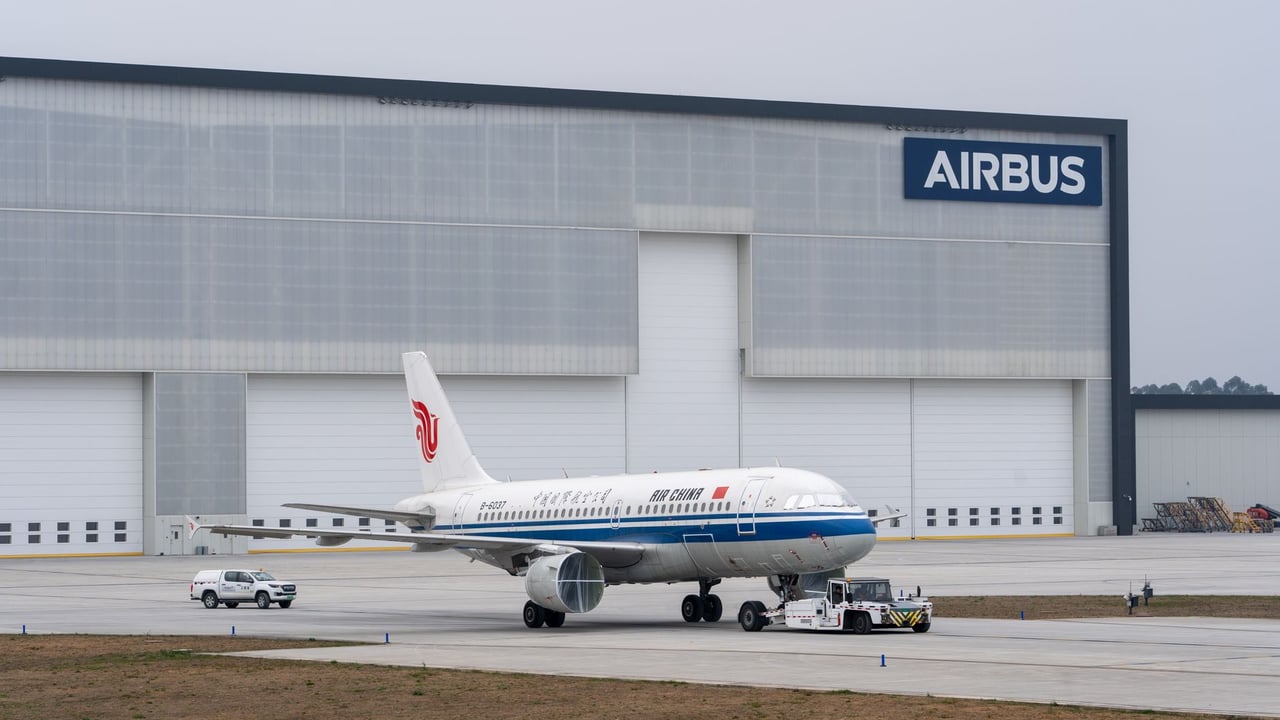
Photo by Peter Xie on Pexels
The Brief
China's commercial freight volume expanded 2.8 percent year-on-year to 32.97 billion tonnes in the first seven months of the year, supported by steady domestic logistics and international trade. Official data released by the Ministry of Transport shows port cargo throughput rose 1.3 percent to 10.56 billion tonnes, led by a 3.6 percent increase in foreign trade volume. Chinese coastal and river ports also accelerated the rollout of direct shipping routes to Africa, Latin America, and South Asia, while fixed-asset investment in transport infrastructure exceeded 1.81 trillion yuan.
Why it matters
The steady growth in freight volume and foreign trade port throughput highlights the underlying resilience of China's supply chains amid shifting global trade dynamics. The expansion of specialized maritime routes to Africa and South America illustrates how Chinese industrial exports are diversifying toward emerging markets, particularly for machinery, vehicles, and construction equipment.
China context
Maintaining robust transport investment is a key pillar of Beijing's strategy to stabilize domestic economic growth through infrastructure spending. With over 1.8 trillion yuan deployed into highways, waterways, and transport hubs during the January–July period, policymakers continue to prioritize cross-regional connectivity and multimodal logistics channels under the 'Transport Powerhouse' agenda.
Editor's View
EDITOR'S VIEW — Analysis and inference, not factual reporting.
While headline growth figures remain moderate, the divergence between domestic trade throughput (up 0.3 percent) and foreign trade throughput (up 3.6 percent) points to export logistics outpacing domestic bulk demand. The focus on direct shipping links from inland and regional ports like Nanjing and Yantai also reveals an operational push to reduce export transit friction for heavy industrial products.
What to watch
- Whether foreign trade cargo throughput maintains its growth momentum in the second half of the year amid broader global economic shifts.
- The pace of capital deployment and construction milestones on major national transport projects such as the Three Gorges new waterway and Xinjiang Duku Expressway.
- Export volume trends for engineering machinery and project cargo along newly launched African and Latin American shipping routes.
Key Takeaways
- 1Commercial freight volume reached 32.97 billion tonnes in January–July, up 2.8% year-on-year.
- 2Foreign trade port throughput grew 3.6%, outpacing overall port throughput growth of 1.3%.
- 3Container throughput rose 5.1% to reach 210 million TEUs.
- 4Ports launched new international routes targeting Africa, South America, and South Asia.
- 5Transport fixed-asset investment reached 1.815 trillion yuan, led by 1.201 trillion yuan in highways.
China's transportation sector recorded steady operational growth over the first seven months of the year, driven by resilient foreign trade throughput and continuous infrastructure investment, according to official data released by the Ministry of Transport.
From January to July, national commercial freight volume reached 32.97 billion tonnes, representing a 2.8 percent increase compared to the same period last year. Highway freight accounted for the bulk of transport activity at 24.98 billion tonnes, up 2.9 percent year-on-year, while waterway freight expanded 3.0 percent to reach 4.93 billion tonnes.
Nationwide port performance was anchored by foreign trade demand. Total port cargo throughput rose 1.3 percent year-on-year to 10.56 billion tonnes. While domestic trade cargo throughput recorded a modest 0.3 percent increase, foreign trade throughput advanced by 3.6 percent. In parallel, container throughput across Chinese ports rose 5.1 percent to 210 million twenty-foot equivalent units (TEUs).
To accommodate evolving export destinations, Chinese port operators have expanded direct shipping links, particularly toward emerging markets. Yantai Port in Shandong province added four direct routes serving African destinations—including Algeria, Dakar in Senegal, Namibia, and Djibouti—handling over 6 million tonnes of cargo this year across more than 200 categories such as machinery, vehicles, and construction materials, marking a 66.1 percent year-on-year increase. Similarly, Nanjing Port introduced three new foreign trade shipping services connecting to major hubs in South America, South Asia, and North America to facilitate direct inland equipment exports.
Capital expenditure in transportation infrastructure remained solid, with total fixed-asset investment reaching 1.8152 trillion yuan ($250 billion) during the seven-month period. Highways absorbed 1.2011 trillion yuan, while waterway projects accounted for 125.5 billion yuan. Key national undertakings, including the Three Gorges water transport new channel, the Duku Expressway in Xinjiang, and the Dalian Jinzhou Bay International Airport integrated transport hub, continued construction.
Passenger mobility also maintained steady levels, with cross-regional passenger volume totaling 39.79 billion trips, an increase of 0.8 percent year-on-year, supported by holiday travel across highway and waterway networks.
Sources
- 前7月我国交通运输主要指标保持增长 外贸新航线密集开通 — National Business Daily · 8/25/2026
- 前7个月我国交通出行397.9亿人次 — State Council of China · 8/25/2026