
Business & IndustryAnalysis
Chinese Industrial Manufacturers Repurpose Infrastructure for Energy Storage
Heavy industries and equipment makers are adopting molten salt and compressed air systems to absorb renewable power and stabilize grids.
Share
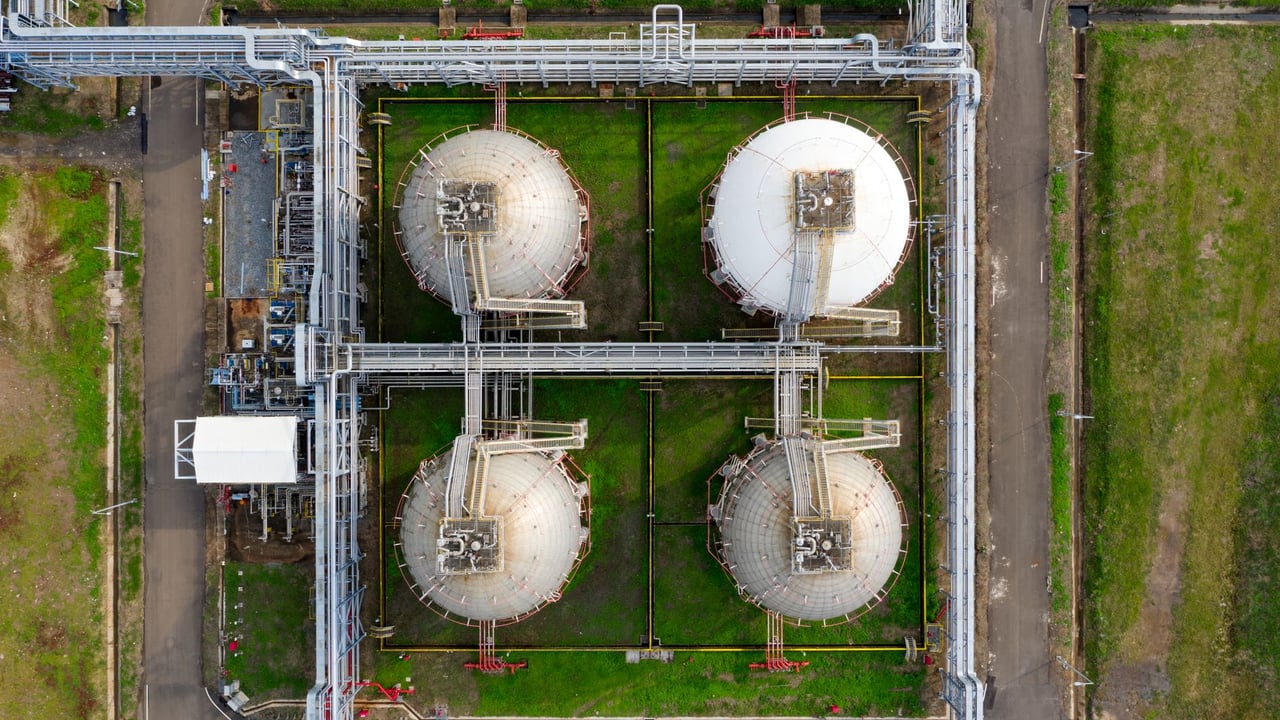
Photo by Tom Fisk on Pexels
The Brief
China's rapid expansion of renewable power—with wind and solar capacity reaching 1.84 billion kilowatts in 2025—is accelerating a transition among traditional industrial enterprises from pure power consumers into active grid regulators. Major industrial players are deploying advanced long-duration energy storage systems, such as electric molten salt thermal storage for heavy manufacturing and utility-scale compressed air storage in underground salt caverns. Meanwhile, traditional boiler and power equipment manufacturers are pivoting toward manufacturing storage components, capitalizing on domestic energy storage deployment that now accounts for roughly half of the global total.
Why it matters
Grid stability and renewable curtailment remain significant hurdles as variable wind and solar capacity outpaces coal. Converting heavy industrial plants into flexible balancing assets and repurposing geological formations allows China to absorb surplus green power directly at consumption hubs while generating new growth sectors for legacy heavy-machinery manufacturers.
China context
China hosts approximately 50 percent of the world's newly installed energy storage capacity, with operational new-type energy storage reaching 153 million kilowatts (396 million kilowatt-hours) by mid-year, a 61 percent increase year on year. As the country pushes toward a modern power system, leveraging existing heavy manufacturing bases and unused geological resources, such as depleted salt caverns, offers an economically feasible route for long-duration energy storage.
Editor's View
EDITOR'S VIEW — Analysis and inference, not factual reporting.
The integration of molten salt and compressed air storage directly into industrial operations reflects a pragmatic shift in China's energy transition. Instead of relying solely on utility-side lithium-ion batteries, industrial players are leveraging thermal and mechanical storage to supply continuous high-temperature steam and base-load electricity. This dual-purpose strategy helps energy-intensive sectors meet decarbonization mandates while providing domestic heavy equipment makers a viable hedge against the eventual plateau of traditional coal-fired power equipment.
What to watch
- Economic payback metrics and steam output consistency from industrial molten salt storage projects in heavy manufacturing.
- Expansion pace and licensing of underground salt cavern storage projects across eastern and central provinces.
- Order volume shifts at traditional equipment manufacturers, such as Dongfang Boiler, toward hybrid thermal-storage and compressed-air systems.
Key Takeaways
- 1China's combined wind and solar capacity reached 1.84 billion kilowatts in 2025, driving urgent demand for long-duration energy storage solutions.
- 2Total operational new-type storage capacity reached 153 million kW (396 million kWh) by mid-year, representing a 61 percent annual increase.
- 3Weiqiao Pioneering Group deployed a molten salt system absorbing 810 million kWh of green power annually to generate over 1 million tons of industrial steam.
- 4The Guoxin Suyan project in Jiangsu utilizes deep salt caverns for compressed air storage, yielding 792 million kWh of annual power generation.
- 5Traditional equipment manufacturers like Dongfang Boiler are diversifying into molten salt and compressed-air storage components.
As China's combined wind and solar capacity reached 1.84 billion kilowatts in 2025, surpassing coal power, the challenge of managing intermittent green electricity has prompted heavy industrial enterprises to transition from passive energy consumers into grid regulators, according to reports by People's Daily.
Traditional manufacturing sectors, which depend on uninterrupted power and industrial steam, are turning to thermal storage to manage renewable intermittency. In Shandong, Weiqiao Pioneering Group commissioned an electric heating molten salt energy storage project designed to convert fluctuating photovoltaic power into continuous industrial steam. The installation absorbs 810 million kilowatt-hours of green electricity annually to produce approximately 1.028 million tons of green steam for an eight-million-ton alumina production complex.
At the grid level, long-duration energy storage is increasingly utilizing geological assets to balance inter-day and seasonal fluctuations. In Huai'an, Jiangsu, the Guoxin Suyan compressed air energy storage project began commercial operations earlier this year, utilizing deep underground salt caverns. According to Zhong Zhikun, deputy general manager of the operating unit, the abandoned salt caverns provide high pressure containment and natural structural self-healing through crystallization. The facility is designed to generate 792 million kilowatt-hours annually, providing enough balancing power for an estimated 600,000 households.
This rapid expansion of new-type energy storage—which grew 61 percent year-on-year to 153 million kilowatts and 396 million kilowatt-hours by the end of June—is generating cross-sector demand for legacy industrial equipment makers. In Suzhou, Anhui, the core equipment for a major integrated thermal power and molten salt storage project was manufactured by Dongfang Boiler, a long-established industrial boiler producer. The company has since diversified into integrated solutions covering coal-fired unit decoupling, steel plant peak shaving, and compressed air energy storage systems, illustrating how legacy manufacturing capacity is being repurposed for grid-balancing technologies.
Sources
- “老兵”站上新赛道丨工业“老底子”炼出储能“新本领”--经济·科技--人民网 — People's Daily · 8/8/2026