
Business & IndustryAnalysis
Chinese Energy Storage Firms Report Robust Growth on AI Data Centers and Global Demand
First-half 2026 corporate earnings indicate recovery across China's energy storage supply chain, driven by artificial intelligence infrastructure and overseas project wins.
Share
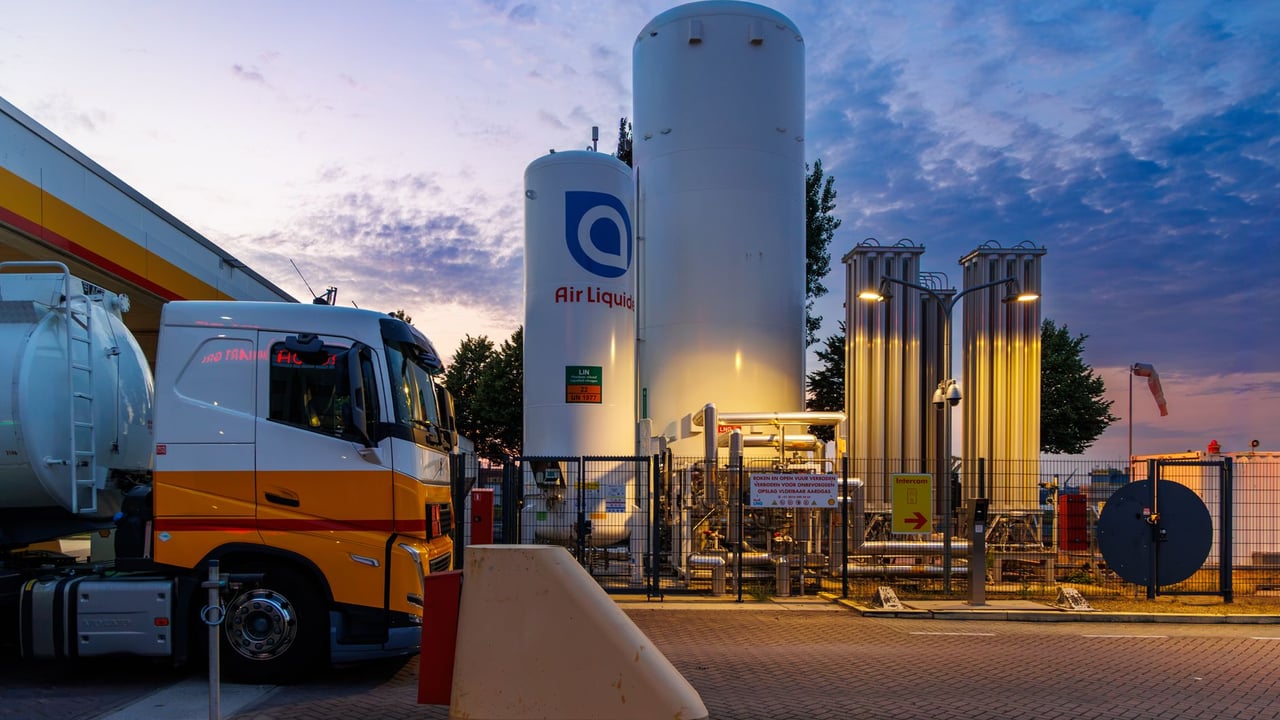
Photo by Igor Passchier on Pexels
The Brief
First-half 2026 financial results from Chinese energy storage manufacturers point to an accelerating industry recovery following significant capacity rationalization in 2025. Listed companies reported surging demand across two distinct fronts: specialized power systems designed for artificial intelligence data centers and utility-scale and residential storage export contracts. Alongside broader market diversification away from mandatory grid-connection quotas, leading suppliers recorded sharp increases in revenue, pointing toward more resilient commercial fundamentals across the sector.
Why it matters
The earnings trajectory highlights an important shift for China's energy storage sector, moving from policy-mandated renewable pairing toward commercially driven end markets. Increased adoption across AI compute hubs, coupled with international utility deployments, is reinforcing order books for established manufacturers following a deep shakeout in 2025.
China context
China is building a new-type power system tailored for high shares of intermittent renewables. To support this transition, central regulators established independent capacity pricing mechanisms for grid-side storage, while market actors are actively integrating power infrastructure with high-density compute clusters across domestic tech corridors.
Editor's View
EDITOR'S VIEW — Analysis and inference, not factual reporting.
The commercial evolution reflected in first-half 2026 reports demonstrates that storage assets are transitioning from regulatory compliance burdens into operational necessities. For global markets, China's aggressive manufacturing scale and fast-paced deployment in AI-adjacent infrastructure will likely lower system costs further, though geopolitical frictions and trade scrutiny around renewable components remain a recurring challenge abroad.
What to watch
- Implementation and billing details of provincial capacity tariff mechanisms for grid-side independent storage
- Durability of AI compute cluster procurement for industrial backup and primary storage systems
- Commercialization timelines for next-generation architectures including long-duration and grid-forming storage
Key Takeaways
- 1First-half 2026 earnings show accelerating recovery in China's energy storage chain, driven by AI data centers and foreign deployments.
- 2CATL's storage revenue climbed 87.54% to 53.261 billion yuan, while EVE Energy's storage segment grew 69.15%.
- 3Data center infrastructure orders saw rapid expansion, with Jinpan Technology reporting data center bookings up over 336%.
- 4Export sales provided primary momentum for inverter and battery manufacturers including Deye, GoodWe, and Pylontech.
- 5A newly instituted capacity tariff mechanism from the NDRC and NEA is formalizing revenue models for grid-side independent storage.
First-half 2026 earnings from Chinese publicly traded clean energy suppliers reflect a steady recovery across the energy storage value chain, propelled by expanding artificial intelligence infrastructure and rising overseas demand, according to a report by People's Daily.
Following a period of consolidation in 2025 that cleared out lower-tier manufacturing capacity, sector concentration has increased, supporting higher utilization rates among Tier-1 manufacturers. Contemporary Amperex Technology Co., Limited (CATL) reported 53.261 billion yuan in energy storage battery system revenue for the first half of 2026, marking an 87.54% increase year-on-year and raising storage's share of total revenue to 19.23%. EVE Energy achieved total revenue of 45.691 billion yuan, up 62.2%, with its dedicated storage battery segment expanding 69.15% over the same period.
A key driver of domestic market expansion has been the rapid integration of energy storage into computing facilities. As computing density rises, storage units are increasingly serving as direct power stabilizers rather than passive emergency reserves. For instance, Sinexcel recorded 441 million yuan in industrial auxiliary power revenue, up 57.81%, supported by a dedicated business unit for AI data center critical power. Similarly, Jinpan Technology reported 7.493 billion yuan in newly signed orders, up 69.31%, with data center-related contracts surging 336.25% to 38.69 billion yuan.
Overseas markets have also emerged as an indispensable revenue pillar for Chinese manufacturers. Deye Share posted a 78.53% increase in net profit attributable to parent shareholders, citing robust overseas demand. GoodWe reported first-half sales of roughly 181,700 energy storage inverters, driven predominantly by international orders, while Pylontech saw utility-scale overseas contracts contribute significantly to its storage business expansion.
Analysts at CITIC Securities noted that the domestic sector has largely moved beyond purely administrative mandates that forced renewable developers to co-locate batteries, transitioning toward merchant independent assets, peak-shaving units, and commercial installations. Policy support has also evolved: in January, the National Development and Reform Commission and the National Energy Administration instituted a dedicated capacity tariff framework for grid-side independent energy storage, setting clearer revenue mechanisms for operators.
Sources
- 2026半年报观储能:算力启增量 出海强动能--经济·科技--人民网 — People's Daily · 8/30/2026