
Technology & AIAnalysis
China Airborne Wind System S4000 Completes High-Altitude Flight Tests
Linyi Yunchuan completes a full-cycle trial of its S4000 airborne wind turbine at a high-altitude base in northwest China.
Share
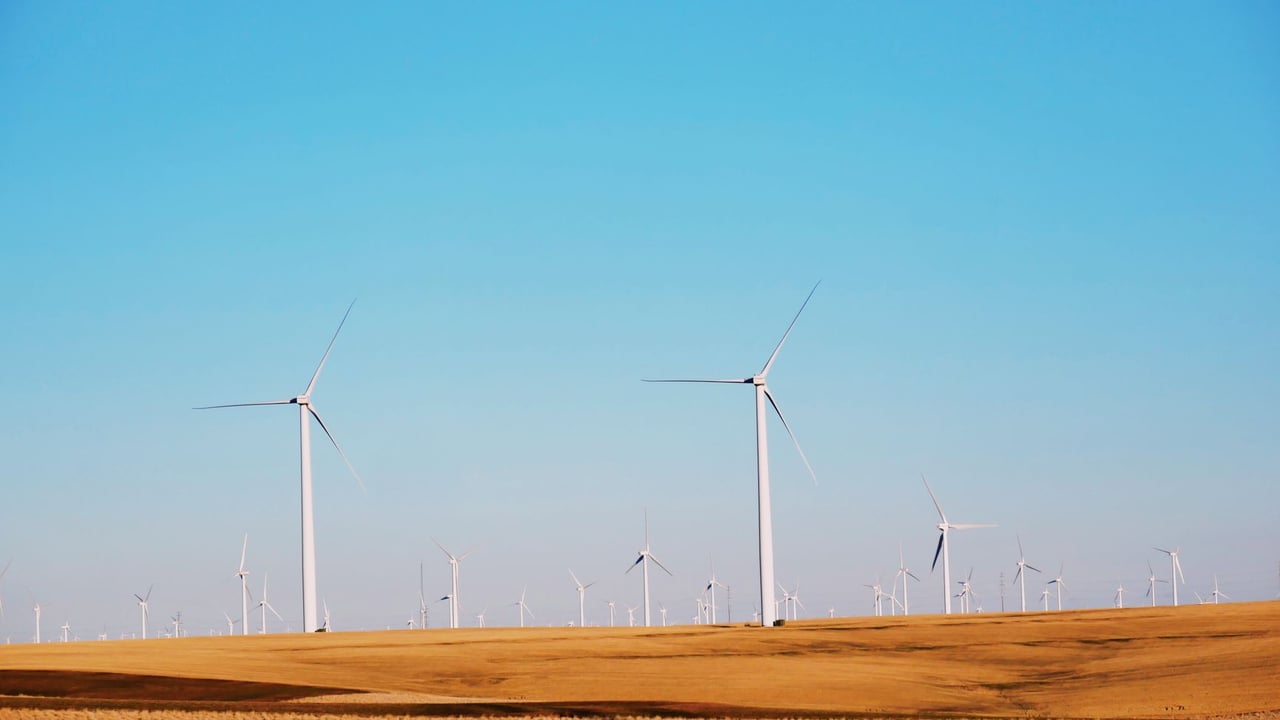
Photo by Aleksey Kuprikov on Pexels
The Brief
Chinese developer Linyi Yunchuan has completed a full-cycle flight verification of its S4000 floating airborne wind energy system at a high-altitude test base in northwest China, according to People's Daily. The trial evaluated ascent, stable aloft station-keeping, power generation, and controlled retrieval under extreme plateau conditions. Designed for high-altitude environments, the S4000 is intended to collect operational data to support the development of a larger 5-megawatt unit, while also serving remote off-grid installations, conventional grid supply, and dual-use airborne sensing platforms.
Why it matters
Ground-based wind power faces geographic bottlenecks and variable surface wind speeds, whereas high-altitude and stratospheric winds offer substantially higher energy density and consistency. Validating the full operational cycle of a buoyant airborne wind turbine under challenging plateau conditions marks an engineering step toward commercial airborne power generation. If operational durability can be proven over long-duration deployments, such systems could provide independent power to remote infrastructure, island bases, and high-altitude border posts where conventional grid extension remains economically or physically impractical.
China context
The trial aligns with China's broader drive to build a 'new power system' capable of integrating non-traditional clean energy sources, as well as Beijing's strategic push to expand the 'low-altitude economy.' By designing aerostats that generate electricity while remaining airborne for extended periods, developers can integrate radar, telecommunications relays, and environmental sensors alongside power generation. This multipurpose profile fits domestic policy priorities that favor dual-purpose infrastructure for national security, border logistics, and emergency management in rugged border regions.
Editor's View
EDITOR'S VIEW — Analysis and inference, not factual reporting.
Airborne wind energy has seen decades of experimentation globally, but commercialization has repeatedly stumbled on tether durability, severe weather survival, and regulatory airspace clearance. Linyi Yunchuan's test demonstrates mechanical execution in harsh inland plateau weather, yet a single completed flight cycle leaves open the critical question of long-term continuous operation. The key metric to watch will be whether the S4000 can sustain continuous station-keeping over weeks or months without mechanical degradation, and whether the targeted levelized cost of electricity can compete with modular solar-plus-storage microgrids in remote regions.
What to watch
- Duration and power output metrics from planned long-term endurance trials of the S4000 at high altitudes
- R&D milestones and manufacturing rollout for the planned S6000-5MW airborne wind turbine model
- Commercial pilot deployments in remote off-grid applications such as mining outposts, border defense stations, and communication relays
Key Takeaways
- 1Linyi Yunchuan completed a full-cycle flight verification test for its S4000 floating airborne wind energy system in northwest China.
- 2The trial validated ascent, aloft station-keeping, power generation, and recovery under high-altitude plateau conditions.
- 3Data gathered from the S4000 is intended to support development of the company's next-generation S6000-5MW platform.
- 4Potential applications include off-grid power for remote islands and border posts, alongside secondary roles as communication and surveillance relays.
Chinese aerostat developer Linyi Yunchuan has completed a full-cycle flight test verification of its S4000 floating airborne wind energy system at a high-altitude testing base in northwest China, according to a report by People's Daily.
The test of the Stratospheric Airborne Wind Energy System covered all operational phases, including ascent, stable airborne hovering, power generation testing, and controlled recovery. According to the company, core functional and performance parameters met design expectations, demonstrating the platform's mechanical and operational reliability under demanding high-altitude conditions.
The S4000 is designed as a foundational grid-support model optimized for plateau and high-altitude deployments. Compared to the company's earlier S2000 prototype, the S4000 features a redesigned aerostat configuration with upgrades to rated power capacity, operational altitude limits, and modular systems integration. Linyi Yunchuan plans to deploy the unit for sustained high-altitude power generation tests, with the resulting extreme-environment data serving as the technical baseline for developing its next-generation S6000-5MW system.
The company is targeting three main commercial scenarios for its tethered buoyant systems. First, the platforms are intended to serve as auxiliary grid-connected clean power generators. Second, they are positioned for off-grid power supply in hard-to-reach areas such as mountain ranges, islands, mining districts, and remote border defense outposts. Third, the long-duration tethered aerostats are designed to support low-altitude economic activities by carrying auxiliary payloads, including radar, communications relays, and monitoring equipment for emergency response and perimeter surveillance.
To support system production, Linyi Yunchuan has assembled an industrial footprint spanning multiple provinces. Headquartered in Beijing for research and development, the firm operates an R&D and pilot testing base in Changsha, a specialized skin material production facility in Zhoushan, an assembly super-factory in Yueyang, and an additional final assembly center in Chengdu.
Founder and Chief Executive Officer Dun Tianrui stated that the team began investigating airborne wind power principles in 2017. Following successive iterations of scale prototypes, Dun said the firm has established core manufacturing and supply capabilities and plans to increase R&D investments to accelerate commercialization.
Sources
- 攻克高海拔工况难题 S4000浮空风电系统完成全流程放飞验证--经济·科技--人民网 — People's Daily · 9/1/2026