
Business & IndustryAnalysis
China Promotes Upgraded Hualong One 2.0 Nuclear Reactor to Global Market
CGN unveils an upgraded Generation III+ design offering reduced equipment footprints, higher automation, and fully domestic key components.
Share
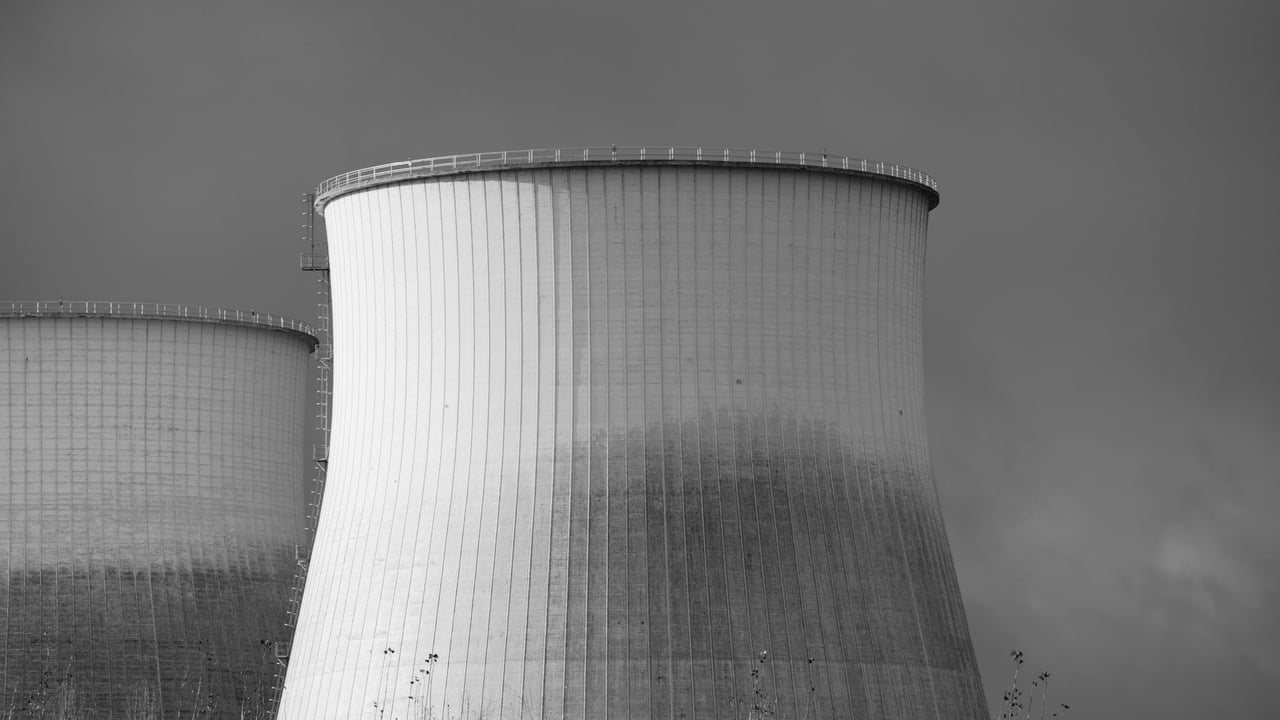
Photo by Budget Bizar on Pexels
The Brief
China General Nuclear Power Group (CGN) has formally introduced Hualong One 2.0, an upgraded 'Generation III+' pressurized water reactor design, during an international conference in Shenzhen. The new iteration builds upon China's flagship nuclear export, incorporating nearly 100 design optimizations that reduce physical installation volume and piping requirements while boosting automation by 66%. Developers stated that the reactor can autonomously withstand accidents for up to seven days without operator intervention and achieves 100% domestic capability for critical components.
Why it matters
The introduction of Hualong One 2.0 indicates China's nuclear power industry is shifting from scaling construction to refining operational efficiency and cost structures. By cutting installation workloads and streamlining equipment, the new design seeks to address construction delays and capital expenditure hurdles that often complicate major nuclear energy deployments globally.
China context
Nuclear energy represents a pillar in China's transition toward clean baseload power and its dual-carbon targets. Known domestically as a 'national calling card,' the Hualong One platform has already seen 10 units enter commercial operation and 37 additional units approved or under construction across domestic and international sites, establishing a robust supply chain to support updated engineering designs.
Editor's View
EDITOR'S VIEW — Analysis and inference, not factual reporting.
The rollout of Hualong One 2.0 underscores how Chinese state nuclear developers are addressing the commercial vulnerabilities of Generation III builds. While original Generation III designs delivered advanced passive safety, many faced significant cost overruns and complex field construction globally. By intentionally reducing auxiliary complexity—such as shrinking piping lengths by nearly a third and the nuclear island's building volume by over a fifth—CGN is positioning its upgraded design squarely around constructability, predictable delivery schedules, and component self-reliance.
What to watch
- Formal regulatory review and construction milestones for the first demonstration plant utilizing the Hualong One 2.0 design.
- Commercial negotiations and bilateral export agreements with overseas partners attending the Shenzhen presentation.
- Data on construction duration and capital savings once the 2.0 units commence active building.
Key Takeaways
- 1CGN unveiled the Hualong One 2.0 nuclear reactor design to delegates from 28 countries and territories in Shenzhen.
- 2The 2.0 design features autonomous accident management capability for up to seven days and 72 hours of post-accident operation without human intervention.
- 3Engineering optimizations cut nuclear island building volume by 21%, installation work by 33%, and pipe lengths by 31%.
- 4Automation levels increased by 66%, and key equipment reportedly achieves 100% domestic localization.
- 5The baseline Hualong One model currently counts 10 operational units and 37 approved or under-construction units globally.
China General Nuclear Power Group (CGN) presented its upgraded 'Generation III+' nuclear technology, Hualong One 2.0, to an international audience at its 2026 sustainable development conference in Shenzhen, state media reported.
The presentation drew over 200 representatives from 28 countries and territories, according to Xinhua. The Hualong One platform is a gigawatt-class pressurized water reactor with fully domestic intellectual property, developed through decades of domestic nuclear engineering, manufacturing, and operational experience. Currently, 10 Hualong One units have entered commercial operation, while 37 additional units are approved or under construction across domestic and international sites.
According to Niu Wenhua, chief expert for the Hualong One 2.0 project, the updated model is not a bottom-up redesign but a systematic optimization of an established platform. Developers carried out nearly 100 targeted design improvements across five dimensions: safety, construction scheduling, project cost, operation and maintenance, and environmental performance.
Technically, the 2.0 version refines 14 safety features, with nine key safety parameters showing marked improvements over the baseline design, project representatives stated. The plant is engineered to operate without operator intervention for 72 hours following an accident and maintain seven days of post-incident autonomy.
Significant reductions in equipment and physical footprint were highlighted as major engineering achievements. The auxiliary system layout has been simplified, resulting in an estimated 31% reduction in pipe lengths, a 25% decrease in process valves, a 21% reduction in the nuclear island building's volume, and an approximate 33% reduction in overall nuclear island installation workload. In addition, the proportion of automated plant operations has increased by 66%, offering faster control responses and tighter system regulation, while key equipment achieves a 100% domestic manufacturing capability.
Sources
- Com — People's Daily · 9/7/2026