
Technology & AIAnalysis
China Expands Liquid Cooling Deployment to Curb Soaring Data Center Power Use
High-density AI clusters turn to immersion and cold-plate systems paired with clean energy to cut power consumption.
Share
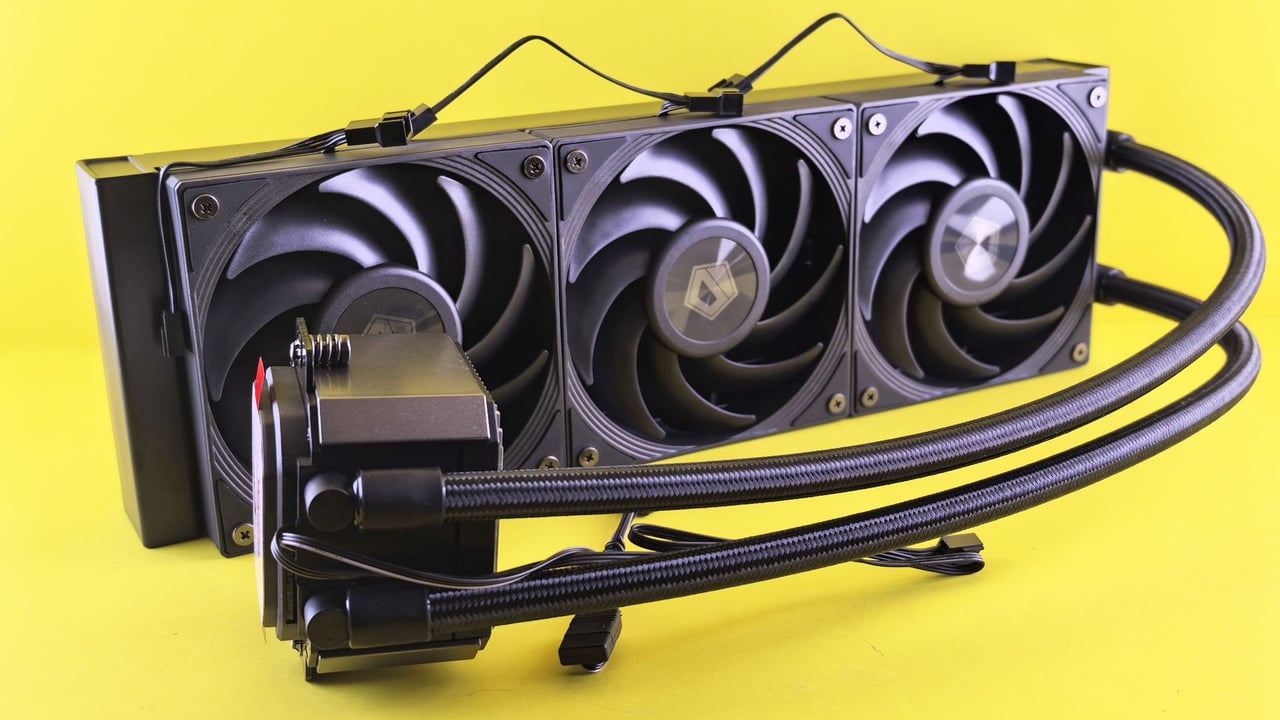
Photo by Andrey Matveev on Pexels
The Brief
As artificial intelligence workloads drive server heat and electricity demands to new highs, Chinese data centers are rapidly shifting toward liquid cooling technologies. In national computing hubs such as Guizhou and Ningxia, operators are deploying immersion and cold-plate liquid cooling modules paired directly with local renewable power. Driven by national policy guidelines targeting computing energy efficiency and manufacturer commercialization, these systems reduce power usage effectiveness (PUE) significantly below traditional air cooling, though upfront costs and operational integration challenges persist.
Why it matters
Cooling is no longer just auxiliary infrastructure; it is becoming a primary bottleneck for scaling high-density AI clusters. Liquid cooling drastically cuts the overhead power required for thermal management, allowing operators to meet stringent carbon and efficiency standards while expanding compute capacity.
China context
Under the 'East-to-West Computing Resource Transfer' project, China is directing energy-intensive computing workloads to western regions rich in hydro, wind, and solar power. Integrating liquid cooling with variable green power generation enables flexible computing load adjustments, aligning industrial digitization with national decarbonization targets.
Editor's View
EDITOR'S VIEW — Analysis and inference, not factual reporting.
The transition to liquid cooling reflects a broader strategic realignment in China's digital infrastructure: moving beyond raw server counts toward energy-compute co-optimization. While state directives and major component suppliers are driving adoption, the long-term viability of these capital-intensive systems will hinge on whether operators can resolve maintenance standardization issues and establish profitable models for waste heat utilization.
What to watch
- Implementation details of energy-efficiency and carbon-performance verification metrics from the National Development and Reform Commission and MIIT.
- Bidding and procurement volumes for cold-plate and immersion cooling systems among major Chinese cloud vendors and telecom carriers.
- Pilot projects testing commercial models for data center waste heat recovery and district heating in northern and western computing hubs.
Key Takeaways
- 1Immersion liquid cooling can reduce cooling-related electricity overhead from 0.3–0.5 kWh per computing kWh down to roughly 0.15 kWh.
- 2National policies, including a multi-agency action plan on AI-energy integration, are formally designating liquid cooling as critical green infrastructure.
- 3Publicly listed suppliers like Envic, Gaolan, and Fnode are expanding mass deliveries for cold-plate and immersion hardware.
- 4High initial construction expenditures, maintenance standards, and waste heat commercialization remain primary friction points.
As the parameter sizes of large artificial intelligence models expand and high-performance computing hardware accelerates, server thermal output is posing an acute operational challenge for data center operators across China. According to a report by the People's Daily, thermal dissipation is driving a major infrastructure transition from conventional air conditioning to advanced liquid cooling solutions.
In the Guian New Area of Guizhou province, the Southern Energy Big Data Center has deployed a 40-foot containerized immersion liquid cooling compute pod. According to the project lead, conventional air cooling requires an additional 0.3 to 0.5 kilowatt-hours of electricity for thermal management for every kilowatt-hour spent on computing tasks. By submerging servers into specialized dielectric coolant, this additional overhead is reduced to approximately 0.15 kilowatt-hours. The pod connects to an integrated power-carbon-compute dispatch system that dynamically adjusts computing loads based on local hydropower output.
Policy mandates are accelerating this deployment. The China Academy of Information and Communications Technology noted in its 2026 green computing research report that liquid cooling has become an indispensable requirement for high-density computing centers. Furthermore, four government agencies, including the National Development and Reform Commission, issued an action plan to promote bidirectional enablement between AI and energy, emphasizing continuous improvements in the energy and carbon efficiency of computing facilities. An accompanying implementation plan for energy-saving equipment spanning 2026 to 2028 targets the development of high-performance thermal materials and phase-change liquid cooling.
Hardware vendors are reporting increased order deliveries. According to public disclosures and mid-2026 financial reports, cooling equipment makers including Envic, Gaolan, and Fnode are scaling volume deliveries of cold-plate and immersion modules. Regional projects illustrate diverse deployment models: Ningxia's Zhongwei hub combines full natural air cooling with localized liquid cooling to run on 100 percent renewable power with an annual power usage effectiveness below 1.2, while China Mobile has deployed large-scale cold-plate systems in the Yangtze River Delta, and Sugon has demonstrated phase-change immersion setups reaching a PUE as low as 1.03.
Industry analysts note, however, that widespread adoption faces bottlenecks. High upfront capital costs, incomplete operations and maintenance standards, and unproven business models for waste heat recovery remain obstacles, while some projects still struggle to fully coordinate cooling hardware with real-time green power grid dispatching.
Sources
- 液冷带走“热量” 绿色算力越跑越“火”--经济·科技--人民网 — People's Daily · 9/4/2026