
Business & IndustryAnalysis
China's Machinery Sector Posts 6.4% Growth in First-Half Value Added
Surging green equipment production and expanding foreign trade drove industrial performance in the first six months.
Share
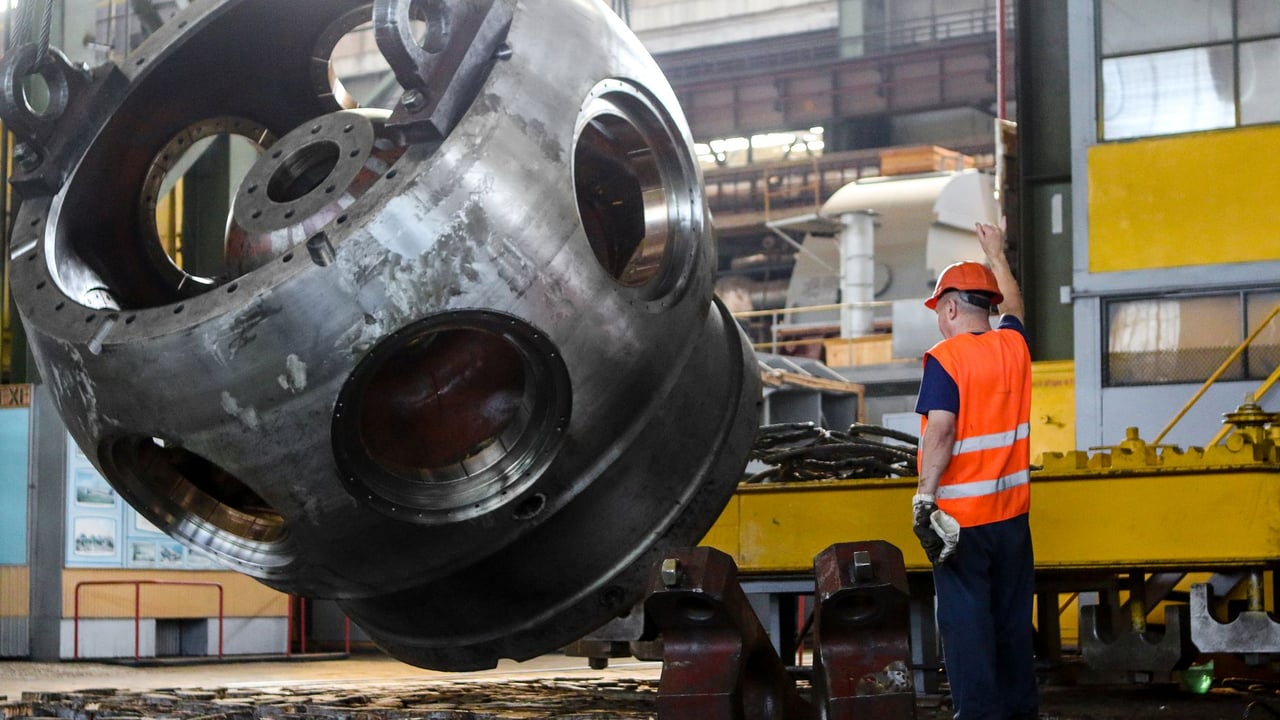
Photo by Kateryna Babaieva on Pexels
The Brief
China's machinery industry recorded steady growth in the first half of the year, with value-added output among large enterprises rising 6.4% year on year, outperforming the broader industrial average. According to data released by the China Machinery Industry Federation, the expansion was anchored by rapid adoption of clean energy equipment, digitalized manufacturing tools, and electrified construction machinery. Foreign trade also provided substantial momentum, as machinery goods generated a trade surplus of $425.89 billion, accounting for nearly three-quarters of China's overall goods trade surplus during the period.
Why it matters
The machinery sector serves as a fundamental pillar of China's industrial economy. Its outperformance relative to general manufacturing, alongside its 73.9% share of the national goods trade surplus, indicates that domestic manufacturers are consolidating competitive advantages in high-value, green, and automated equipment despite external economic headwinds.
China context
Faced with subdued domestic consumer demand and overseas trade friction, policymakers have pushed equipment upgrades and industrial decarbonization under national climate goals. The sector's transition toward electrification and smart equipment reflects how supply-side modernization policies are buffering broader macroeconomic growth.
Editor's View
EDITOR'S VIEW — Analysis and inference, not factual reporting.
The data underscores a structural divergence within Chinese manufacturing. Growth is no longer driven by generic low-end assembly, but by clean energy components, industrial automation, and heavy equipment electrification. While export figures remain exceptionally strong, sustaining this momentum will depend on navigating potential tariff barriers abroad and stabilizing domestic private investment in heavy industry.
What to watch
- Whether export growth for electric vehicles and heavy machinery can withstand mounting international trade barriers.
- The sustainability of high profit growth in specialized segments like machine tools and construction equipment.
- Investment growth trajectories across smart manufacturing and agricultural equipment throughout the second half of the year.
Key Takeaways
- 1Machinery sector value-added rose 6.4% year on year in H1, outpacing overall manufacturing growth.
- 2Clean energy equipment saw rapid gains, with nuclear power equipment output surging 92% and lithium-ion battery production rising 39.3%.
- 3Electric machinery gained significant market share, with electric forklifts accounting for 80.2% of total sales.
- 4Machinery trade surplus expanded 27.4% to $425.89 billion, representing 73.9% of China's total goods trade surplus.
- 5High-end machine tool industry profits surged 89.2%, while agricultural machinery investment grew 11.5%.
China's machinery industry sustained stable expansion in the first half of the year, supported by clean energy demand, factory automation, and resilient exports, according to data released by the China Machinery Industry Federation at an economic briefing.
Value-added output among machinery enterprises above a designated annual revenue threshold grew 6.4% year on year during the first six months. The growth rate exceeded the national averages for overall industry and manufacturing by 1.0 and 0.8 percentage points, respectively, Federation Vice President Ye Dingda reported.
Energy transition initiatives served as a primary growth engine. Output of nuclear power generation units surged 92% year on year, while hydropower and wind power equipment output rose 51.9% and 11.5%, respectively. Driven by demand from energy storage and electric mobility, lithium-ion battery production climbed 39.3%. Electrification also accelerated across commercial and industrial fleets: electric forklifts made up 80.2% of total forklift sales, while electric loaders reached 31% of total loader sales and 57.5% of domestic loader sales.
Advanced manufacturing and automation sectors saw double-digit expansion. Value-added output in intelligent equipment manufacturing rose 16.7% year on year. Production of 3D printing equipment jumped 48.5%, industrial robots rose 28.0%, and industrial automatic control instruments increased 25.1%. Investment in lithium-ion battery manufacturing and robotics grew 24.4% and 3.8%, respectively.
Traditional equipment lines registered financial improvement driven by technological upgrades. Machine tool sector profits jumped 89.2% year on year amid rising demand for high-end precision equipment. Construction machinery profits expanded 24.2%, aided by fleet replacements and export demand. Agricultural machinery led sub-sector investment growth with an 11.5% year-on-year increase.
Foreign trade provided strong macroeconomic support. Total machinery imports and exports reached $692.76 billion in the first half, up 15.9% year on year. Exports rose 20.0% to $559.33 billion, while imports increased 1.4% to $133.44 billion, yielding a trade surplus of $425.89 billion—a 27.4% increase. Machinery exports and the resulting surplus represented 26.3% and 73.9% of China's total goods trade, respectively. Automobile export volume grew 53%, while electric passenger vehicle exports climbed 76%.
Sources
- 上半年机械工业向新向优转型提速--经济·科技--人民网 — People's Daily · 8/8/2026