
Business & IndustryAnalysis
China Existing Home Sales Outpace New Builds as Overall Market Stabilizes
Official data for January through August show existing residential transactions rising over ten percent while new home sales continue to contract.
Share
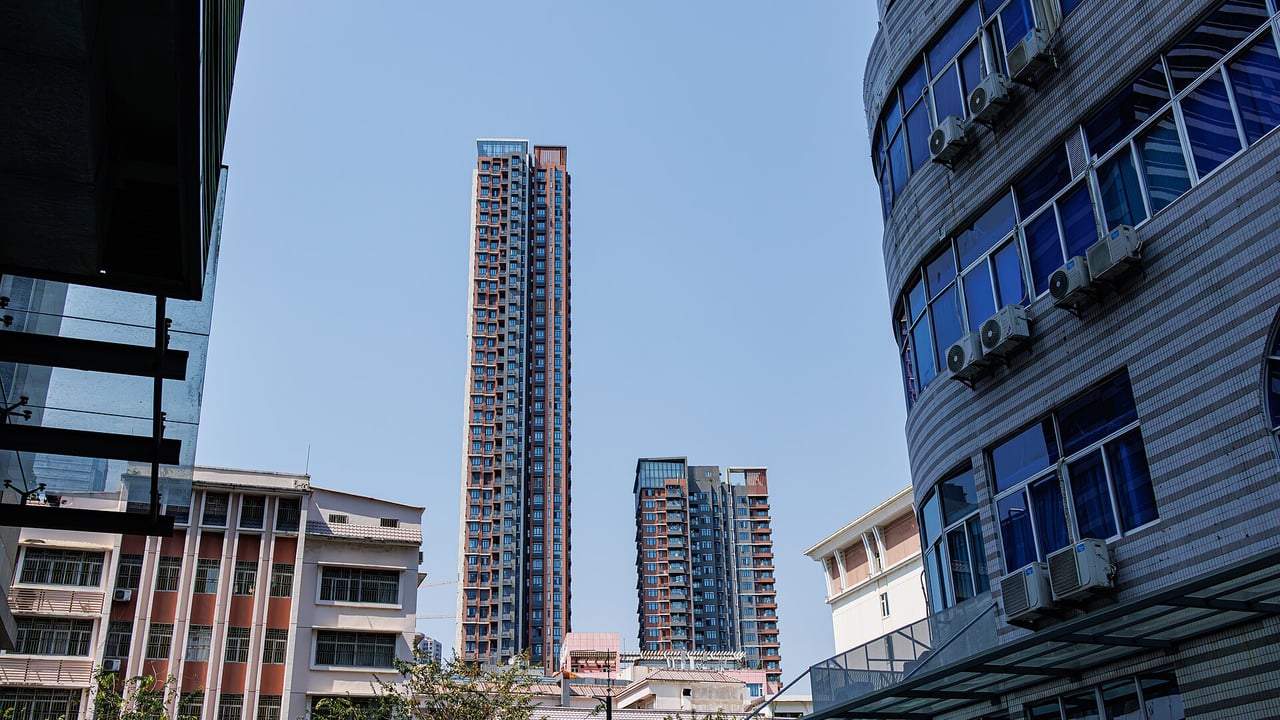
Dinkun Chen via Wikimedia Commons, CC BY-SA 4.0
The Brief
China's property market is undergoing a structural transition as existing home transactions increasingly outpace new home sales. According to data from the National Bureau of Statistics and the Ministry of Housing and Urban-Rural Development covering January through August, nationwide secondary home transaction area reached 549.23 million square meters, climbing 10.6 percent year on year. In contrast, new commercial home sales contracted by 12.1 percent. While new construction activity remains subdued, expanding resale activity has helped stabilize aggregate transaction volumes, accompanied by a modest monthly price uptick in Tier-1 cities.
Why it matters
The continuous growth of secondary home sales over new construction signals that housing consumption is shifting toward mature, urban-core properties with lower delivery risk. As buyers prioritize immediate occupancy and established neighborhood amenities, the expanding resale market is helping establish an operational floor for nationwide transaction volumes, though it presents ongoing cash-flow challenges for developers reliant on off-plan presales.
China context
Policymakers have adjusted property sector targets around controlling incremental supply, digesting existing inventory, and optimizing housing provisions. As local governments advance urban redevelopment and public housing projects, central authorities are supporting structural reforms, including expanding completed-home sales models to rebuild consumer confidence following widespread delivery disruptions in recent years.
Editor's View
EDITOR'S VIEW — Analysis and inference, not factual reporting.
The divergence between secondary and primary home sales reflects a rational recalibration of buyer risk. Secondary homes eliminate project completion risks and offer price flexibility directly negotiated between homeowners and buyers. However, while robust resale turnover absorbs secondary inventory, municipal land auction revenues and private developer liquidity remain constrained. A sustained macro recovery will ultimately depend on whether transaction momentum in top-tier resale markets can stabilize broader property asset values and encourage reinvestment.
What to watch
- Whether strong secondary market transaction volumes in Tier-1 and Tier-2 cities begin to spill over into new residential projects and land auctions.
- Price trajectories across the 70 major cities through the fourth quarter to see if monthly declines continue to narrow in Tier-2 and Tier-3 markets.
- Implementation of policy support measures aimed at inventory clearance and the shift toward finished-home sales frameworks.
Key Takeaways
- 1Nationwide resale home transactions rose 10.6 percent year on year to 549.23 million square meters in the first eight months of the year.
- 2Sales of newly constructed commercial properties dropped 12.1 percent to 498.80 million square meters over the same period.
- 3Secondary housing transactions have exceeded new home sales for several consecutive months, reflecting a structural shift in consumer preferences.
- 4Tier-1 city new residential prices ticked up 0.1 percent month on month in August, led by gains in Shanghai, Guangzhou, and Shenzhen.
China's housing market is experiencing a notable structural shift as secondary home transactions consistently outstrip new home sales, helping stabilize total market activity despite continuing contractions in newly built residential properties.
According to data from the Ministry of Housing and Urban-Rural Development, the registered transaction area for nationwide secondary housing reached 549.23 million square meters from January through August, marking a 10.6 percent increase compared to the same period last year. Conversely, National Bureau of Statistics data showed that sales of newly built commercial properties fell 12.1 percent year on year to 498.80 million square meters over the same eight-month span. Secondary home transaction volume has now exceeded newly constructed residential sales for several consecutive months.
National Bureau of Statistics chief economist and spokesperson Fu Linghui stated that while transactions of newly constructed commercial housing have declined, the growth in resale transactions has brought stability to overall market volume. Fu noted that the market is shifting from a structure historically driven by new property transactions toward one increasingly dominated by existing housing stock.
Data from industry research firm CRIC corroborates the trend across major urban centers. In 20 key monitored cities, secondary residential transaction area totaled 125.09 million square meters between January and August, rising 6.9 percent year on year. Resale activity in August was notably stronger than transaction volumes for newly built homes in those centers.
Li Yujia, chief researcher at the Guangdong Housing Policy Research Center, observed that buyers in hot-spot cities are primarily driven by essential housing needs and family-expansion upgrades. According to Li, existing homes are increasingly favored because they offer immediate move-in readiness, eliminate construction-completion uncertainty, and often feature better transport links and lower aggregate prices compared to newly developed outlying projects.
Price dynamics also displayed early signs of stabilization in August. Across 70 large and medium-sized cities tracked by the statistical bureau, 38 cities recorded narrowing year-on-year declines in new residential prices, while 48 cities saw narrowing declines in secondary housing prices. On a month-on-month basis, new home prices in Tier-1 cities edged up 0.1 percent, reversing the flat performance of the previous month. Among these, Shanghai, Guangzhou, and Shenzhen posted month-on-month gains of 0.4 percent, 0.1 percent, and 0.2 percent, respectively, whereas Beijing recorded a 0.2 percent decline. Tier-2 cities saw new home prices slide 0.1 percent month on month, matching the pace of decline seen in July.
Sources
- 房地产市场释放哪些新信号?(锐财经) --经济·科技--人民网 — People's Daily · 9/17/2026
- 房地产市场释放哪些新信号?(锐财经) — NetEase · 9/18/2026