
Business & IndustryAnalysis
Airbus Delivers First Aircraft from Second Assembly Line in Tianjin
The delivery to China Eastern Airlines expands the planemaker's dual-line footprint as it aims for a monthly global rate of 75 jets by 2027.
Share
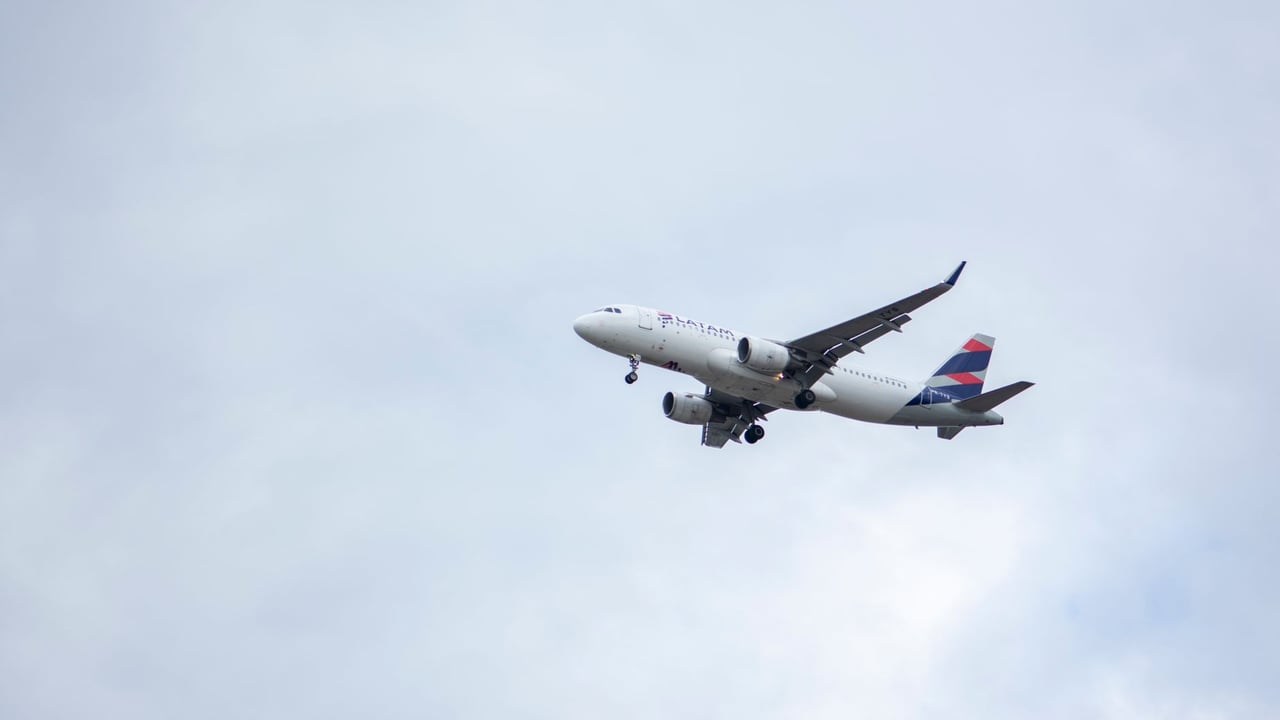
Photo by Rodolfo Gaion on Pexels
The Brief
Airbus has handed over the first A320neo assembled at its second final assembly line in Tianjin to China Eastern Airlines, marking the transition of its expanded Chinese manufacturing hub into regular operational deliveries. The completion comes roughly three years after bilateral agreements authorized the expansion. With two of its ten global narrowbody assembly lines now located in Tianjin, Airbus expects China to account for roughly 20 percent of its single-aisle assembly capacity, providing critical support toward its target of delivering 75 A320-family jets per month by 2027.
Why it matters
Bringing Tianjin's second final assembly line into the active delivery phase operationalizes Airbus's dual-line system in China at a time when the manufacturer faces heavy delivery backlogs. Sustaining production expansion in Tianjin is central to reaching the global target of 75 A320-family jets monthly by 2027. It also highlights how deeply the European aerospace giant is anchoring its industrial footprint in China's manufacturing ecosystem to mitigate persistent worldwide supply chain friction.
China context
China is both a critical industrial base and an essential demand driver for Airbus. The country is projected to require 8,830 new commercial passenger planes over the next two decades, representing more than 20 percent of total worldwide demand. Beyond assembly, major state-owned aerospace suppliers under Aviation Industry Corporation of China—including units in Harbin, Chengdu, Xi'an, and Shenyang—supply structural components, anchoring an aviation manufacturing cluster of over 100 enterprises in Tianjin.
Editor's View
EDITOR'S VIEW — Analysis and inference, not factual reporting.
Airbus's operationalization of a second Tianjin line reflects a clear divergence from broader Western supply chain 'de-risking' trends. While consumer tech and electronics firms seek alternate manufacturing hubs in Southeast Asia or India, aerospace manufacturing faces steep capital barriers, rigorous certification standards, and severe capacity constraints that make established hubs difficult to duplicate. Airbus is doubling down on China not only to secure production capacity, but also to solidify its commercial standing in a market projected to take one-fifth of all new passenger jet deliveries over the next two decades. However, the true test lies in execution: matching assembly capacity with strained upstream component flows, such as engines and precision sub-assemblies, remains an acute bottleneck.
What to watch
- The operational ramp-up rate of Tianjin's second line and when it achieves output parity with the initial line.
- Global supply chain bottlenecks, particularly in engine manufacturing and raw material delivery, that could threaten the 2027 monthly target of 75 aircraft.
- Order additions by Chinese state-owned carriers for both single-aisle and widebody aircraft over the coming regulatory planning cycle.
Key Takeaways
- 1Airbus delivered its first A320neo from the second Tianjin final assembly line to China Eastern Airlines on September 16, 2026.
- 2Tianjin now hosts two of the ten global A320-family assembly lines, contributing roughly 20 percent of the model's worldwide assembly capacity.
- 3Airbus affirmed that its target of producing 75 A320-family planes per month globally by 2027 remains unchanged.
- 4Airbus carried an unfulfilled backlog of 7,577 A320-family aircraft through August 2026, with the A321neo accounting for 5,691 units.
- 5Upstream supply chain coordination remains the primary challenge to ramping up delivery rates, according to Airbus leadership.
Airbus has officially delivered the first aircraft assembled at its second final assembly line in Tianjin, completing the handover of an A320neo jet to China Eastern Airlines, according to reports from Xinhua and Jiemian News. The handover marks the commercial commissioning of the facility, which took roughly three years to complete following the signing of expansion agreements witnessed by Chinese and French officials in April 2023.
The newly active line expands Airbus's worldwide narrowbody manufacturing network to ten final assembly lines: four in Hamburg, Germany; two in Toulouse, France; two in Mobile, Alabama; and two in Tianjin. Airbus opened its first Tianjin assembly line in 2008 and has since assembled and delivered more than 800 A320-family passenger jets from the Chinese port city.
With both assembly lines active, China is slated to provide around 20 percent of total global assembly capacity for the A320 family, according to statements previously made by Airbus China management. Company executives reiterated at the delivery ceremony that Airbus's target of lifting global A320-family output to 75 aircraft per month by 2027 remains unchanged. If reached, that pace would represent the highest production cadence in commercial aviation history.
However, accelerating assembly requires overcoming persistent aerospace supply chain bottlenecks. Marc Poesselman, Airbus global senior vice president and head of China operations, told Jiemian News that coordinating concurrent production increases across every supplier remains the most complex operational challenge. He noted that the original supply chain was configured for lower volumes and that Airbus is conducting monthly reviews to help suppliers keep pace with its production plans.
Local Chinese manufacturing plays a pivotal role in this expansion. Units of Aviation Industry Corporation of China—including Harbin Aircraft Industry Group, Chengdu Aircraft Industry Group, Xi'an Aircraft Industry Group, and Shenyang Aircraft Corporation—produce components for Airbus aircraft. Tianjin alone hosts a cluster of more than 100 aviation manufacturing suppliers.
The production push comes against the backdrop of an immense delivery backlog. By the end of August 2026, cumulative orders for the A320 family stood at 20,418 aircraft, with 12,841 delivered and 7,577 orders awaiting fulfillment. Over 70 percent of that backlog consists of the larger A321neo model.
Sources
- 空客在华第二条总装线交付首架飞机 中国供应链支撑产能扩容 — Xinhua News Agency · 9/17/2026
- 空客天津二线开启交付 — Jiemian News · 9/17/2026