
Policy & RegulationAnalysis
China Targets Supply Chain Bottlenecks Through Quality Standardization Push
Market regulators coordinate 2,000 industrial initiatives covering automotive chips, robotics, and high-end equipment.
Share
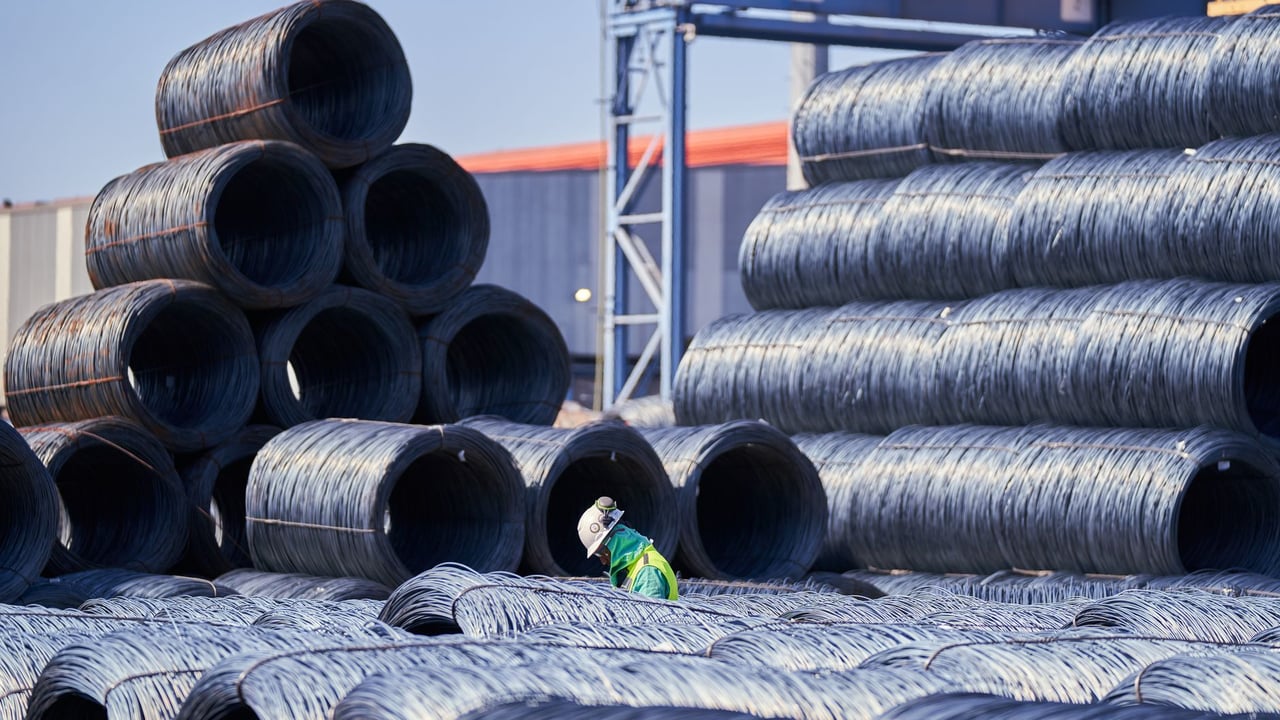
Photo by Willians Huerta on Pexels
The Brief
China's State Administration for Market Regulation (SAMR) has coordinated 2,060 quality tackle projects across domestic manufacturing supply chains, resolving approximately 150,000 technical and standardization bottlenecks, according to an agency briefing reported by People's Daily. Involving nearly 3,000 innovation consortia and 260,000 companies, the state-directed campaign focuses on upgrading testing infrastructure, synchronizing technical standards, and expediting certification across sectors including electric vehicles, automotive chips, industrial robotics, and hydrogen energy equipment.
Why it matters
Persistent quality bottlenecks and fragmented standards represent major impediments to China's drive for manufacturing self-reliance. By mobilizing large enterprises and technical institutes into state-backed quality consortia, regulators are attempting to bridge compatibility gaps, raise component qualification rates, and ease adoption barriers for domestic alternatives in critical manufacturing supply chains.
China context
Faced with external technology restrictions and fierce domestic price competition, Chinese authorities are increasingly leveraging National Quality Infrastructure (NQI)—encompassing technical standards, metrology, inspection, and certification—as an industrial policy instrument. Rather than relying solely on direct financial subsidies, market regulators are using standardization to eliminate low-end redundancies and enforce performance thresholds across regional industrial clusters.
Editor's View
EDITOR'S VIEW — Analysis and inference, not factual reporting.
The campaign highlights a pragmatic pivot in Chinese industrial policy: state planners recognize that lab-stage breakthroughs remain fragile unless supported by rigorous testing apparatuses, unified technical standards, and certified scale. While coordinating hundreds of thousands of firms across regional administrative boundaries helps overcome localized chokepoints, the true measure of success will be whether these standardized solutions achieve commercial sustainability and international recognition without perpetual state coordination.
What to watch
- Commercial adoption rates and reliability metrics for the 25 newly certified domestic automotive chips in mass-production vehicles.
- International reception and standards-body adoption of China's proposed technical standards in hydrogen storage and fuel cell systems.
- Performance assessments and scaling of the first 21 cross-regional pilot projects, including the Beijing-Tianjin-Hebei brain-computer interface platform.
Key Takeaways
- 1SAMR reported overseeing 2,060 supply chain quality projects, creating 2,959 innovation consortia and solving 150,000 industrial bottlenecks.
- 2Flagship interventions targeted EV charging interoperability, heavy-duty robotics control precision, and calibration systems for five categories of advanced scientific instruments.
- 3Certification reviews were completed for 25 key automotive chips, supporting the deployment of over 20 million chips in vehicles.
- 4Regulatory actions introduced 17 national and two international standards for hydrogen storage, transport equipment, and fuel cells.
- 5Regional coordination programs mobilized 4,500 enterprises across 21 pilot cross-provincial networks, including high-end machinery in Hunan and aviation parts in Jiangsu.
China's market regulators are intensifying efforts to eliminate technical bottlenecks across key industrial supply chains by combining technical standardization with centralized quality-control initiatives, according to a press conference organized by the State Administration for Market Regulation (SAMR) and reported by People's Daily.
According to Zhang Leilei, deputy director of SAMR's Quality Development Bureau, the agency has overseen 2,060 targeted quality improvement projects to date. These initiatives led to the formation of 2,959 quality technology innovation consortia involving roughly 260,000 supply chain companies, resolving approximately 150,000 specific operational and quality hurdles.
Regulatory interventions have focused heavily on advanced manufacturing and strategic emerging industries. Under ten flagship supply chain initiatives comprising 289 technical assignments, the agency addressed long-standing compatibility and precision challenges. In the new energy vehicle (NEV) sector, national rules were unified for ultra-fast charging certification to eliminate cross-brand charging and communication failures. In industrial robotics, technical intervention targeted control stability, reportedly doubling the precision of 360-kilogram heavy-duty units. Specialized measurement frameworks were also developed for scientific instruments across five domains, including mass spectrometers, electron microscopes, and laser interferometers, as well as augmented-reality near-eye display calibration systems.
Regulators have tied standard-setting directly to downstream adoption. In automotive semiconductors, SAMR completed certification and audits for 25 critical chip varieties, facilitating their deployment across 20 million vehicle-installed units. Concurrently, a power battery monitoring system was expanded to cover 730,000 NEVs in real time. For prospective sectors such as hydrogen energy, SAMR formulated or revised 17 national standards, two international standards, and five metrology and technical safety codes spanning fuel cells and transport equipment.
Regional authorities have mirrored the central campaign by issuing over 5,600 problem, task, and policy catalogs across 100 localized supply chain projects. Provincial initiatives yielded specific operational milestones: Hunan machinery manufacturers published over 50 bearing standards to address shield machine testing limits; Jiangsu lifted the pass rate of aircraft-supporting components to 90 percent; and Hubei tackled 78 shared quality problems in its laser cluster, generating over 190 million yuan in efficiency gains.
To bridge regional market fragmentation, SAMR has initiated 21 cross-provincial projects bringing together more than 4,500 enterprises and 300 technical bodies, including a joint medical-engineering platform for brain-computer interfaces spanning Beijing, Tianjin, and Hebei.
Sources
- 着力破解产业链质量堵点卡点(锐财经) --经济·科技--人民网 — People's Daily · 8/24/2026