
Business & IndustryAnalysis
China Strengthens Power Supply Measures as Summer Peak Load Hits Record High
Regional grids deploy smart dispatch systems, infrastructure upgrades, and coordinated logistics to handle rising heat and expanding demand.
Share
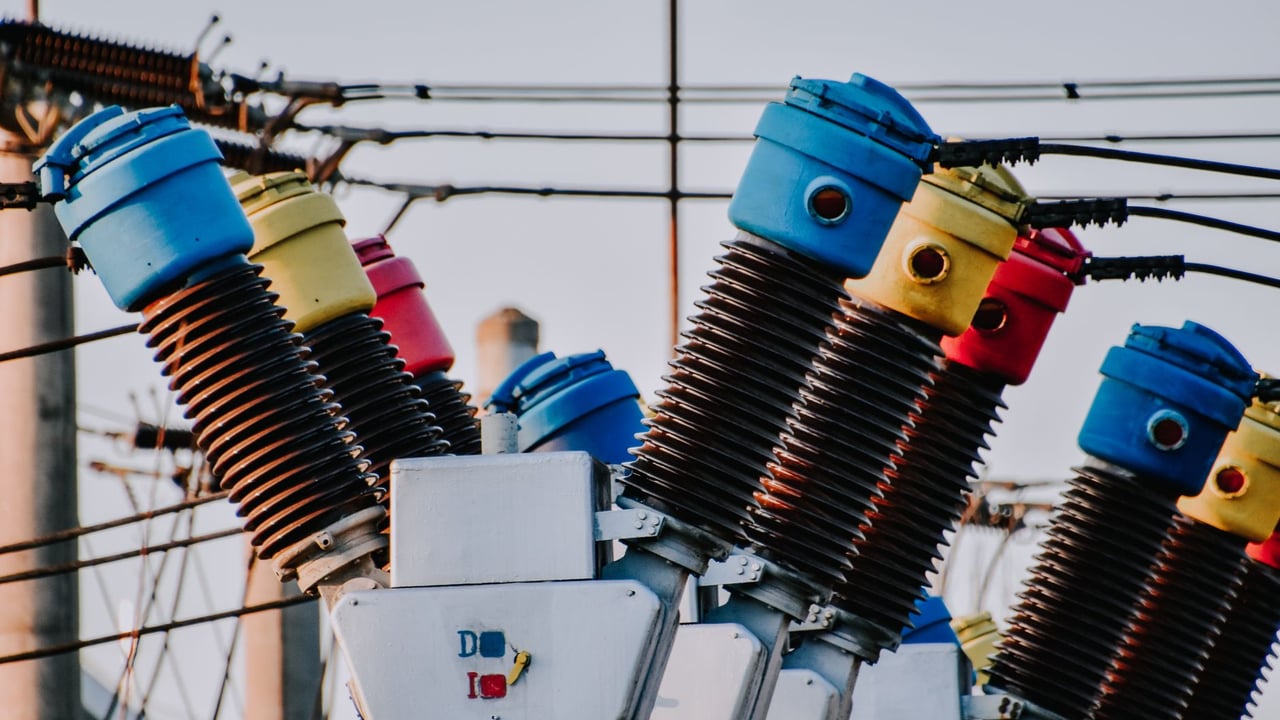
Photo by Diana ✨ on Pexels
The Brief
Rising summer temperatures and expanding commercial and industrial activity pushed China's national electricity load to a record 1.551 billion kilowatts on July 14, according to People's Daily. Total electricity consumption in June reached 898.1 billion kilowatt-hours, a 3.7% increase year-on-year. To maintain grid stability during the summer peak, local utilities across provinces including Anhui, Sichuan, Hubei, and Fujian are executing multi-pronged management strategies, blending traditional coal logistics and transformer upgrades with artificial intelligence and digital dispatching systems.
Why it matters
Reliable power supply is essential for meeting household cooling needs during intense heatwaves while safeguarding industrial output and supporting ongoing economic recovery.
China context
To manage seasonal demand spikes, China is building a resilient energy framework by combining conventional coal-fired baseload generation with rapid growth in renewables, energy storage, and digitized grid dispatch.
Editor's View
EDITOR'S VIEW — Analysis and inference, not factual reporting.
The response to this summer's demand surge illustrates China's shifting approach to energy security, moving beyond simple generation expansion toward integrated 'source-grid-load-storage' management. While baseline reliability still relies heavily on securing coal supply and upgrading physical power lines, the deployment of AI-assisted forecasting and proactive digital grid defenses highlights how software automation is becoming essential for managing extreme weather risks.
What to watch
- Whether national electricity load continues to break records during late-summer heat spikes.
- The operational efficacy of AI-assisted disaster mitigation platforms during extreme weather events.
- The pace of grid integration for new regional energy storage and pumped-hydro projects.
Key Takeaways
- 1China's national electricity load reached a record peak of 1.551 billion kilowatts on July 14.
- 2June electricity consumption grew 3.7% year-on-year to 898.1 billion kWh, led by tertiary sector growth.
- 3Provinces are combining coal supply logistics, new transformer capacity, and renewable energy integration to secure supply.
- 4Utilities in areas like Fujian and Wuhan are using AI-driven dispatch platforms and predictive tools to manage peak demand and extreme weather risks.
Driven by high summer temperatures and expanding energy demands across the industrial and service sectors, power loads across China have surged in recent weeks, according to People's Daily. Data from the National Bureau of Statistics shows that total electricity consumption in June reached 898.1 billion kilowatt-hours, representing a 3.7% year-on-year increase. On July 14, national power load climbed to a record peak of 1.551 billion kilowatts. Growth was led by the tertiary sector, where power use rose 5.6% year-on-year, followed by a 4.7% increase in the secondary sector and a 2.0% increase in the primary sector.
To navigate the summer demand peak, local utilities and energy enterprises are executing multi-layered supply assurance plans. In Anhui province, energy companies expanded coal procurement networks and accelerated equipment maintenance to protect thermal generation bases. In Guang'an, Sichuan province, operators coordinated grid infrastructure, power sources, and load management, boosting local supply capacity past 3 million kilowatts by integrating solar power, energy storage, and tiered demand response mechanisms.
Urban grids are also undergoing targeted resilience upgrades. In Wuhan, Hubei province, where electricity demand hit historical highs, municipal grid operators brought 24 major projects online this year, adding 1.833 million kilovolt-amperes of transformer capacity. Key 220-kilovolt transmission lines were completed to reinforce electricity delivery across core commercial districts, residential neighborhoods, and industrial parks.
Digital technology and artificial intelligence are playing an increasingly prominent role in grid dispatching and disaster management. According to Zhou Yang, an associate professor at Beijing Normal University cited by People's Daily, smart dispatch platforms now integrate real-time generation output, grid operational status, and demand-side data. In Fujian province, power utilities have transitioned toward proactive digital defense systems, using AI-assisted diagnostic tools and disaster mitigation platforms to accurately predict risks before storms hit, optimize real-time dispatch during severe weather, and accelerate power restoration afterward.
Sources
- 多地用电负荷攀升 迎峰度夏电力保供有序推进--经济·科技--人民网 — People's Daily · 7/29/2026