
Policy & RegulationAnalysis
China Expands Transport and Energy Integration to Accelerate Fleet Decarbonization
Regulators and industry leaders map out infrastructure standards, heavy-duty truck electrification, and bidirectional vehicle-to-grid deployment.
Share
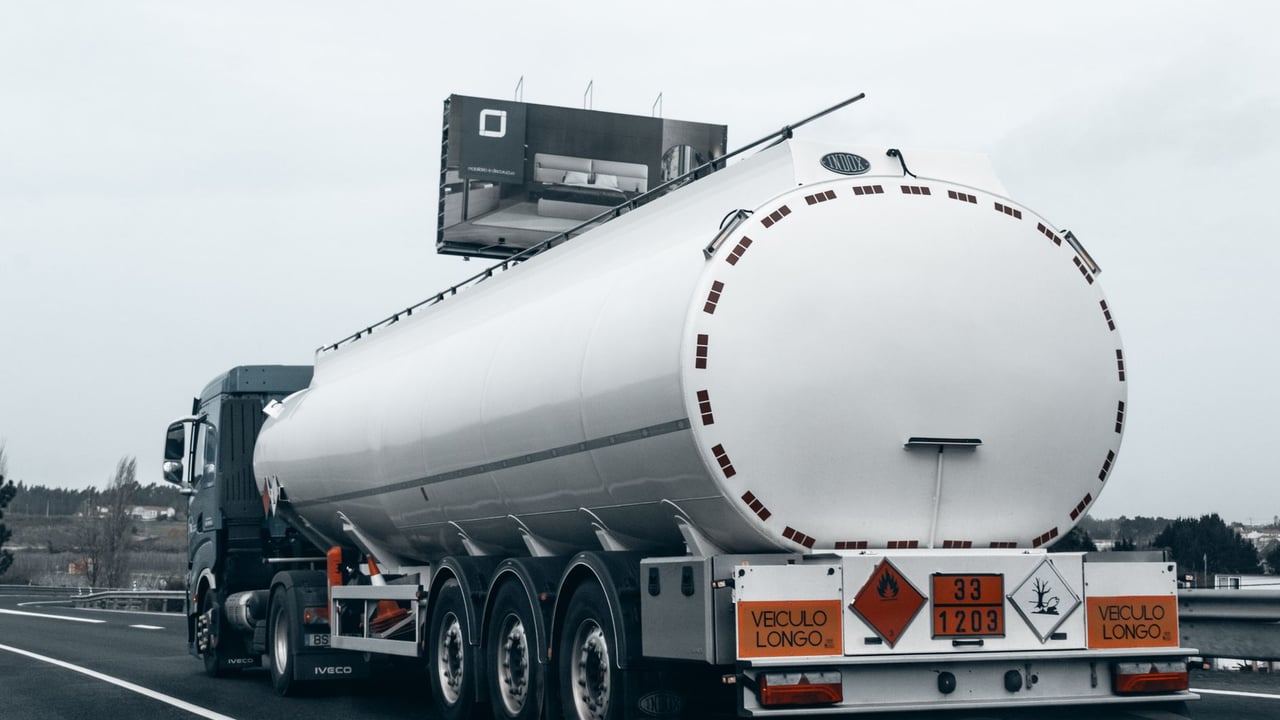
Photo by Vadym Alyekseyenko on Pexels
The Brief
China is moving the integration of its transportation and energy sectors from regional pilot projects to large-scale commercialization, according to officials and industry experts speaking at the 2026 Transportation and Energy Integration Innovation Development Conference. National Energy Administration data indicates that nationwide charging units have surpassed 23 million, while aggregated vehicle-to-grid capacity has topped 20 million kilowatts. Sector authorities are now coordinating on battery standardization for electric heavy trucks, streamlined grid connections for highway solar projects, and broader implementation targets for the upcoming 15th Five-Year Plan period.
Why it matters
Linking transportation infrastructure with clean energy systems turns highways, ports, and vehicle fleets from net power consumers into distributed energy storage and generation assets. As commercial fleet operators scale up electric heavy trucks, bidirectional charging and standardized battery-swapping networks will be vital to stabilizing the power grid, lowering logistics costs, and supporting China's broader decarbonization roadmap.
China context
Under China's 'Dual Carbon' targets and 'Transport Powerhouse' strategy, cross-ministry coordination between the National Energy Administration and the Ministry of Transport has become central to infrastructure planning. Policymakers are addressing long-standing structural bottlenecks, such as non-standardized battery packs in commercial freight, fragmented grid-connection approvals for highway service areas, and localized power pricing disparities.
Editor's View
EDITOR'S VIEW — Analysis and inference, not factual reporting.
The transition of transportation corridors from passive energy sinks to active nodes in a smart grid represents a critical step in China's energy transition. While passenger electric vehicle adoption has advanced rapidly, commercial freight and heavy-duty logistics have historically lagged due to high upfront costs, grid-capacity constraints, and disparate proprietary standards. By coordinating highway solar generation, standardized battery swapping, and vehicle-to-grid mechanisms, Chinese authorities are creating an integrated regulatory and technical framework designed to make heavy transport decarbonization commercially viable.
What to watch
- Finalization of transport-energy integration directives and new-energy heavy truck policies in the 15th Five-Year Plan
- Standardization measures for heavy-duty truck battery dimensions and swap stations nationwide
- Provincial implementation of streamlined on-grid approval processes and feed-in tariff rules for highway solar systems
- Expansion of commercial vehicle-to-grid (V2G) pilot programs and dynamic discharging compensation mechanisms
Key Takeaways
- 1Nationwide charging units have surpassed 23 million, with aggregated vehicle-to-grid capacity exceeding 20 million kilowatts across more than 8,000 bidirectional piles.
- 2The Ministry of Transport is preparing systematic policies for the 15th Five-Year Plan period to accelerate new-energy heavy-duty truck adoption and energy replenishment networks.
- 3Experts called for standardized heavy-duty truck battery-swapping systems and unified provincial grid-connection approval processes for highway service area solar generation.
- 4Municipalities like Wuhan are demonstrating commercial feasibility through port battery swapping, intelligent test roads, and green maritime industrial clusters.
China is accelerating the convergence of its transportation network and clean power grid, transitioning from isolated pilot demonstrations to nationwide deployment, according to industry leaders and regulators at the 2026 Transportation and Energy Integration Innovation Development Conference covered by People's Daily.
Yang Shengshi, president of the China Communications and Transportation Association, stated that the relationship between transportation and energy has evolved beyond basic fuel consumption into a coordinated ecosystem spanning infrastructure, equipment manufacturing, and operational scenarios. Both sectors are undergoing simultaneous technological transformations toward low-carbon operations.
Hardware deployment has laid the foundation for bidirectional energy flows. Tan Hongjiang, deputy director of the Electricity Department at the National Energy Administration, reported that nationwide charging infrastructure has exceeded 23 million units. The aggregated capacity of vehicle-to-grid resources has surpassed 20 million kilowatts, with more than 8,000 bidirectional charging and swapping piles built, delivering cumulative discharge volumes above 8 million kilowatt-hours. The agency plans to focus on scaling up infrastructure, improving operating service quality, and strengthening network management.
Municipal authorities are integrating these systems into local industrial ecosystems. In Wuhan, Vice Mayor Zhang Fei highlighted the Yangluo Port demonstration project, which boosted battery-swapping efficiency twentyfold while generating more than 4.5 megawatts annually. The city has opened nearly 4,000 kilometers of intelligent connected vehicle test roads and expanded its green shipbuilding industrial scale beyond 50 billion yuan, contributing to an automotive and energy industrial cluster approaching 800 billion yuan.
Decarbonizing heavy freight remains a central priority for regulators. Ma Jiming, deputy director of the Transport Services Department at the Ministry of Transport, stated that during the 15th Five-Year Plan period, the ministry will systematically implement policies to expand energy replenishment networks, broaden commercial operating scenarios, accelerate core technology development, and refine cross-departmental coordination mechanisms for new-energy heavy trucks.
To resolve market bottlenecks in freight electrification, Zheng Jianlong, an academician of the Chinese Academy of Engineering and professor at Changsha University of Science and Technology, urged strict enforcement of battery standardization and wider adoption of battery-swapping models. Zheng also recommended streamlining approval procedures for solar power generated at highway service areas by routing applications through provincial operating companies directly to provincial grid operators, standardizing feed-in tariffs to protect investor returns.
Sources
- 交能融合逐“绿”向“新” 双向赋能转型之路--经济·科技--人民网 — People's Daily · 8/14/2026