
Policy & RegulationAnalysis
China Unveils First 41 AI Transport Scenarios to Accelerate Sector Integration
A joint ministerial action plan identifies 860 breakthrough areas across rail, road, maritime, aviation, and postal networks.
Share
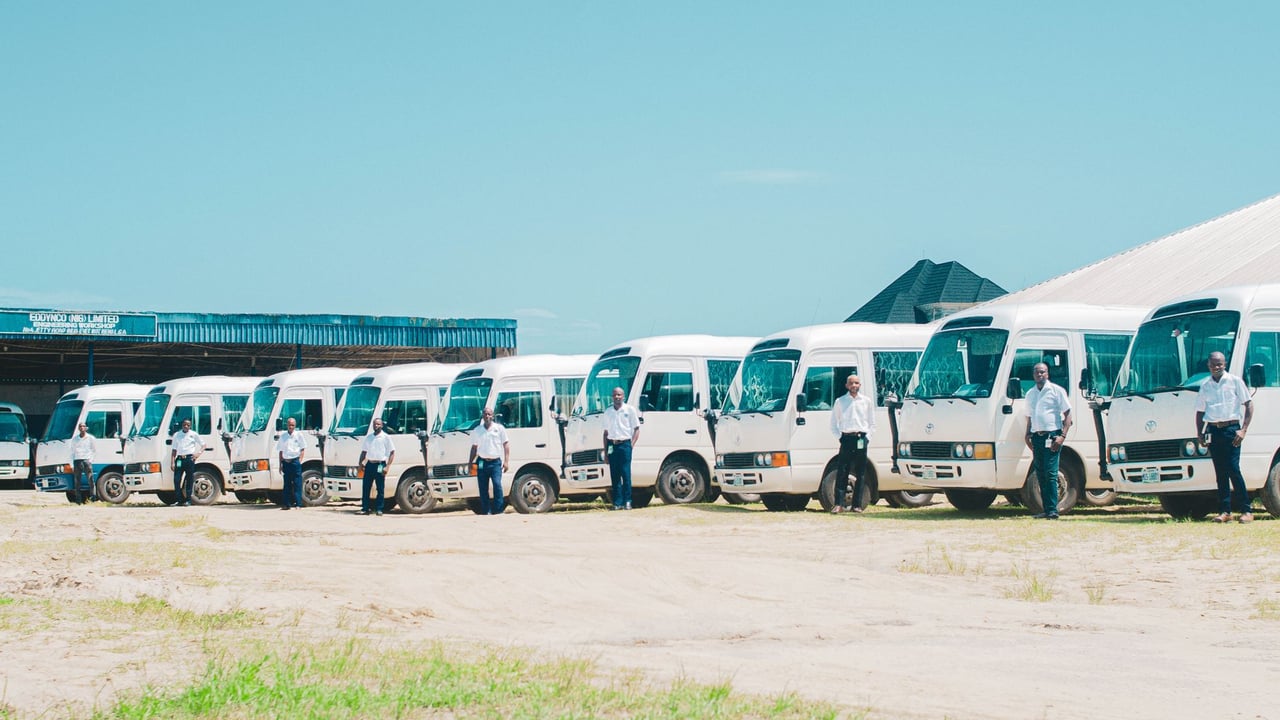
Photo by Abasiakan on Pexels
The Brief
China's Ministry of Transport and four other government departments have released an initial batch of 41 typical artificial intelligence application scenarios, supported by targeted construction guidelines, to accelerate the integration of AI across national transit networks. The broader initiative identifies 860 breakthrough scenarios spanning railways, highways, waterways, civil aviation, and postal services across ten core domains. Officials aim to foster new infrastructure, advanced equipment, and innovative service models by 2030, leveraging large-scale real-world testbeds to drive dual development for AI developers and transport operators.
Why it matters
The policy establishes clear technological roadmaps and market demand for autonomous driving, large foundation models, and embodied robotics. By opening state-backed transit infrastructure as commercial proving grounds, Chinese authorities seek to lower operational costs, enhance system safety, and foster domestic industrial clusters in applied artificial intelligence.
China context
Under the national strategies of building a 'Transportation Powerhouse' and a 'Digital China,' central authorities frequently employ scenario-based catalogs paired with construction guidelines to orchestrate technological adoption. This approach harnesses China's extensive transport infrastructure to pull technical breakthroughs into market readiness through structured deployment.
Editor's View
EDITOR'S VIEW — Analysis and inference, not factual reporting.
Rather than issuing abstract R&D mandates, Chinese transport regulators are treating physical transit networks as direct operational testbeds for AI companies. By pairing consumer-facing efficiencies like ticketing and highway hazard alerts with industrial applications like autonomous truck platoons and automated logistics hubs, policymakers are seeking immediate efficiency gains while subsidizing technology validation through daily infrastructure usage.
What to watch
- Rolling releases of subsequent batches of typical AI transport application scenarios and technical guidelines.
- Commercialization progress of autonomous heavy-duty truck platooning across regional highway networks.
- Formulation of research and development guidelines for emerging technologies, including embodied robotics and low-altitude delivery logistics.
Key Takeaways
- 1Five Chinese ministries launched an initial batch of 41 AI transport application scenarios across ten focus areas.
- 2A broader inventory of 860 breakthrough scenarios covers rail, highway, water, aviation, and postal infrastructure.
- 3The 2030 policy goal focuses on deploying intelligent infrastructure, equipment, and new operational models.
- 4Pilot results on the Jingxiong Expressway include autonomous truck platooning and 95-plus percent incident detection accuracy.
- 5Logistics pilots, including ZTO's Wuhan hub, demonstrated over 40 percent labor cost reductions via automated sorting.
China's Ministry of Transport, alongside four other central government departments, has released an initial batch of 41 typical application scenarios alongside technical construction guidelines to accelerate the adoption of artificial intelligence across the nation's transport networks, according to a departmental briefing reported by People's Daily.
The release elaborates on the Action Plan for the Innovative Application of 'AI + Transportation' Scenarios, originally issued in June. The plan sets a target for 2030, aiming to cultivate a range of new AI-integrated infrastructure, equipment, operating models, and industrial ecosystems across rail, road, water, aviation, and postal systems.
According to Xu Wenqiang, director of the Ministry of Transport's Science and Technology Department, officials identified 860 initial breakthrough scenarios across infrastructure, transit equipment, logistics services, and sector governance. These target ten primary fields, including autonomous driving, smart highways, intelligent railways, civil aviation, postal logistics, and multimodal freight.
Regulators outlined two core priorities guiding the scenario selection. The first is public service delivery, incorporating real-time traffic dispatch, integrated ticketing, highway fog warning systems, and smart cold-chain monitoring. The second is industrial empowerment, designed to open large-scale operational environments to commercial AI developers. Highlighted commercial cases include autonomous freight driving, automated port scheduling, and railway health monitoring.
Several pilot projects demonstrate how these frameworks are functioning in practice. On the Jingxiong Expressway connecting Beijing and the Xiong'an New Area, operators partnered with Baidu AI Cloud to deploy foundation models that achieve an incident recognition accuracy rate above 95 percent, alongside automated fog-warning smart lighting and toll robots. The expressway also passed mid-term inspection for an autonomous heavy-duty truck project, completing over 30,000 kilometers of testing with mixed 'one-leads-two' platooning formations.
In postal logistics, an intelligent overhaul at ZTO Express's Wuhan sorting hub linked transit planning algorithms with smart sorting hardware. According to reported figures, the hub processed an average of 75 million outgoing parcels per month in the first half of the year, maintaining an on-time transit rate above 94 percent while reducing labor costs by more than 40 percent.
Ministry officials stated that regulators will continue tracking technology trends to roll out subsequent scenario batches and technical guidelines on an ongoing basis.
Sources
- 交通需求与人工智能技术加速对接(政策解读) --经济·科技--人民网 — People's Daily · 8/21/2026