
Policy & RegulationAnalysis
China Highlights Micro-Renovation Model for Historic Urban Heritage
Official media spotlights Fuzhou and Shantou as blueprints for balancing modern urban renewal with architectural conservation.
Share
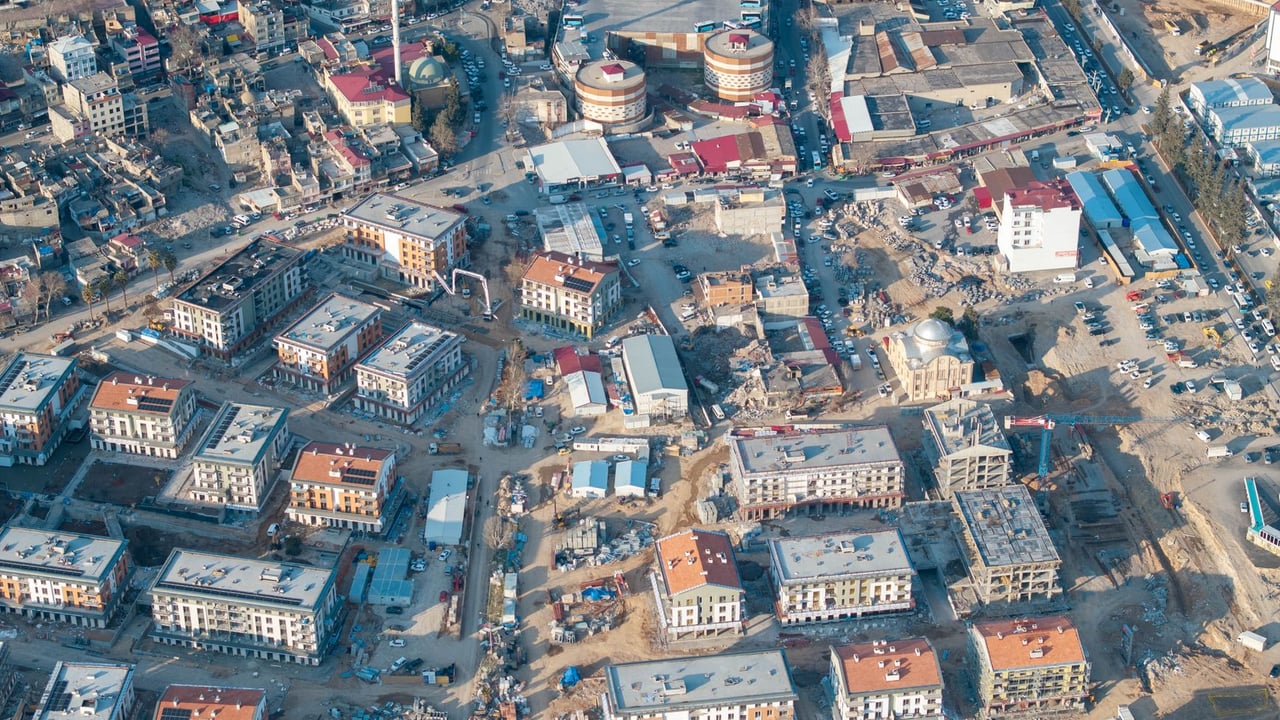
Photo by Ömer Furkan Yakar on Pexels
The Brief
Chinese state media highlighted the nation's ongoing shift toward micro-renovation and cultural preservation in urban renewal, featuring prominent historical districts such as Fuzhou's Sanfang Qixiang and Shantou's Xiaogongyuan. According to Xinhua, policy directives emphasize treating ancient architecture with care, avoiding sweeping demolitions in favor of incremental restoration. The Ministry of Housing and Urban-Rural Development has designated Sanfang Qixiang—where over 300 historic buildings covering 270,000 square meters have undergone restoration—as an official urban renewal model, reflecting Beijing's broader push to integrate cultural identity with local tourism economies.
Why it matters
As China transitions away from debt-fueled, large-scale property redevelopment toward quality-oriented urban renewal, official guidance emphasizes preserving historic urban fabric. Showcasing micro-restoration models signals to municipal planners nationwide that cultural conservation must supersede aggressive commercial demolition in city planning.
China context
The coverage appeared under Xinhua's regular feature series detailing top leadership priorities, linking current preservation standards directly to Xi Jinping's decisions during his tenure as Fuzhou party chief in the 1980s and 1990s and his inspection tour in March 2021. 'Cultural consciousness' has increasingly been positioned as a core pillar of high-quality urban development and national heritage protection across Chinese governance.
Editor's View
EDITOR'S VIEW — Analysis and inference, not factual reporting.
The renewed emphasis on preservation highlights an administrative pivot in municipal governance. For decades, local authorities relied on rapid land clearance to drive fiscal revenue and modern real estate expansion, frequently flattening historical enclaves. By elevating Sanfang Qixiang and Shantou as national templates, Beijing is directing local cadres to pursue gradualist, heritage-first revitalizations. However, municipalities face the practical challenge of managing commercialization pressures: maintaining authentic community vitality and artisan crafts without reducing historic quarters to formulaic tourist retail zones.
What to watch
- Whether the Ministry of Housing and Urban-Rural Development issues binding nationwide standards based on the Sanfang Qixiang micro-renovation template
- How local municipal governments balance commercial tenant ratios against cultural heritage and resident retention in secondary and tertiary cities
- Budget allocations and local government financing vehicles adapting from traditional urban demolition projects to low-margin preservation projects
Key Takeaways
- 1State media spotlighted preservation-focused urban renewal, emphasizing micro-renovation over large-scale demolition.
- 2Fuzhou's Sanfang Qixiang has restored over 300 historic dwellings covering 270,000 square meters using an incremental repair approach.
- 3The Ministry of Housing and Urban-Rural Development selected Sanfang Qixiang as an inaugural typical case of urban renewal.
- 4Sanfang Qixiang drew over 100 million visitor trips between 2021 and 2025, including more than 26 million in 2025.
- 5Shantou's Xiaogongyuan district demonstrated the integration of intangible cultural heritage studios into restored arcade shophouses.
State media coverage has cast a spotlight on China's evolving urban renewal strategy, pointing to historic conservation projects in Fujian and Guangdong as models for balancing cultural preservation with modern city governance. According to Xinhua, national directives increasingly emphasize "cultural consciousness" and gradual micro-renovation over sweeping urban demolition.
The official review highlighted Fuzhou's Sanfang Qixiang (Three Lanes and Seven Alleys), a residential district tracing its layout back to the Jin, Tang, and Song dynasties. In the late 1980s and 1990s, the district faced imminent risk from commercial redevelopment until municipal leadership intervened to protect the enclave. During a follow-up inspection in March 2021, Xi Jinping reiterated that protecting traditional neighborhoods, ancient architecture, and cultural relics preserves the fundamental lineage of cities, urging planners to approach historical structures with care and respect.
In recent years, Fuzhou implemented a preservation strategy described as "repairing the old as old" through incremental, small-scale, and continuous restoration. The effort has repaired more than 300 historic dwellings totaling approximately 270,000 square meters, while upgrading museum exhibitions in the former residences of notable historical figures such as Yan Fu, Lin Juemin, Shen Baozhen, and Wu Shi. The Ministry of Housing and Urban-Rural Development designated Sanfang Qixiang among its inaugural cohort of model urban renewal cases. Between 2021 and 2025, the historic quarter received more than 100 million visitors, recording over 26 million visits in 2025 alone.
The report similarly cited the Xiaogongyuan historic port district in Shantou, Guangdong Province, where arcade-style commercial corridors along Guoping Road have been repurposed into studios for intangible cultural heritage. Artisans in wood carving, porcelain inlay, and drawnwork now demonstrate traditional techniques directly to visitors within restored early-20th-century commercial buildings.
The prominent coverage underscores an ongoing transition in China's municipal planning apparatus, steering city managers toward preserving tangible cultural landmarks while developing sustainable local tourism.
Sources
- 习近平总书记关切事|以文化自觉,守护城市根脉 — Ministry of National Defense · 9/19/2026
- 习近平总书记关切事|以文化自觉,守护城市根脉 - 中国军网 — China Military Online · 9/20/2026