
Business & IndustryAnalysis
Chinese Battery Makers Expand Decarbonization Across Upstream Supply Chains
Leading manufacturers look beyond direct factory emissions to tackle the vast majority of carbon embedded in raw materials and components.
Share
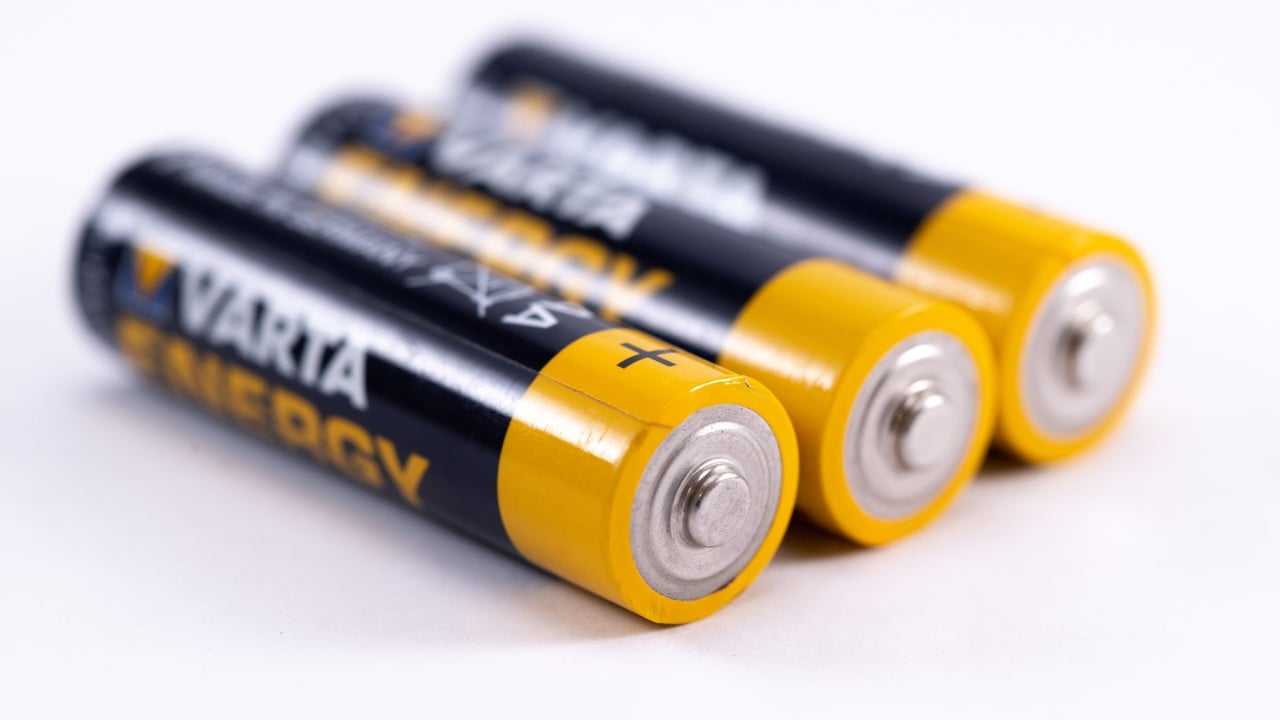
Photo by mohamed abdelghaffar on Pexels
The Brief
China's power battery industry is moving beyond single-plant emission cuts to address full value chain decarbonization, according to a report by People's Daily. Industry estimates show over 80% of life-cycle battery carbon emissions originate in upstream links such as mining, refining, and materials synthesis—generating more than five times the emissions of final battery manufacturing. At a recent operational event, industry leader CATL announced it achieved operational carbon neutrality by late 2025 across 20 certified zero-carbon plants and outlined a roadmap to reach full value chain carbon neutrality by 2035.
Why it matters
Power batteries are critical components for the global transition to electric mobility. Because the overwhelming majority of battery emissions occur upstream, solely purchasing green power for manufacturing plants cannot fulfill life-cycle decarbonization demands. Establishing verifiable low-carbon supply chains is increasingly vital for Chinese battery manufacturers to comply with emerging international green trade standards and carbon footprint regulations.
China context
Under China's dual-carbon objectives and the drive to build a new energy framework, domestic industrial policy is pivoting from isolated plant-level emissions reductions toward coordinated supply chain decarbonization. Partnerships involving major battery firms, the National Center for Climate Change Strategy and International Cooperation, and regional exchanges like the Beijing Green Exchange and Shanghai Environment and Energy Exchange reflect an effort to establish unified carbon accounting standards and market-based mechanisms within China.
Editor's View
EDITOR'S VIEW — Analysis and inference, not factual reporting.
The battery sector's pivot to upstream carbon accounting reflects a pragmatic realization: battery manufacturing itself is relatively low-emission compared to the energy-intensive chemical refining and mining required to produce active materials. By building proprietary carbon tracing tools and auditing Tier-1 suppliers, leading Chinese players are attempting to set de facto standard-setting power before international compliance frameworks harden.
What to watch
- Implementation milestones and technical accounting rules under CATL's 2035 value chain carbon neutrality roadmap.
- Progress in establishing unified, internationally recognized battery carbon footprint accounting standards and databases.
- The rate at which smaller upstream raw material suppliers adopt carbon management systems and join zero-carbon industry platforms.
Key Takeaways
- 1Over 80% of battery life-cycle emissions occur upstream in mining, smelting, and materials synthesis, exceeding manufacturing emissions by more than fivefold.
- 2CATL announced it achieved operational carbon neutrality by late 2025 across 20 zero-carbon certified factories running on 100% zero-carbon electricity.
- 3CATL unveiled a 2035 value chain carbon neutrality roadmap, auditing carbon data for over 100 Tier-1 suppliers and tying carbon metrics to procurement.
- 4Partnerships with carbon exchanges and national climate centers aim to advance unified carbon accounting standards and market-based mechanisms.
China's power battery sector is shifting its decarbonization strategy from isolated factory upgrades to full value chain coordination, according to a report published by People's Daily.
Industry estimates indicate that more than 80% of life-cycle carbon emissions in power batteries are concentrated in upstream supply chains—including mineral extraction, smelting, cathode and anode synthesis, and component processing. Total emissions from these early stages can exceed five times those generated during final battery assembly, making supply chain coordination essential for meaningful emissions cuts.
To address this challenge, domestic battery manufacturers are rolling out structured value chain programs. At a carbon neutrality briefing, Contemporary Amperex Technology Co., Limited (CATL) announced that it achieved carbon neutrality in its core operations by the end of 2025. The company stated that 20 of its battery manufacturing facilities secured ISO 14068-1 zero-carbon plant certifications, utilizing 100% zero-carbon electricity for core manufacturing operations.
Building on this operational baseline, CATL disclosed its action plan targeting full value chain carbon neutrality by 2035. The company established a carbon data tracing platform using proprietary management tools and has completed carbon accounting assessments for more than 100 core Tier-1 suppliers. Carbon footprint metrics and renewable electricity usage rates are being integrated into its formal supplier evaluation systems.
To expand sector-wide adoption, CATL launched a zero-carbon supply chain enablement program and advocated for an industry-wide zero-carbon ecosystem collaboration platform. It also entered strategic partnerships with the National Center for Climate Change Strategy and International Cooperation and the Shanghai Environment and Energy Exchange to explore standard formulation and market-driven reduction mechanisms.
Industry specialists participating in the event noted that tackling Scope 3 supply chain emissions remains a complex, long-term undertaking. Chinese Academy of Engineering academician Ling Wen emphasized that technical innovation and cross-border cooperation are vital to overcoming practical hurdles. Beijing Green Exchange Chairman Wang Naixiang noted that carbon trading platforms can effectively bridge emission responsibilities, technologies, and market incentives as the industry works to establish unified accounting standards.
Sources
- 绿链突围 锂电产业“碳”路--经济·科技--人民网 — People's Daily · 8/19/2026