
Technology & AIAnalysis
Research Maps Global Solar PV Waste Influx and Recycling Economics
A study led by Shandong University models decommissioned panels through 2060, projecting industry breakeven between 2035 and 2040 as waste shifts toward emerging economies.
Share
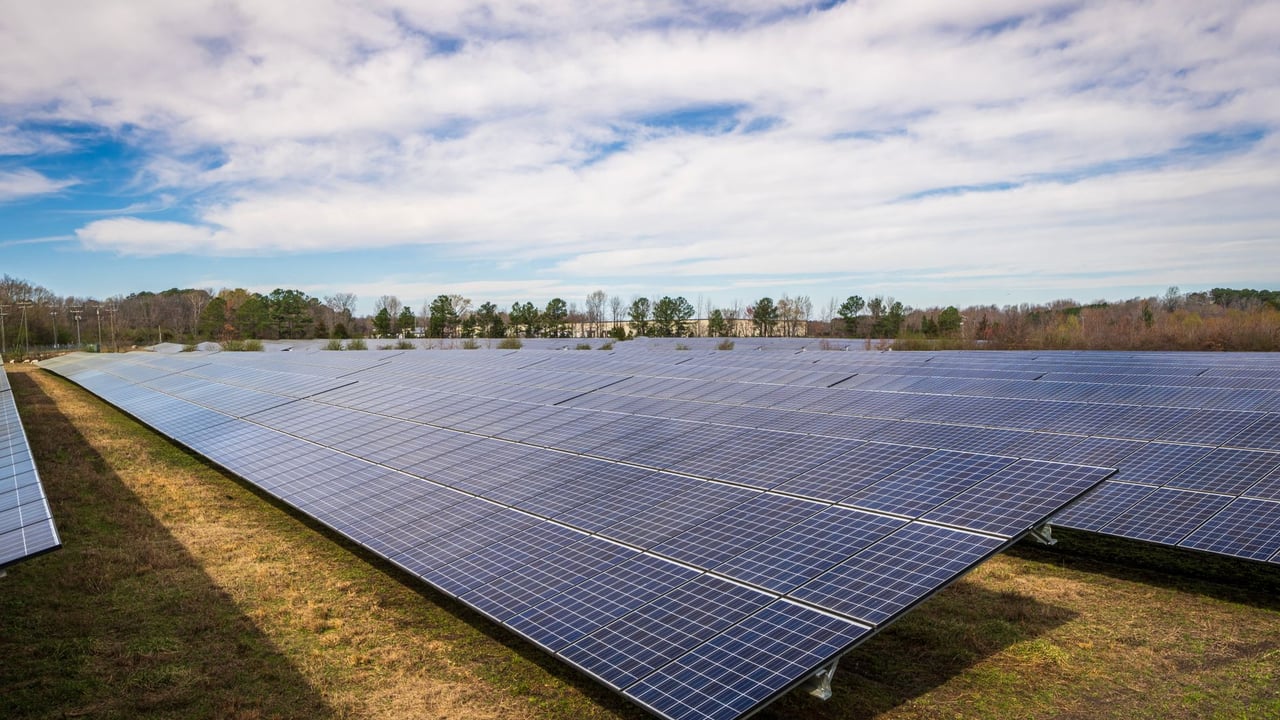
Photo by Mark Stebnicki on Pexels
The Brief
A joint research team led by Shandong University has developed an integrated assessment framework for the global solar photovoltaic (PV) circular economy, analyzing more than 1,700 policy and technology combinations. The study estimates cumulative decommissioned PV waste will reach 297 million to 402 million metric tons by 2060, with the bulk of retirements shifting from Western markets to emerging economies like China and India. The authors project that the global PV recycling sector will reach financial breakeven between 2035 and 2040, generating substantial net economic and carbon reduction benefits.
Why it matters
As the first generations of utility-scale solar installations reach the end of their operational lives, managing decommissioned PV panels has become critical. The study offers a quantitative roadmap tracking critical materials like silicon and silver while highlighting the economic tipping points for industrial-scale recycling infrastructure worldwide.
China context
As the world's largest producer and installer of solar panels, China faces a massive domestic decommissioning wave in the coming decades. Chinese academic leadership on PV circularity provides theoretical grounding for domestic policymakers to design differentiated subsidy mechanisms, manage hazardous substances like lead and fluorine, and establish end-of-life supply chains.
Editor's View
EDITOR'S VIEW — Analysis and inference, not factual reporting.
The transition to renewable energy cannot overlook the downstream lifecycle challenges of clean technologies. This research demonstrates that recycling is not merely an environmental safeguard against toxic waste, but an economically viable source of critical minerals that will achieve profitability within two decades. Differentiated policies across regions will be essential to prevent emerging markets from bearing an unmanageable disposal burden.
What to watch
- Adoption of the assessment framework in international solar waste and circular economy policy standards.
- Policy announcements regarding national PV recycling subsidy models and extended producer responsibility rules in China and India.
- Commercialization timelines and cost parity across mechanical, chemical, and pyrolysis recycling methods.
Key Takeaways
- 1A research team led by Shandong University evaluated over 1,700 policy and technology scenarios to model the global PV circular economy through 2060.
- 2Global cumulative decommissioned PV modules are projected to reach 297 million to 402 million metric tons by 2060, shifting from Western nations to emerging economies like China and India.
- 3The global PV recycling industry is estimated to achieve financial breakeven between 2035 and 2040, with cumulative net economic returns potentially reaching hundreds of billions of dollars by 2060 un
- 4High raw material costs could suppress global cumulative installations by 1,900 GW, reinforcing the need for closed-loop mineral recovery.
As early generations of solar installations approach retirement, managing end-of-life photovoltaic (PV) modules has emerged as a central challenge for the clean energy transition. To address this, a research team led by Professor Li Jiashuo from the Institute of Blue and Green Development at Shandong University (Weihai), in collaboration with domestic and international institutions, has published a comprehensive assessment framework for global PV circular governance, according to People's Daily.
By coupling multiple modeling approaches across more than 1,700 policy and technology scenarios, the researchers quantified the dynamic relationship between critical mineral supplies and PV deployment. The study projects that cumulative decommissioned PV modules worldwide will reach between 297 million and 402 million metric tons by 2060. Over this period, the primary geographic focus of panel retirements is expected to shift from early-adopting high-income regions, such as Europe and the United States, toward rapidly growing emerging markets, particularly China and India.
The findings also emphasize the vulnerability of solar deployment to upstream raw material constraints. Driven by declining ore grades and rising extraction expenses, prices for key minerals like silicon and silver could increase significantly. Under a high-price scenario modeled by the researchers, cumulative global PV installations would decrease by 1,900 gigawatts, corresponding to a 7-million-metric-ton reduction in decommissioned module volume.
Evaluating the regional economic performance and emissions impacts of mechanical, chemical, and pyrolysis recycling technologies, the team estimated that the global PV recycling industry will reach overall financial breakeven between 2035 and 2040. Under the high material price scenario, cumulative net economic returns from the sector could reach hundreds of billions of dollars by 2060. Beyond mineral recovery, large-scale recycling is shown to significantly cut lifecycle greenhouse gas emissions.
Li noted that building a closed-loop industry requires integrating technical innovation with localized policy tools. The authors advocate for differentiated country-level regulations, targeted technology transfers, and enhanced international collaboration, alongside optimized subsidy structures to support commercial scaling.
Sources
- 光伏产业循环治理难题有了科学解法--经济·科技--人民网 — People's Daily · 8/15/2026