
Defense & StrategyAnalysis
Chinese Military and Armed Police Mobilize for Typhoon Saudel Flood Relief
PLA units, People's Armed Police, and local militias conduct evacuations and clear debris across Zhejiang, Fujian, and Jiangxi.
Share
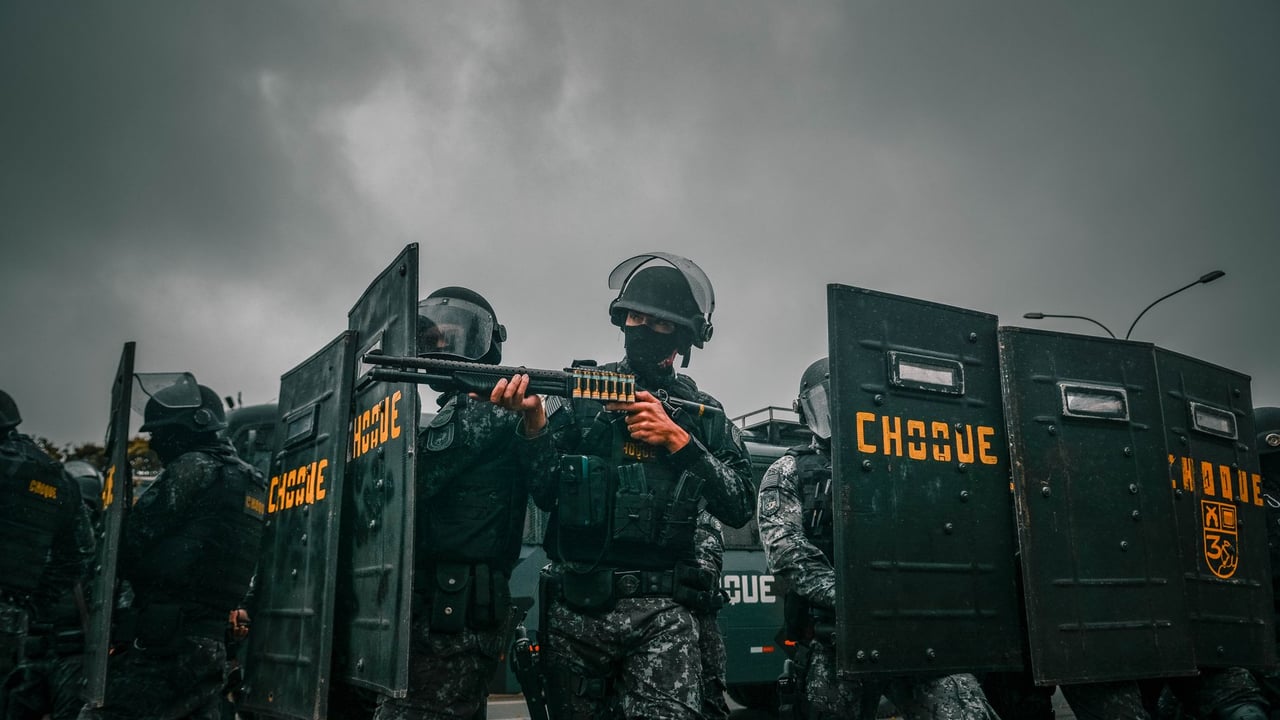
Photo by Joel Santos on Pexels
The Brief
Chinese military forces, the People's Armed Police (PAP), and local militia units have mobilized across southeastern China to counter widespread flooding and infrastructure damage triggered by Typhoon Saudel. Torrential downpours across Zhejiang, Fujian, and Jiangxi inundated urban centers, trapped residents, and disrupted schooling. According to official military reports, operations included rescuing over 700 stranded citizens in Putian, delivering relief supplies to more than 300 students and staff in Cangnan, and deploying militia contingents to clear debris from inundated schools as the academic term begins.
Why it matters
The emergency mobilization demonstrates the operational integration of China's armed forces in domestic disaster response, particularly the dual role of the People's Armed Police and local military sub-commands during severe climate disruptions. As typhoon-induced extreme weather increasingly threatens key economic corridors along the southeastern coast, rapid civil-military coordination remains essential to maintaining infrastructure resilience and municipal stability.
China context
Under China's disaster response framework, local authorities routinely request PLA and PAP support when severe weather exceeds municipal handling capacities. The response highlights the tiered architecture of domestic crisis management: PAP regional and mobile contingents provide tactical rescue capabilities, while People's Armed Forces Departments (PAFDs) and military sub-commands activate local militia personnel who offer localized terrain knowledge and immediate availability.
Editor's View
EDITOR'S VIEW — Analysis and inference, not factual reporting.
The deployment following Typhoon Saudel underscores how peacetime disaster relief functions as a critical testbed for command-and-control interoperability between active-duty troops, paramilitary units, and reservist militias. Utilizing both the PAP Fujian Corps and the PAP Second Mobile Corps alongside county-level PAFDs illustrates seamless vertical coordination. However, the recurring necessity of military intervention for urban drainage failures points to lingering vulnerabilities in municipal storm infrastructure amid escalating severe weather patterns.
What to watch
- Further precipitation forecasts and secondary disaster risks associated with Typhoon Saudel's lingering system across southeastern provinces.
- The pace of restoration for damaged municipal facilities, transport links, and affected school districts.
- Official evaluations of joint civil-military disaster mitigation mechanisms following post-storm operations.
Key Takeaways
- 1Typhoon Saudel's downpours triggered severe urban waterlogging and severed transit routes across Zhejiang, Fujian, and Jiangxi.
- 2PAP Wenzhou Detachment delivered emergency provisions to over 300 stranded students and faculty at Cangnan Second High School.
- 3PAP units and the Putian Military Sub-command rescued and evacuated over 700 stranded residents during overnight operations in Putian.
- 4Sixty militia members in Datian County cleared more than 200 cubic meters of silt from a flooded secondary school to assist school reopening.
Chinese armed forces, the People's Armed Police (PAP), and militia personnel mobilized for emergency rescue and recovery operations across Zhejiang, Fujian, and Jiangxi provinces following severe flooding triggered by Typhoon Saudel, according to military press reports.
Torrential rains caused widespread urban waterlogging, cut transport corridors, and submerged low-lying residential sectors across multiple southeastern population centers. Active-duty military contingents, paramilitary formations, and regional reserve organizations coordinated with municipal authorities to carry out evacuations and protect public infrastructure.
In Zhejiang province, heavy downpours on September 2 led to severe urban inundation across Cangnan County and Longgang City. Troops from the PAP Wenzhou Detachment entered flooded districts to assess water levels and conducted grid-by-grid search operations. The detachment transported emergency supplies to more than 300 teachers and students cut off by floodwaters at Cangnan County Second High School. Concurrently, the Wenzhou Military Sub-command deployed multiple militia detachments equipped with specialized gear to reinforce dikes and address immediate local hazards.
The emergency deepened on the evening of September 3 in Fujian province, where central urban districts of Putian sustained deep waterlogging that submerged residential dwellings and trapped inhabitants. In response, personnel from the PAP Fujian Corps, the PAP Second Mobile Corps, and the Putian Military Sub-command launched overnight operations.
Operating in darkness through deep water and hazardous roadway conditions, combined teams conducted sweep searches to locate isolated residents. Official accounts reported that these units transferred more than 700 stranded civilians over 24 hours of continuous deployment.
Recovery efforts also prioritized public educational institutions due to the opening of the school semester. At Datian County No. 1 High School in Fujian, floodwaters deposited thick silt and debris throughout campus grounds and instructional corridors. The Datian County People's Armed Forces Department assembled 60 militia members on the afternoon of September 3, deploying heavy tools to restore the campus. Personnel cleared over 200 cubic meters of silt by early morning on September 4, enabling rapid post-disaster remediation as wider recovery initiatives continue across adjacent affected regions.
Sources
- 浙江福建多地因持续强降雨引发城乡内涝等险情 解放军和武警部队官兵、民兵迅速展开救援 — Ministry of National Defense · 9/4/2026
- 持续强降雨致浙江福建江西多地发生城乡内涝等险情 解放军和武警部队官兵、民兵持续奋战 — China Military Online · 9/5/2026