
# Semiconductors
Latest news and articles about Semiconductors
Total: 480 articles found
Beyond Nanometers: Huawei Unveils ‘τ Law’ in Bold Bid to Outrun Moore’s Law and US Sanctions
Huawei has introduced 'Tao’s Law' (τ Law), a semiconductor strategy that replaces traditional transistor shrinking with 'logic folding' to reduce signal latency. By focusing on time scaling rather than geometric size, Huawei aims to reach 1.4nm-equivalent performance by 2031, effectively bypassing Western lithography restrictions.
Shareholder Asset Freeze Plunges Wingtech into Deeper Uncertainty Amid Legal War
Wingtech Technology's controlling shareholder has had its entire 12.37% stake frozen by a court following a dispute with investor Jiang Zhaobai. Already under delisting warnings, the company faces growing scrutiny over its stability and financial health.

The Tao of Silicon: Huawei’s Strategic Pivot to Rewrite the Rules of Computing
Huawei has introduced 'Tao Law,' a new semiconductor principle that prioritizes signal transmission speed over transistor density. This strategic shift aims to bypass U.S. chip sanctions by optimizing architectural efficiency and data transport, potentially redefining performance metrics for the AI era.
Latency Over Lithography: Huawei’s 'Tau Law' Seeks to Redefine the Semiconductor Frontier
Huawei has introduced the 'Tau Law' as a new benchmark for semiconductor progress, prioritizing signal transmission speed over transistor density. This strategic pivot allows the company to maintain a competitive edge in AI hardware despite being cut off from the world's most advanced chip-making tools.
China’s Tech Titans Power A-Share Surge as Huawei Teases New Chip Breakthrough
China's tech-heavy indices saw a historic surge, with the STAR 50 rising nearly 6% and trading volume exceeding 3.2 trillion RMB. The rally was driven by Huawei's announcement of a new 'logic folding' chip technology and breakthroughs in high-performance materials for AI computing.
Silicon Sovereignty: SMIC Surges to Record High as China Doubles Down on Chip Independence
SMIC's share price hit a 20% ceiling, pushing its total valuation to a record 730 billion RMB amid a surge in China's semiconductor sector. This rally highlights the massive capital flows into firms essential for China's technological self-reliance and AI infrastructure goals.
Beyond the Shrinking Gate: Huawei’s ‘Tau Law’ and China’s New Semiconductor Paradigm
Huawei has introduced the 'Tau Law' to challenge the dominance of Moore’s Law, focusing on architectural 'logic folding' over traditional transistor shrinkage. This move represents a strategic attempt by China to bypass Western chip sanctions and establish an independent technological trajectory.

Lenovo’s AI Pivot Delivers Record Results as Yang Yuanqing Eyes $100 Billion Horizon
Lenovo reported record fiscal year 2025/26 revenue of $83.1 billion and a 42% surge in net profit, driven by the massive commercial success of its AI-centric hardware and services. The company has successfully diversified its revenue streams, with AI-related business now accounting for nearly 40% of its quarterly intake as it eyes a $100 billion future valuation.
China’s Tech Engine Roars as Semiconductor Sector Leads Broad Market Recovery
China's STAR 50 index spiked over 5% on record-breaking trading volumes, driven by a massive rally in the semiconductor and AI-related sectors. The surge highlights a significant capital rotation toward high-tech self-reliance as domestic chipmakers hit historic highs.

Beyond Moore’s Law: Huawei Proposes ‘Tau Law’ as a Strategic Pivot in the Semiconductor War
Huawei has introduced the 'Tau Law' to replace Moore’s Law, focusing on time-based scaling and logic folding rather than physical miniaturization. This strategic pivot aims to achieve 1.4nm-equivalent performance by 2031, effectively bypassing current restrictions on advanced semiconductor manufacturing equipment.
Beyond the Nanometer: Huawei’s “Tao Law” and the New Frontier of Silicon Sovereignty
Huawei has introduced the 'Tao (τ) Law,' a new semiconductor development principle that prioritizes reducing signal latency through 'logic folding' over traditional physical miniaturization. This strategy aims to achieve high-end performance parity with 1.4nm chips by 2031, effectively creating a workaround for current lithography restrictions.
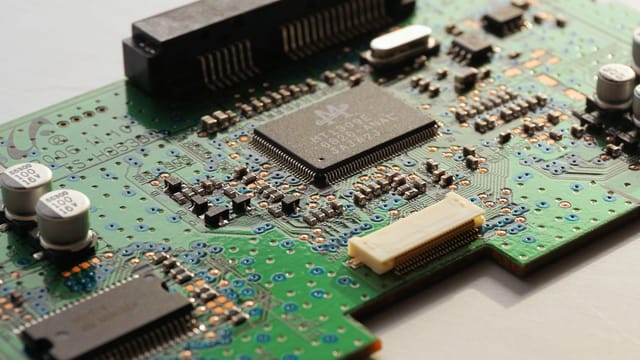
AI Memory Mania: How South Korea’s Chip Boom is Reshaping Markets and Social Status
The AI-driven demand for high-bandwidth memory has triggered a massive wealth boom in South Korea, leading to record bonuses for Samsung and SK Hynix employees and a retail investing frenzy. While this has boosted the domestic economy, it has also created extreme market concentration and volatility as the KOSPI index becomes increasingly dependent on two semiconductor giants.