
Policy & RegulationAnalysis
China Targets Grid Stability and Solar Innovation in 15th Five-Year Plan
Joint policy guidelines set higher peak-hour capacity targets for solar and wind while driving low-silver and perovskite cell breakthroughs.
Share
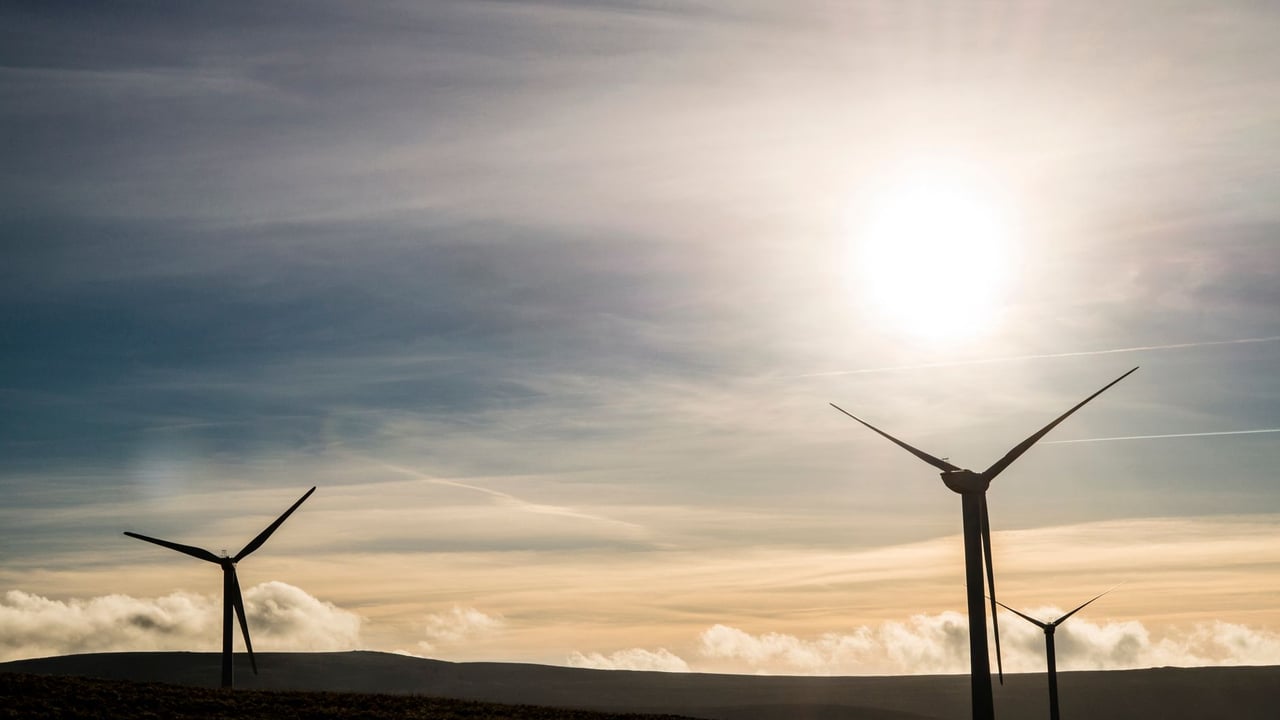
Photo by Ben Jessop on Pexels
The Brief
By mid-2026, China's total installed power capacity reached 4.04 billion kilowatts, supported by rapid wind and solar expansion. To integrate these growing volumes, the National Development and Reform Commission and National Energy Administration released guidelines for the 15th Five-Year Plan for Renewable Energy Development. The plan mandates that wind and solar provide over 20 percent of electricity during peak demand by 2030. Reaching this target relies on technical advancements, including equipment resilience to extreme weather and mass production of perovskite tandem solar cells.
Why it matters
As China expands its renewable energy grid, technological innovation is shifting from sheer installation volume toward grid integration, firm capacity, and resource sustainability. The reduction of silver dependency and breakthroughs in tandem cell efficiency mark crucial steps toward lower levelized cost of energy (LCOE) and supply chain resilience.
China context
The joint policy release outlines energy priorities for the 15th Five-Year Plan period (2026–2030), emphasizing peak-load contribution, firm capacity, and next-generation photovoltaic manufacturing. This reflects Beijing's broader goal of moving from volume-driven energy expansion to high-quality grid integration.
Editor's View
EDITOR'S VIEW — Analysis and inference, not factual reporting.
China's energy strategy reflects a maturing transition that prioritizes operational reliability over simple capacity metrics. Setting explicit targets for peak-hour power contribution forces manufacturers and grid operators to address intermittency directly. However, the reliance on next-generation technologies like silicon-perovskite tandem cells and low-silver pastes means success hinges on overcoming real-world durability and cost barriers in mass manufacturing.
What to watch
- Progress on commercial mass production lines for low-silver and silver-free photovoltaic modules.
- Real-world field deployment results and long-term stability testing for silicon-perovskite tandem solar cells.
- Detailed provincial implementation plans and capacity allocation following the 15th Five-Year Plan guidelines.
Key Takeaways
- 1China's power generation capacity reached 4.04 billion kW by mid-2026, with solar at 1.27 billion kW and wind at 680 million kW.
- 2The 15th Five-Year Plan requires wind and solar to supply over 20% of power during peak evening demand by 2030.
- 3Policy guidelines emphasize extreme weather resilience and accelerated deployment of low-silver and perovskite cell technologies.
- 4Major solar manufacturers have recorded tandem cell efficiencies between 31.39% and 35.5% in development trials.
China is shifting its renewable energy focus from rapid capacity expansion toward grid integration and technology upgrades under its 15th Five-Year Plan framework, according to a report by People's Daily.
Data from the National Energy Administration shows that by the end of June, China's total installed power generation capacity reached 4.04 billion kilowatts, an increase of 10.8 percent year-on-year. Solar power capacity rose 15.8 percent to 1.27 billion kilowatts, while wind power expanded 18.5 percent to 680 million kilowatts.
To address structural grid challenges posed by variable generation, the National Development and Reform Commission and the National Energy Administration jointly issued the 15th Five-Year Plan for Renewable Energy Development. The policy establishes that by 2030, the average trusted firm capacity of wind and solar—including source-side energy storage—must reach 8 percent, with wind targeted at around 11 percent and solar at 6 percent. Additionally, wind and solar power must account for over 20 percent of electricity generation during peak summer and winter evening demand hours, representing an increase of roughly 10 percentage points.
Achieving these targets requires enhanced equipment durability and higher efficiency. The plan mandates technical improvements to withstand extreme weather conditions, such as dust storms, cold waves, and typhoons, alongside accelerated research into high-efficiency cells like perovskite tandem solar technologies.
In response, domestic manufacturers are adapting equipment designs. Wind turbine maker Mingyang Smart Energy has developed onshore models featuring active de-icing and anti-corrosion systems for extreme cold and sandstorm environments, alongside offshore units designed with flexible towers to withstand Category 17 typhoons. In the solar sector, LONGi Green Energy introduced nano-alloy grid lines to reduce reliance on silver paste and developed specialized modules designed to mitigate risks from fire, shading, and dust accumulation.
Efficiency gains in next-generation photovoltaics continue to advance. According to industry data reported by People's Daily, LONGi achieved a 35.5 percent conversion efficiency for silicon-perovskite tandem cells, while Tongwei reached 33.08 percent and Astronergy reached 31.39 percent.
Industry analysts noted that replacing silver paste is essential to overcoming raw material constraints. While long-term technical stability challenges for pure perovskite cells remain to be fully resolved, silicon-perovskite tandem configurations offer a practical technological pathway toward commercial scale during the upcoming Five-Year Plan period.
Sources
- 向“新”逐“绿” 科技创新赋能可再生能源发展--经济·科技--人民网 — People's Daily · 7/29/2026