
Technology & AIAnalysis
Guangdong’s Humanoid Robot Cluster Accelerates as Domestic Sector Expands
A cluster of ten Greater Bay Area firms drives commercial deployment, algorithmic models, and domestic component supply chains.
Share
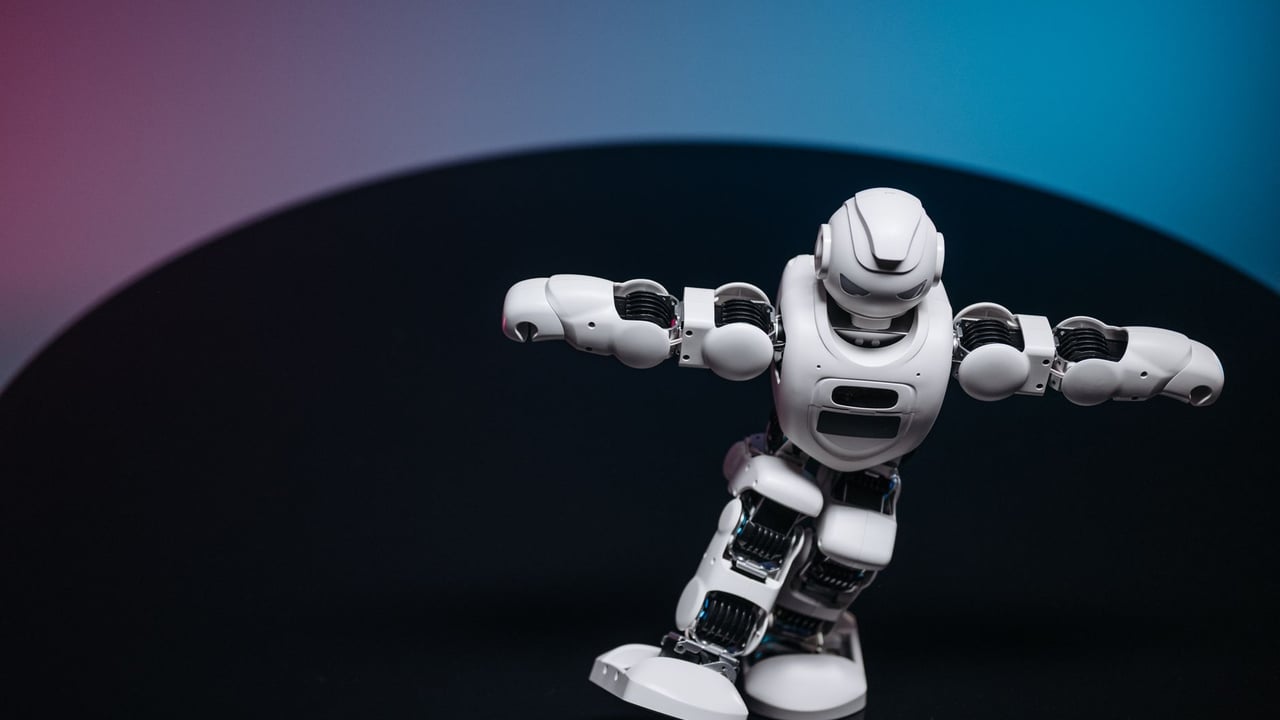
Photo by Pavel Danilyuk on Pexels
The Brief
China now accounts for more than 400 complete humanoid robot products, representing over half the global total, according to state media outlet Xinhua. In the first half of the year, newly registered enterprises in the humanoid robotics sector rose 9.5 percent year on year to 116,000. In Guangdong province, an emerging cluster of ten primary hardware and systems developers—including LimX Dynamics, Autonomous, AgiBot, Leju, EngineAI, Midea, XPeng, Honor, UBTECH, and Dobot—is leading differentiated commercial rollouts spanning foundation models, bipedal locomotion, and industrial deployment.
Why it matters
Humanoid robotics sits at the intersection of embodied artificial intelligence and advanced manufacturing. By integrating software startups with established consumer electronics and industrial giants, Guangdong is testing whether regional supply chains can transition lab prototypes into scalable, commercially viable hardware.
China context
Backed by the manufacturing ecosystem of the Guangdong-Hong Kong-Macao Greater Bay Area, Chinese developers are seeking domestic component self-reliance while competing for overseas enterprise and research contracts. The concentration of component suppliers and high-density test environments provides the region with rapid prototyping and iteration advantages.
Editor's View
EDITOR'S VIEW — Analysis and inference, not factual reporting.
The emergence of Guangdong's specialized robotics cluster demonstrates China's industrial playbook in action: pairing agile algorithm startups with established consumer hardware giants. While claims of rapid enterprise creation and model milestones are impressive on paper, commercial viability will ultimately be judged by sustained multi-unit field deployments and durable margins rather than laboratory demonstrations.
What to watch
- Delivery timelines and overseas fulfillment rates for multi-thousand-unit orders reported by bipedal robot manufacturers.
- Real-world generalization capabilities of foundational embodied AI and vision-language-action (VLA) models in complex manipulation tasks.
- Component substitution rates across domestic humanoid supply chains, particularly regarding harmonic drives, actuators, and sensor integration.
Key Takeaways
- 1China has developed over 400 complete humanoid robot products, exceeding 50 percent of the world's total, with sector-related corporate registrations reaching 116,000 in the first half of the year.
- 2Guangdong's emerging cluster highlights ten core developers pursuing differentiated paths across bipedal locomotion, embodied foundation models, and commercial supply integration.
- 3LimX Dynamics has logged multi-thousand-unit orders with over half bound for export, while Leju Robotics reports a 95 percent domestic sourcing rate for core components in its Kuafu model.
- 4Algorithmic developers including Autonomous and AgiBot are investing heavily in real-world multimodal data factories and novel vision-language-action architectures.
China has accumulated more than 400 complete humanoid robot models, accounting for over half of the global total, according to data reported by Xinhua. The domestic sector saw 116,000 newly registered enterprises in the first half of the year, marking a 9.5 percent increase compared to the previous year.
In southern China's Guangdong province, ten prominent developers based across the Greater Bay Area have formed an identifiable cluster, often referred to domestically as the region's "ten steeds." The group comprises LimX Dynamics, Autonomous, AgiBot, Leju Robotics, EngineAI, Midea, XPeng, Honor, UBTECH, and Dobot. These firms are deploying varied technical approaches spanning motor coordination, embodied foundational models, and high-precision mechanical engineering.
Firms focusing on mobility and balance are reporting early traction in commercial fulfillment. At LimX Dynamics in Shenzhen, engineers emphasize the integration of whole-body dynamic control with cognitive perception. Zhang Wei, founder of the firm, stated that integrating low-level motion coordination with higher-level cognitive AI represents the critical path for physical-world artificial intelligence. LimX Dynamics has secured multi-thousand-unit orders for its full-sized humanoid models and TRON series bipedal mobile manipulation platforms, with more than half of those shipments destined for overseas clients across commercial inspection and scientific research scenarios.
Parallel efforts focus on embodied foundational models that govern task execution. Shenzhen-based startup Autonomous has built dedicated proprietary data pipelines to collect tens of thousands of hours of multimodal real-world training data, according to company founder Wang Qian. Meanwhile, algorithm developer AgiBot released its proprietary NeuroVLA model in 2026, designing the system around active perception, fault self-recovery, and temporal memory to execute biological-style physical motions, achieving unicorn status within twelve months of operation.
Hardware localization and structural mechanics have also advanced. Leju Robotics reported that its Kuafu series full-sized humanoid robot features a 95 percent domestic component rate, positioning it among the most industrialized platforms in the domestic market. Similarly, developers such as EngineAI have pushed mechanical design toward natural straight-knee walking gaits, reflecting efforts to bridge the gap between basic bipedal stability and practical human-environment navigation.
Sources
- “十骏”腾跃向未来——广东人形机器人产业加速崛起 — Xinhua News Agency · 8/21/2026