
Technology & AIAnalysis
Chinese Chip Startup Huixi Intelligence Unveils Embodied AI Chips
The company introduced its R1 family of processors and computing modules designed to integrate perception and real-time robotic motor control on a single die.
Share
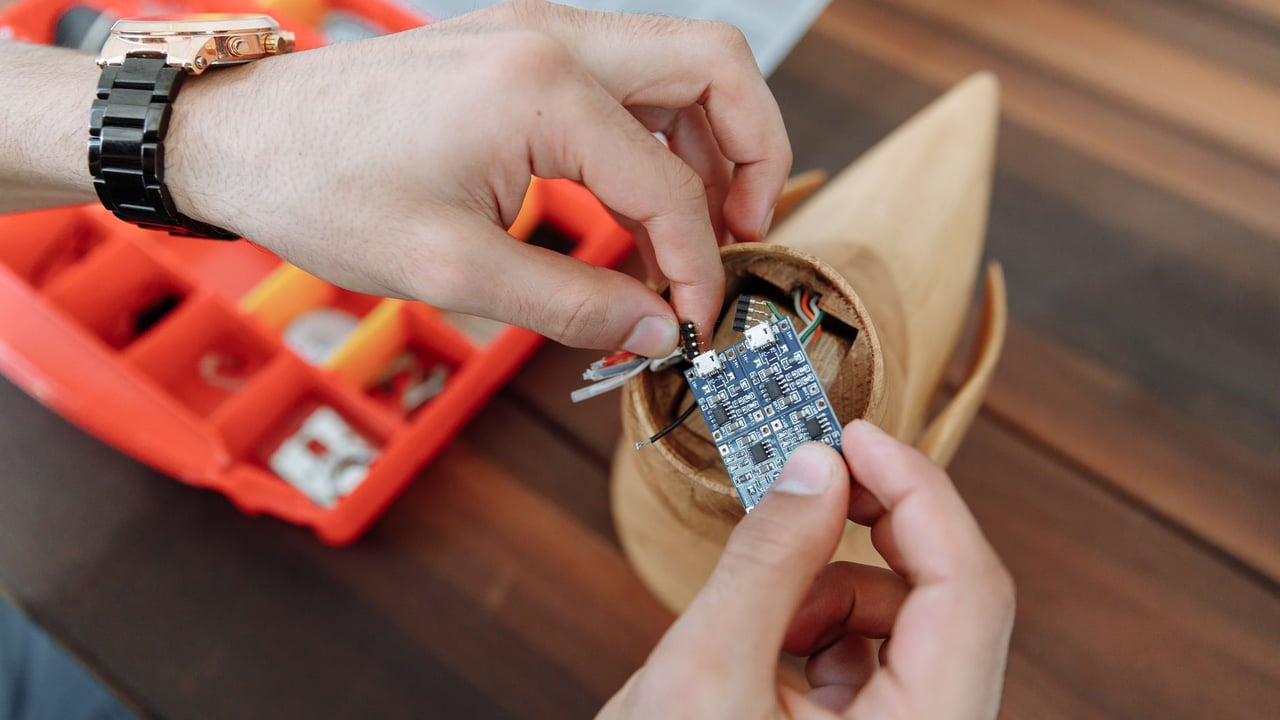
Photo by Thirdman on Pexels
The Brief
Chinese chip startup Huixi Intelligence has unveiled its Huixi Embodied product portfolio during the 2026 World Robot Conference, presenting dedicated computing hardware for robotic systems. The lineup includes the R1 PRO and R1 MAX system-on-chips alongside the RCM400 and RCM500 compute modules. Designed around a self-developed architecture, the new R1 PRO offers 375 TOPS of INT8 computing power and integrates general processing, neural acceleration, graphics, and real-time interfaces onto a single chip. The architecture aims to combine high-throughput multimodal perception and low-latency motor execution, reducing multi-chip communication overhead.
Why it matters
Embodied artificial intelligence platforms typically divide computation between high-throughput multi-modal inference—often referred to as the 'brain'—and high-frequency, deterministic real-time motion control, or the 'cerebellum.' By integrating the CPU, NPU, GPU, and real-time interfaces on a single system-on-chip, Huixi aims to eliminate inter-chip latency and reduce bill-of-materials costs. This marks a notable engineering push by Chinese chip designers toward integrated, native hardware solutions tailored for robotics rather than relying on adapted automotive or mobile platforms.
China context
The product launch coincides with aggressive industrial policy support from the Beijing Economic-Technological Development Area (Yizhuang), which is positioning itself as a hub for robotics and embodied AI. Municipal authorities are pushing to connect integrated circuit development directly with domestic robotics manufacturers to build local supply chains across core components, processors, and full-system platforms.
Editor's View
EDITOR'S VIEW — Analysis and inference, not factual reporting.
The shift toward native robotics silicon illustrates how Chinese semiconductor ventures are targeting emerging verticals where global standards and dominant architectures remain unsettled. Rather than competing head-to-head solely in general-purpose cloud accelerators, companies like Huixi are targeting edge applications such as logistics vehicles and humanoid robots. However, the commercial impact of such integrated hardware will ultimately hinge on developer adoption, software toolchain maturity, and how smoothly its custom architecture interfaces with standard robotic operating systems.
What to watch
- Benchmark testing and real-world power efficiency metrics for the R1 PRO and R1 MAX in commercial robotic deployments.
- Software compatibility of the RCM400 and RCM500 modules with mainstream robotics frameworks and frontier multimodal models.
- Competitive hardware announcements from both domestic Chinese AI chipmakers and global semiconductor firms addressing robotic edge computing.
Key Takeaways
- 1Huixi Intelligence introduced its Huixi Embodied product series at the 2026 World Robot Conference, covering chips, modules, and software.
- 2The new R1 PRO SoC integrates CPU, NPU, GPU, and real-time control interfaces on a single die, delivering 375 TOPS of INT8 AI compute.
- 3The hardware is intended to unify cognitive AI inference and real-time robotic motor control while reducing inter-chip communication overhead.
- 4Huixi's R1 silicon has entered testing and deployment across robotics and L4 autonomous logistics vehicles.
- 5The launch aligns with Beijing Yizhuang's policy initiative to establish an integrated domestic industrial ecosystem for robotics and AI semiconductors.
Chinese artificial intelligence semiconductor developer Huixi Intelligence officially introduced its Huixi Embodied product series during the 2026 World Robot Conference, expanding its presence in computing platforms for robotic systems, according to a report by People's Daily.
The newly announced lineup comprises the Huixi Embodied R1 processor family—consisting of the R1 MAX and the newly launched R1 PRO—as well as the Robot Core Module series, which includes the RCM500 and the new RCM400. Alongside the hardware, the company showcased an accompanying software stack designed to support deployment from silicon-level execution to operational engineering.
A central focus of the launch was the R1 PRO, which Huixi described as an SoC natively designed for embodied AI to fuse cognitive and motor computing. The architecture integrates a central processing unit, neural processing unit, graphics processing unit, and real-time interfaces onto a single piece of silicon. This integrated configuration is intended to handle perception, reasoning, decision-making, and high-frequency motion control within an on-chip loop, reducing the communication latency and hardware complexity associated with multi-chip designs.
According to Huixi, the R1 PRO provides 375 TOPS of INT8 AI compute performance. The processor employs a mixed-precision single-instruction, multiple-threads (SIMT) architecture optimized for embodied AI workloads, aiming to balance compute efficiency and general programmability. The company stated that its underlying design utilizes a Turing-complete instruction set to accommodate irregular compute patterns and algorithmic updates over time.
The development of the series follows Huixi's earlier Guangzhi R1 processor, which the company reported has undergone joint evaluation and production testing with commercial partners across robotics and Level 4 autonomous logistics vehicles.
The product debut reflects broader industrial efforts in Beijing to strengthen local supply chains for emerging technologies. Speaking at the launch event, Li Yantao, deputy director of the Beijing Economic-Technological Development Area Administrative Committee and head of Beijing's major integrated circuit projects office, noted that the Yizhuang district is accelerating the development of the embodied AI industry. Li emphasized the district's strategy to build an interconnected value chain encompassing core components, intelligent chips, robot bodies, and operational use cases.
Sources
- 辉羲智能发布Huixi Embodied系列 面向具身智能打造全栈算力平台--经济·科技--人民网 — People's Daily · 8/21/2026