
# AI
Latest news and articles about AI
Total: 207 articles found

Memory Makers Ride an AI-Fuelled Supercycle as Prices Soar — and Few Can Stop It
A surge in demand for AI‑related storage is driving rapid price rises across DRAM and NAND, with suppliers shifting to flexible, quarterly pricing and prioritising high‑margin AI products. Limited capacity growth — because investment is being spent on process upgrades rather than volume expansion — means the shortage looks structural and could persist through 2026–27, benefiting memory vendors but squeezing OEMs and raising the cost of scaling AI services.

Tencent's Sogou Keyboard Goes All‑In on AI, Adding Multi‑Language Real‑Time Translation
Tencent has launched Sogou Input Method 20.0, upgrading voice, typing and translation with model‑level AI and adding a 'HunYuan champion' translation model that supports over 30 languages. The change deepens Tencent's control over a key user interface and raises questions about data use, privacy and the company’s competitive posture in the AI arms race.

With RMB5bn War Chest and a Star Founder at the Helm, a Chinese Large‑Model Start‑up Bets on Hardware to Prove Value
Jieyue Xingchen has raised over RMB5 billion in a B+ round and named Yin Qi, founder of Megvii and current chair of Qianli Technology, as chairman to accelerate commercialization of its large models. The start‑up aims to marry its foundation models with device partners — phones and cars — to create a full productisation chain, betting that terminal deployment will prove its commercial value.

China’s Big Tech Turns Lunar New Year Into an AI‑Fueled Cash War: Baidu and Tencent Pour Billions into Red‑Packet Promotions
Baidu and Tencent have launched multi‑hundred‑million‑yuan Spring Festival cash campaigns, coupling traditional digital red packets with AI demonstrations and ecosystem plays. The promotions highlight an emerging pattern: China’s tech giants are using culturally resonant incentives and AI showpieces to drive short‑term transactions and long‑term platform engagement, with implications for competition and regulation.

Baidu Throws Its Hat Into the New Year AI Bonanza with a RMB 500m Red‑Envelope Push
Baidu is offering users a share of RMB 500 million in cash rewards via its Wenxin assistant from Jan 26 to Mar 12, with individual prizes up to RMB 10,000, and has been named chief AI partner for the 2026 Beijing Spring Festival Gala. The promotion is a marketing gambit to boost engagement and legitimacy amid intense competition among Chinese tech firms for AI users, but it carries economic and regulatory risks.

Jensen Huang’s China Visit and a New Wave of Chinese Space-Tech Listings Signal Business-first Engagement
Nvidia CEO Jensen Huang’s January visit to Shanghai highlights the continuing commercial importance of China to global AI hardware suppliers. At the same time, Beijing’s new measures to develop commercial satellite data and a string of corporate preparations for public listings, such as Zhongke Yuhang’s completed IPO counselling, show China steering capital and policy toward space and data‑intensive technologies while tightening data governance.

China's 2026 Growth Playbook: Policy Push, Consumption Pivot and a Tech-Led Transition
China ended 2025 with 5% GDP growth and its economy topping RMB 140 trillion. For 2026 economists expect coordinated fiscal and targeted monetary easing to prioritise domestic demand, with consumption and services leading a structural shift toward technology-driven growth.

Baidu Bundles Documents and Cloud Storage into a ‘Personal Super Intelligence’ Unit to Fast‑Track AI Growth
Baidu merged its Wenku document repository and Wangpan cloud storage into a single Personal Super Intelligence Business Group led by Wang Ying, reporting directly to CEO Robin Li. The consolidation aims to leverage document and personal‑file datasets to accelerate consumer AI products, drive new monetisation and tightly integrate generative features into Baidu’s ecosystem while navigating privacy and regulatory risks.

IMF Chief: AI a 'Tsunami' for Jobs — Young and Entry-Level Workers Face the Brunt
IMF chief Kristalina Georgieva warned at Davos that AI will act like a ‘tsunami’ for labour markets, affecting an estimated 60% of jobs in advanced economies and 40% globally. She said young people face the greatest disruption because many entry-level roles are being eliminated, and stressed that governance has not kept pace with technological change.
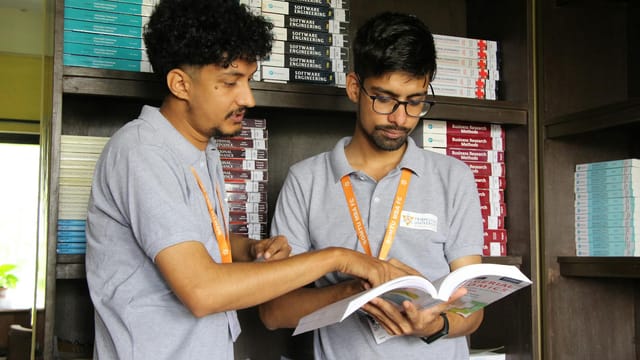
China’s MBA Market Cools: Fewer Jobs, Falling Fees and a Curriculum Reckoning
China’s MBA market is undergoing a correction as economic slowdown, automation and policy changes shrink demand for traditional management degrees. Top programmes retain value through alumni networks and tailored curricula, but many schools have cut fees and retooled courses to stay competitive amid fewer clear job outcomes for graduates.

Feeding the Machine: How AI’s Rise Depends on Low‑paid Labor and Vast Natural Resources
James Muldoon’s reporting reframes generative AI as a large‑scale extraction system that depends on low‑paid labour, unconsented creative material and vast energy and water resources. The phenomenon deepens global labour competition, concentrates managerial control, and risks reproducing Western cultural biases unless regulated.
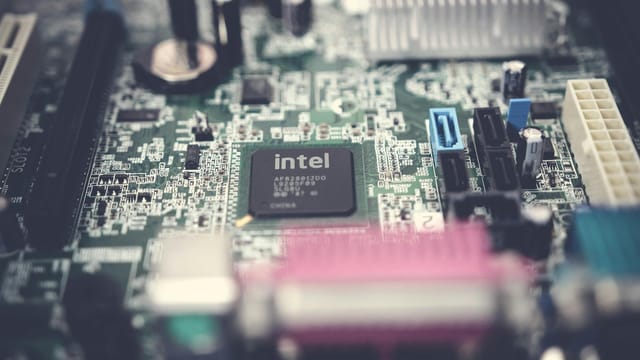
Intel’s CEO Concedes Yield Shortfalls as AI Demand Outpaces Supply
Intel CEO Chen Liwu admitted on the Q4 2025 earnings call that the company has not fully met skyrocketing AI-driven demand because product yields are below his expectations. Intel has pledged to make yield improvements a top priority in 2026, but the admission triggered a sharp market reaction and raises competitive and supply-chain risks.