
# Starlink
Latest news and articles about Starlink
Total: 62 articles found

SpaceX Secures Investment-Grade Status: S&P’s ‘BBB’ Rating Validates Musk’s Long Game
S&P Global Ratings has assigned SpaceX an investment-grade 'BBB' rating with a stable outlook, citing its dominant launch and Starlink businesses. While capital needs for Starship remain high, the agency expects the company's financial leverage to peak in 2028 before improving through AI and connectivity revenue.

Gravity Returns to SpaceX: Trillion-Dollar Titan Faces First Post-IPO Turbulence
SpaceX shares fell 5% in a volatile trading session, marking the first major decline since its landmark public listing. Despite the dip, the company maintains a valuation over $2.5 trillion as it navigates the transition from a private venture to a public market heavyweight.

SpaceX’s Trillion-Dollar Turbulence: What the Latest 5% Slide Reveals About the Future of Frontier Tech
SpaceX shares dropped 5% in a volatile trading session on June 17, 2026, reversing earlier gains. The fluctuation occurs as the company maintains a $2.5 trillion valuation, reflecting broader instability in high-stakes frontier technology markets.
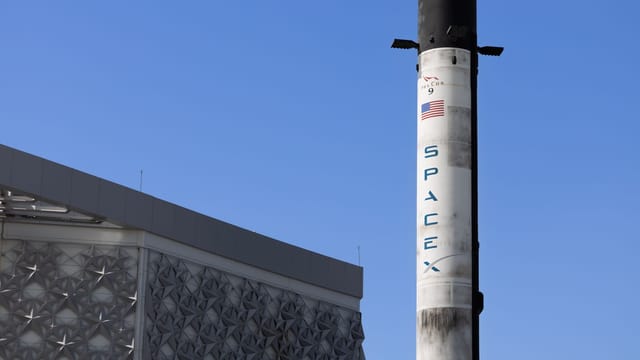
A New Orbit for Global Capital: SpaceX Reaches $2.5 Trillion After Record-Breaking IPO
SpaceX has shattered financial records with an $85.7 billion IPO, the largest in history, surpassing Saudi Aramco's previous record. The company's valuation now nears $2.5 trillion following a massive 42% stock surge since its market debut.

Beyond the Rocket: How SpaceX’s Trillion-Dollar IPO Redefines the Space-AI Frontier
SpaceX’s $1.7 trillion Nasdaq debut marks its evolution from a rocket manufacturer to an AI infrastructure giant. While Starlink provides the cash flow, the company is now betting on space-based data centers to bypass terrestrial energy limits, presenting a formidable new challenge for China’s accelerating commercial space sector.

Beyond the Stratosphere: SpaceX’s $2.1 Trillion IPO Marks the Dawn of the Space-AI Era
SpaceX has completed the world's largest-ever IPO, achieving a $2.1 trillion valuation and making Elon Musk the first trillionaire. The company is pivoting from a launch provider to an AI-space infrastructure hybrid, utilizing record capital raises to fund massive orbital data centers and satellite expansion.
The Mars Premium: SpaceX’s $2 Trillion Debut and the Coronation of the Trillionaire Era
SpaceX's Nasdaq debut has pushed its valuation past $2 trillion, making Elon Musk the world’s first trillionaire. The market success comes despite significant annual losses, as investors bet on a future of interplanetary travel and orbital AI infrastructure rather than near-term profitability.
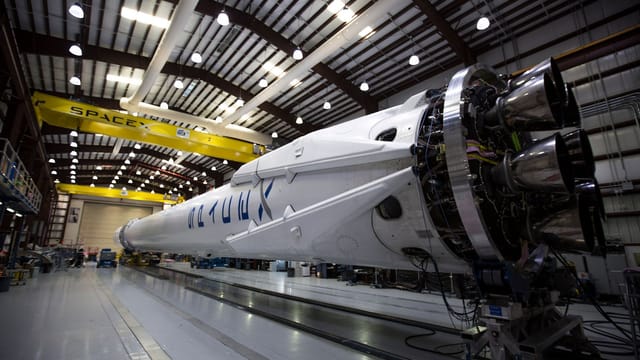
Musk’s Trillion-Dollar Frontier: SpaceX’s IPO and the Dawn of ‘Infinite Wealth’
SpaceX's successful Nasdaq IPO has pushed its market value to $2.1 trillion, officially making Elon Musk the world's first trillionaire. The listing signals a major market shift toward valuing space as a critical infrastructure and AI play rather than just a transportation sector.
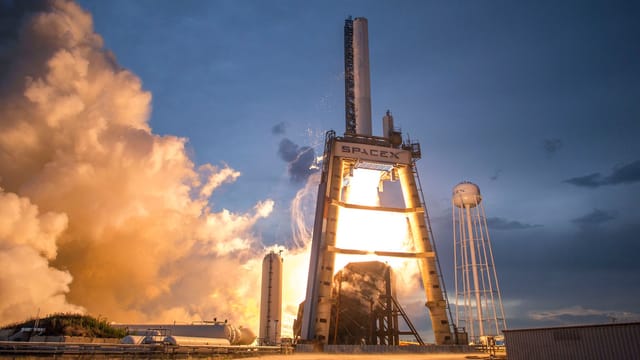
Musk’s Middle East Shield: Iran Signals Potential Strikes on SpaceX and Starlink Assets
Iran is reportedly assessing Elon Musk’s SpaceX and Starlink ground stations across the Middle East as potential military targets. Citing the networks' alleged support for U.S. and Israeli operations, Tehran is signaling a new doctrine that treats private tech infrastructure as a legitimate extension of state military power.

The Trillion-Dollar Frontier: SpaceX IPO Propels Elon Musk into Uncharted Financial Territory
SpaceX has completed the world's largest IPO, reaching a $2.28 trillion valuation and making Elon Musk the first trillionaire in history. The listing underscores a massive shift in global capital toward space technology and gives Musk unprecedented control over critical aerospace infrastructure.
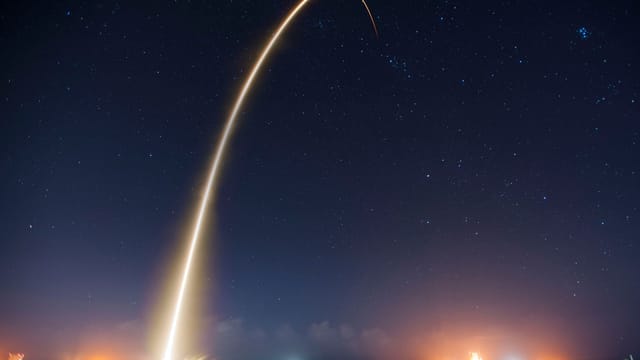
SpaceX’s $1.8 Trillion Debut: Why the World’s Biggest IPO is More Than Just a Rocket Story
SpaceX has launched the world's largest IPO to date, reaching an $1.8 trillion valuation driven by the global expansion of Starlink and its critical role in U.S. national security. The listing makes Elon Musk the world's first trillionaire and sets a new precedent for 'strategic technology' valuations in the public market.
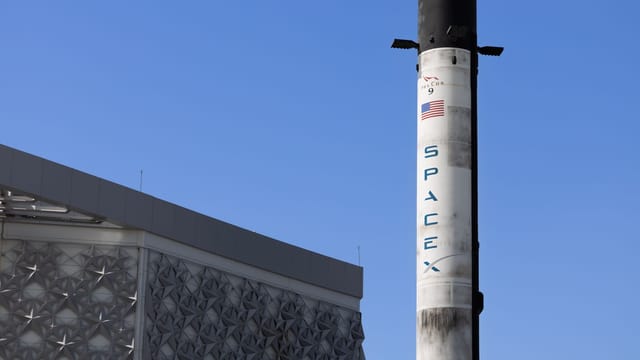
Elon Musk’s $1.8 Trillion Moonshot: Inside the SpaceX IPO Gamble
SpaceX is set to debut on Nasdaq at a $1.8 trillion valuation, pivoting its business model toward a vertically integrated AI and space infrastructure giant. Despite overwhelming investor demand, the company faces scrutiny over its massive AI-driven losses and Elon Musk’s absolute governance control.