
Business & IndustryAnalysis
China Shipbuilding Orders Surge 105.2% in First Half of 2026 as Maritime Sector Gains
Strong demand for high-end green vessels pushes shipyard backlogs past 2029 as marine tourism also expands.
Share
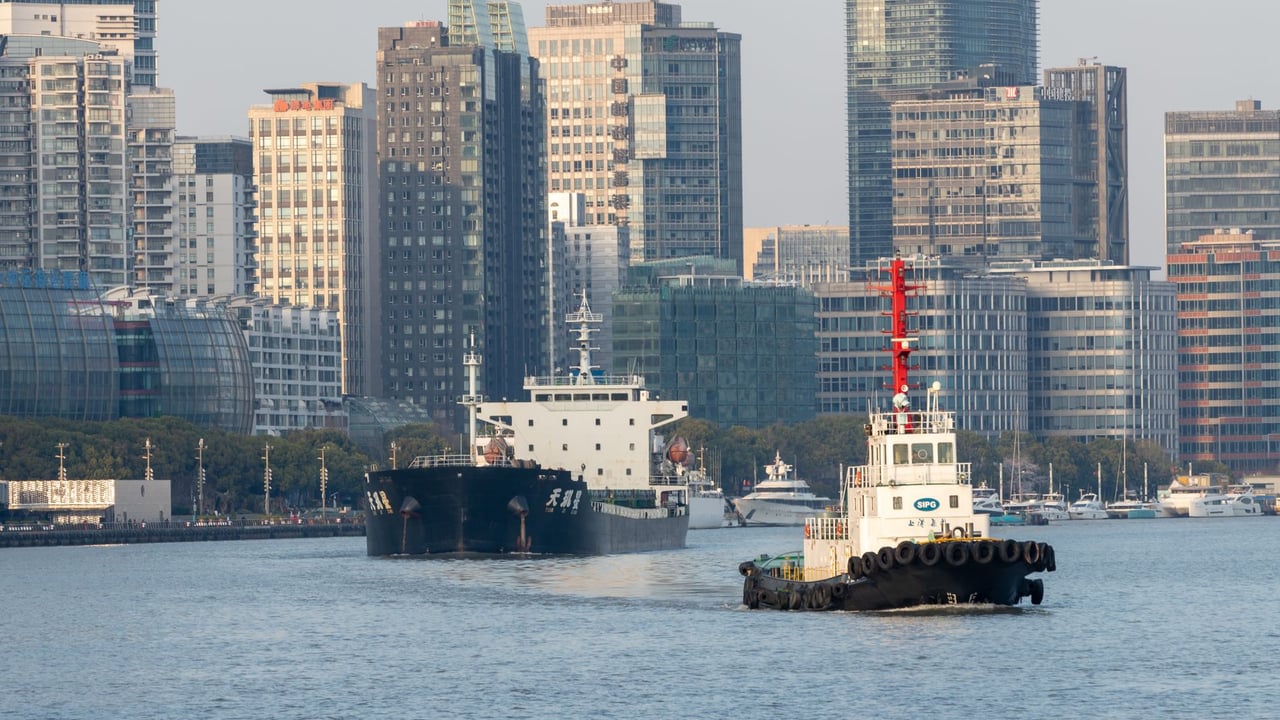
Photo by JC Terry on Pexels
The Brief
China's commercial shipbuilding sector registered significant growth in the first half of 2026, with new ocean-going vessel orders doubling year-on-year according to data from the Ministry of Natural Resources. Chinese shipbuilders captured nearly three-quarters of new global orders during the period while accelerating deliveries of dual-fuel and alternative-energy ships. Concurrently, national ocean tourism and passenger transport recorded steady gains, supported by new cruise offerings and regional maritime policies.
Why it matters
The surge in high-end vessel orders underlines China's strengthening market position in complex naval architecture and green maritime technology. As global shipping operators face tighter emissions targets, China's ability to supply large-scale methanol, LNG, and battery-electric vessels positions its shipyards as central players in international logistics decarbonization. Furthermore, the capacity expansion and extended order backlogs provide strong visibility for domestic heavy manufacturing through the end of the decade.
China context
The performance aligns with Beijing's broader economic strategy to shift traditional heavy manufacturing toward high-value, tech-driven output. By combining technological upgrades in commercial shipbuilding with expanded marine leisure and cruise operations, domestic authorities are leveraging the maritime economy to support both industrial export value and internal services consumption.
Editor's View
EDITOR'S VIEW — Analysis and inference, not factual reporting.
The doubling of new ship orders demonstrates that Chinese shipyards are successfully converting global energy-transition mandates into commercial contracts. Winning dominance across all three core indicators—new orders, completions, and order books—indicates a structural edge that goes beyond cost competitiveness. The key test moving forward will be managing shipyard execution across multi-year backlogs extending past 2029 without encountering supply chain bottlenecks or delivery delays in next-generation propulsion systems.
What to watch
- Execution and delivery schedules for shipyards with order backlogs extending past 2029.
- Adoption rates and route expansions for domestic cruise ventures, including Adora Magic City and 66 Degrees Expeditions.
- Implementation and scaling of regional yacht policies, particularly within the Guangdong-Hong Kong-Macao Greater Bay Area.
Key Takeaways
- 1New sea vessel orders increased by 105.2% year-on-year in H1 2026, representing 73.9% of the global market share.
- 2Completions and hand-held orders rose 34.8% and 37.1% respectively, holding global market shares of 55.4% and 63.3%.
- 3Deliveries included advanced green propulsion vessels, such as a 24,000-TEU methanol dual-fuel ship and a 10,800-car LNG dual-fuel carrier.
- 4Shipyard production capacity is tightly booked, with major order schedules extending beyond 2029.
- 5Marine passenger traffic grew 4.6% year-on-year, supported by expanding cruise operations and new Greater Bay Area yacht policies.
China's maritime economy demonstrated robust momentum during the first half of 2026, boosted by a sharp rise in international commercial shipbuilding orders and a steady recovery in marine passenger traffic, according to data released by the Ministry of Natural Resources.
From January to June 2026, new orders for Chinese ocean-going vessels increased by 105.2% year-on-year. Shipbuilding completions rose 34.8%, while hand-held orders expanded by 37.1%. These figures secured China the leading position in global shipbuilding metrics, with international market shares reaching 73.9% for new orders, 55.4% for completions, and 63.3% for total order books.
Industrial output reflected a structural move toward higher-value and lower-emission vessel classes. Domestic shipbuilders delivered more than 40 major vessels during the six-month period, including container ships exceeding 10,000 TEU, ultra-large crude carriers, and large liquefied natural gas (LNG) carriers. Prominent technical milestones included the delivery of the world's first 10,800-car LNG dual-fuel car carrier, the world's first 24,000-TEU methanol dual-fuel container ship, and China's first 740-TEU pure electric intelligent container ship. Officials noted that several major shipbuilding enterprises report full production schedules, with delivery slots committed past 2029.
Alongside heavy industrial manufacturing, marine consumer activity also registered solid growth. National marine passenger volume and passenger turnover grew by 4.6% and 5.4% year-on-year, respectively, as consumer demand shifted from standard coastal sightseeing toward immersive marine experiences.
Cruise and leisure operations saw notable operational milestones. Guangzhou's Nansha Cruise Homeport handled over 110,000 passenger trips across 25 voyages over a five-month span, marking a 5% year-on-year increase. Polar cruise brand 66 Degrees Expeditions embarked on its maiden journey, while the domestically built cruise ship Adora Magic City completed trial runs for destination-free sea tours. Regional integration also progressed following the introduction of new yacht management rules for Guangdong, Hong Kong, and Macao, facilitating cross-border movement for inaugural yacht arrivals.
Sources
- Com — People's Daily · 8/3/2026
- 全国海洋旅游消费潜力持续释放--经济·科技--人民网 — People's Daily · 8/3/2026